British warshipOne of the worst maritime disasters to strike Great Britain and the Royal Navy in home waters occurred off Portsmouth on August 28, 1782. The HMS Royal George, a 100 gun ship of the line, had just returned from North American waters and was preparing to accompany HMS Victory to Gibraltar when it capsized just off the entrance of Portsmouth harbor. Compounding the disaster was the fact that more than hundreds of women and children had boarded the vessel to visit with friends and family. The Royal George had been careened on its side for maintenance and the sea quickly engulfed the vessel through open gun ports. More than 900 died in the tragic accident including 360 women and children.

For nearly 50 years the ship lay intact in shallow waters near the entrance until two enterprising divers contrived a plan to remove the ship’s remains which were now a hazard to navigation. From 1834 to 1836, the divers, brothers Charles and John Deane, attempted unsuccessfully to salvage the vessel. Although failing, the brothers did discover the wreck of the Mary Rose which would later be successfully raised and preserved in the early 1980s. Several years later, from 1839-1844, the Royal Engineers performed salvage efforts on the vessel and raised many of her bronze cannon and other items. These cannon were later melted down and used to craft part of Nelson’s Column in London’s Trafalgar Square. As a final exclamation mark in the story of the Royal George, the Royal Engineers detonated a massive controlled explosion that shattered windows ashore as far as two to three miles away from the wreck site.

HMS Fury

August 25, 2013 — Leave a comment
HMS Fury

HMS Fury’s Sister Ship Trapped in Ice

The search for the fabled Northwest Passage captivated European explorers for much of the 1500s through the early 1900s. Alas, like Ponce de Leon’s mystical Fountain of Youth, the Northwest Passage proved elusive and commercially non-existent. Not until Roald Amundsen’s journey through the passage from 1903 to 1906 was someone able to complete the journey completely by sea.

Among the numerous expeditions sent to explore the far reaches of the Arctic Sea were two led by Royal Navy officer Sir William Edward Parry. For seaborne transportation Parry relied on two bomb ketches – the sister ships HMS Hecla and HMS Fury. Only a few months before the expedition’s return to England in October 1825, the Fury was severely damaged by ice floes which had trapped the ship. Despite numerous efforts to rescue the vessel, the Fury had to be abandoned on August 25, 1825.

Before she was abandoned, though, the vessel’s extensive stores were moved ashore and deposited into a supply cache. Four years later those supplies would save the life of Arctic explorer John Ross and his team before they were rescued. The site of the Fury’s loss is now called Fury Beach; however, it remains unclear if the Fury slipped beneath the waves when the ice floes parted or if she drifted off to sink into the clutches of the Arctic Sea in another location.

Battle of Majorca

August 16, 2013 — Leave a comment
mallorca

Majorca
CC Image Courtesy of D J Petty on Flickr

The largest island in Spain’s Mediterranean Balearic island chain, modern day Majorca is a popular tourist destination; however, for several weeks in 1936 the island was the site of fierce fighting between Nationalist and Republican forces. On August 16th, 1936, a Republican naval squadron landed a force of 8,000 accompanied by heavy artillery at Punta Amer and Porto Cristo on the island. Over a period of 10 days, the Republicans forced their way 12km inland and vastly outnumbered the small ~2,000 man Nationalist garrison. Italian reinforcements arrived to bolster the faltering Nationalist forces and soon the Republican forces were in full retreat. By September 12th, the last Republican troops had abandoned the island and no further attempts would be made to retake the island. Majorca would remain firmly in Nationalist hands until the end of the Spanish Civil War.

frozen-in-time

Frozen in Time by Mitchell Zuckoff is a thrilling tale of survival, heroism and discovery. Set in Greenland, Zuckoff switches between World War Two and the present day to relate the loss of three American military aircraft and the epic search for both the planes and their survivors. Zuckoff writing flows smoothly between the historic loss of the planes and the modern day search and the book’s 330+ pages seem much shorter as a result.

Perhaps one reason for Zuckoff’s engaging style is that he accompanied the 2011 expedition in search of the Coast Guard float plane that had gone down while searching for the other two missing planes. While set in World War Two, the book is not military history, but rather reads more like heroic survivor stories such as David Howarth’s We Die Alone or polar exploration tales like The Last Viking.

Frozen in Time showcases Zuckoff’s excellent attention to detail as the minutae of daily survival in a downed plane in arctic conditions is relayed to the reader; however, Zuckoff avoids the trap of losing the story (and the reader) in the minor details. The book also benefits from the generous use of photographs to document both the characters and the events described in the book. One amusing anecdote from the book is the author’s description of the whiskey his team chose to bring with them to Greenland – a modern recreation of Ernest Shackleton’s whiskey. Overall, Frozen in Time is a highly readable book that will appeal to anyone wishing to relieve the dog days of summer with a chilling tale of survival in a frozen land.

Battle of the Nile

August 1, 2013 — 3 Comments
Aboukir Bay

Battle of the Nile by Thomas George Webster
CC Image Courtesy of Black County Museums on Flickr

The boy stood on the burning deck

Whence all but he had fled;

The flame that lit the battle’s wreck

Shone round him o’er the dead.

Two hundred fifteen years ago today, Admiral Horatio Nelson pounced upon the French fleet in Aboukir Bay, Egypt. By early morning the next day, Nelson and his fleet had captured or destroyed nearly every French ship and ended Napoleon Bonaparte’s dreams of a French Egypt and the destruction of Britain’s colonial holdings in India. Alternatively called the Battle of the Nile or the Battle of Aboukir Bay, the action would later be immortalized in the poem Casabiana by Felicia Dorothea Hemans, the first stanza of which is above.

For two months in the summer of 1798, Nelson fruitlessly tracked the French fleet across the Mediterranean. Meanwhile, the French used the time to capture the island of Malta and land an army of troops and scholars in Egypt. Although the French troops eventually were defeated, the scholars scored a victory for the ages when they discovered the Rosetta Stone.

After finally catching up with the French fleet in Egypt, Nelson wasted no time in daringly dividing his forces and launching an attack on the French fleet. Dividing his forces allowed the British fleet to engulf the French in a deadly crossfire and after three hours much of the French fleet had been destroyed. Capping the battle was the violent destruction of the French flagship L’Orient caused by a fire reaching one of the ship’s magazines.

A Very Strange Way to go to War

Today marks the 31st anniversary of the triumphant return of the SS Canberra to Southampton upon the successful conclusion of the Falklands War. In his new book, A Very Strange Way to Go to War, author Andrew Vine replays for the reader the high drama of the sailing of the Canberra, a modern day cruise ship, into the very teeth of enemy action. Readers are walked through the early days of the P&O liner Canberra and her transition from ocean liner to cruise ship and her convergence with the Royal Navy and Merchant Navy as the Falklands were invaded.

Vine strings together a fascinating tale of the preparations aboard the Canberra for her use as a troop ship for Royal Army Paras as well as Royal Marines and subsequent sailing into the combat zone surrounding the Falklands. Among the strengths of Vine’s writing are his ability to paint a broad picture of the Falklands conflict for readers who may be unfamiliar with its details 31 years on while still integrating micro-level social history from interviews with participants in the action. Vine’s writing makes for very interesting reading, and while the book might have benefitted from being fifty pages shorter, A Very Strange Way to Go to War remains an excellent book both for those looking for a unique history of the Falklands War or maritime history.

kickstarter

Kickstarter, the wildly successful crowdfunding website, is currently hosting two nautical themed projects. The first is “Twice Forgotten,” a documentary about the USS R-12, a training submarine that sank off the coast of Key West, Florida seventy years ago today. Forty US sailors and officers as well as two Brazilian officers went down with the sub and it was not until 2010 that she was re-discovered. Funding will allow the team to return to the site and conduct filming this summer to complete the documentary.

kickstarter

Instead of seeking to tell a true story from the past, the second project aims to produce a fictional film about a World War II submarine and its mysterious disappearance during the war. The film team has partnered with Battleship Cove, the home of the battleship USS Massachusetts and submarine USS Lionfish, to provide a filming location. If the project is funded, then the remaining half of the project’s expenses will be covered and the filming will be able to proceed as planned.

Dornier 17

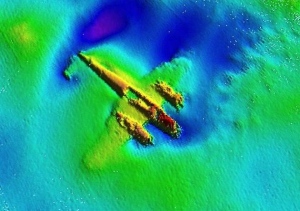
A joint team from salvage company SeaTech and the Royal Air Force Museum have successfully recovered an intact Dornier 17 medium range bomber from the Goodwin Sands in the English Channel. The plane was first located in 2008 and in the intervening years efforts have been made to bring together a team to recover and restore the aircraft.

Dornier 17s were medium range bombers developed for the Nazi Luftwaffe and put into service 1937. The plane is one of the lesser known Luftwaffe designs as it was largely obsolete by 1942. Powered by two 1,000hp 9-cylinder engines, the plane could reach speeds of 265mph while delivering a 2,200 lb. bomb load. There are currently no surviving examples of a Dornier 17 as most were melted down after they were shot down or confiscated after the war.

spy ship

USS Liberty
Photo Courtesy of US Navy

Today marks the forty-sixth anniversary of a tragic and deadly encounter between the US Navy and the Israeli Defense Force. Four days into the Six-Day War, the US Navy intelligence ship USS Liberty was operating off the coast of the Sinai Peninsula. The ship had been ordered to withdraw from the area, however, miscommunication had resulted in the ship keeping its station in an area hotly contested by Israeli and Egyptian forces.

Mistaking the vessel for an Egyptian warship, the Israeli Air Force and Navy launched an attack on the ship which left 34 American servicemen dead and 171 injured. In the years since the attack, anti-semites and conspiracy theorists have used the attack to paint the Israeli state as an enemy of the United States and a perpetrator of an assault on an unarmed vessel. Numerous investigations have refuted these allegations and, indeed, it would have been against Israeli interests to alienate the United States as the Israeli people faced threats from all sides. Ultimately, miscommunication and the fog of war resulted in a tragic loss of life and only fueled the fires of those who seek to wipe the nation of Israel from the map.

The Hunt for Hitler's Warship

Regnery History, a relatively new imprint of Regnery Publishing, has brought readers yet another fantastic offering in Patrick Bishop’s The Hunt for Hitler’s Warship. Previous books from Regnery History reviewed here include Ships of Oak, Guns of Iron and Fatal Dive. Over the span of ~400 pages, Bishop familiarizes readers with the epic saga of the Nazi battleship Tirpitz from her gestation in Wilhelmshaven to her cataclysmic death at the hands of British bombers in November 1944.

Bishop brings to life the tireless efforts of the Royal Navy, Fleet Air Arm, Royal Air Force and Norwegian Resistance to reduce Nazi Germany’s last remaining battleship Tirpitz to a worthless heap of scrap iron. The reader is also introduced to life aboard the Tirpitz through Bishop’s interviews with surviving crew and archival research. This aspect helps round out the work and present readers with a better understanding of both the dread struck in British military planners’ minds by the Tirpitz as well as the fear and trepidation experienced within the ranks of the Kriegsmarine at the prospect of the loss of the Tirpitz in a surface action.  Unlike Hunting Tirpitz, which I reviewed earlier last year and is essentially a compendium of after-action reports by the British Admiralty, The Hunt for Hitler’s Warship, is an engaging work designed to bring the story of the sacrifices of British and Norwegian sailors and airmen to life for modern audiences.