St. Louis Riverboat

Belle of the Night
Photo: Polestar Boating Center

Three days from now, on October 20th, the Belle of the Night, a former floating restaurant will be auctioned off to the highest bidder at Polestar Boating Center in St. Charles, Missouri. The Belle of the Night operated as a restaurant and night club in Havana, Missouri until being laid up. Prior to that, she was named Belle Angeline and was moored along St. Louis’ Laclede’s Landing as a floating restaurant during the late 1970s and 1980s. The vessel was built in 1975 and is a barge with a 4 story superstructure and not an actual riverboat. The current owner has attempted to work with groups to re-open the Belle of the Night in Grafton, Illinois or St. Charles, but neither have come to fruition. If the vessel is not sold at auction, then its fixtures will be auctioned off on October 24th and the vessel sent to the scrapyard.

The plight of the Belle of the Night is not unusual as the St. Louis riverfront has lost many of its former riverboat attractions in the past few years. The riverboat Robert E. Lee was lost to a fire in 2010 and the Admiral Casino was sent to the scrapyard in 2011. The St. Louis riverfront used to be home to nearly a dozen floating restaurants, excursion boats and even a World War II minesweeper, but changing demands and the forced retirement of many vessels due to age has caused the number of vessels to dwindle to a mere handful.

chinese porcelain

Blue & White Yuan Dynasty Porcelain
Photo: history.cultural-china.com

Vietnamese authorities are attempting to protect a 14th century shipwreck discovered earlier this year in the province of Quang Ngai. Local fishermen originally found the wreck and salvaged some of its Yuan dynasty porcelain cargo. Authorities quickly swooped in and confiscated the recovered porcelain. Now, locals are determined to profit from the wreck by salvaging it themselves.

Last Saturday, Vietnamese police guarding the wreck were attacked by a throng of 60 fishermen. Two policemen were injured after the fishermen pelted the guards with rocks and swarmed their boats and vehicles. The mob freed a fisherman the authorities were attempting to arrest and hundreds of police eventually had to be called in to quell the violence. The police presence will most likely continue for the 3 months it is predicted to take to salvage the wreck.

HMS Cymric

Oil Painting by Kenneth King
National Maritime Museum of Ireland

Late in 2011, divers from Dark Star dive team discovered the wreck of the British submarine J6 off the Northumberland coast. While the discovery of a submarine may have surprised the team, what is even more surprising, and tragic, are the circumstances by which the J6 was sunk.

On October 15, 1918 the HMS Cymric was on patrol off the Northumberland coast in Northeastern England. The HMS Cymric was originally an Irish schooner launched in 1893. She was later converted by the Royal Navy for use as a Q-ship. Q-ships were modern-day Trojan Horses – camouflaged to look like innocent merchant ships in order to lure unsuspecting German u-boats and merchant raiders to attack. When attacked, the Q-ship crew would reveal a bristling array of hidden armaments and the hunter would become the hunted. Q-Ships claimed fourteen German u-boats destroyed and 60 damaged during World War I through the use of these tactics.

While on patrol, the Cymric’s crew spotted what appeared to be a German submarine with the markings U6 on its conning tower. The Cymric opened fire and sank the submarine. Unfortunately, the markings were in fact J6 and 15 Royal Navy sailors lost their lives to friendly fire. The Cymric’s captain was cleared after a court of inquiry and the matter remained classified until 1969. The Cymric returned to commercial service after the war, but her bad luck continued as she struck a tram with her bowsprit in 1927 in Dublin harbor and then disappeared with all hands while sailing from Scotland to Portugal in 1944. Dark Star divers plan to return to the wreck this year to lay a memorial plaque in honor of the lives lost aboard J6.

Captain Cook

HMB Endeavour
CC Image Courtesy of Alex Bikfalvi on Flickr

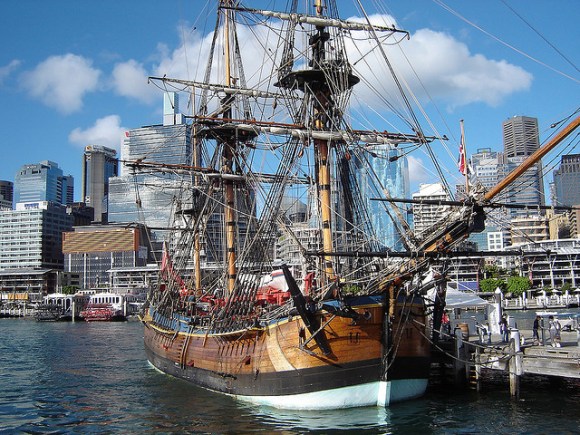
Launched in 1993, HMB Endeavour is a faithful recreation of the bark used by Lieutenant James Cook on his expedition to Australia and New Zealand from 1768 – 1771. Cook and his crew explored various parts of Australia and New Zealand, gave Botany Bay its name and even ran aground on the Great Barrier Reef. Returning home a hero, Cook led two more expeditions of discovery before his death at the hands of natives in the Hawaiian Islands. The Endeavour continued in his majesty’s service as a troop transport before being sold into private hands. Renamed Lord Sandwich the bark was eventually scuttled as a blockship off Providence, Rhode Island during the American Revolution.

Having sailed over 170,000 nautical miles and visited 29 countries, the bark now calls the Australian National Maritime Museum home. Located in Sydney, the Australian National Maritime Museum has more than a half dozen museum ships including the patrol vessel HMAS Advance, submarine HMAS Onslow, destroyer HMAS Vampire, and barque James Craig. The bark is open for tours and more information can be found here.

research vessel

R/V Sikuliaq
Photo: The Glosten Associates

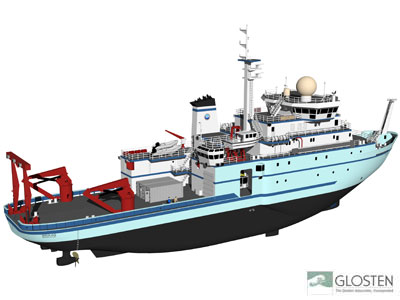
Yesterday, Marinette Marine launched the arctic research vessel Sikuliaq which will enter service with the University of Alaska Fairbanks in 2014. Sikuliaq, which means young sea ice in Inupiaq, will replace the 40 year old R/V Alpha Helix. The $140 million ship is not only newer, but also is more capable than Alpha Helix. Being designed specifically for arctic use, the ship is capable of cutting through ice up to 3 feet thick and can house 26 scientists for up to 60 days at a time. With the increase in commercial use of the polar regions, the ship will be put to good use studying the geology of the arctic, its fisheries and changes in ice levels. One of Inupiaq‘s designers was also responsible for the new Neil Armstrong research vessel class for the US Navy. The University of Alaska Fairbanks plans for the ship to be deployed on oceanographic expeditions for 270 days out of the year.

America's Cup

America Replica
CC Image Courtesy of Greg Bishop on Flickr

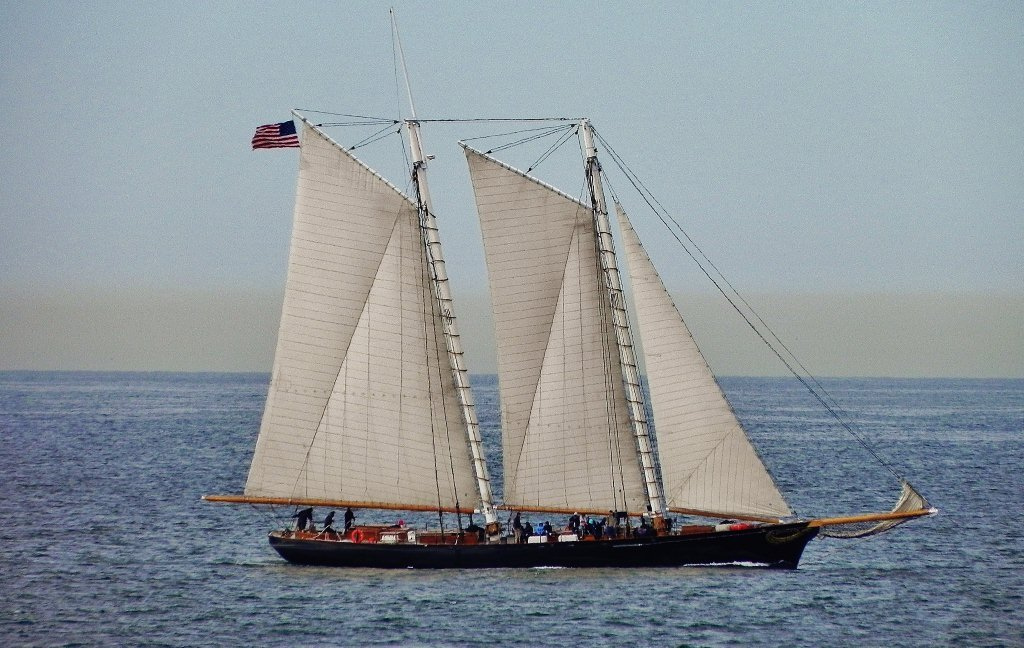
The America’s Cup yacht race has a storied history including a connection to the American Civil War. The race traces its origins to 1851 when the newly built American yacht America bested Britain’s finest yachts in the Royal Yacht Squadron’s annual 100 Guinea Cup.  Bringing the trophy back to the New York Yacht Club, America became the namesake for the America’s Cup – a race that is older than even the modern-era Olympics. Today the race is held in various port cities around the world.

Following the 100 Guinea Cup, the America was sold between various parties and eventually found itself in the hands of the Confederate Navy. Instead of using the ship as a blockade runner or merchant raider, the Confederates scuttled the ship as a block ship to prevent the Union Navy’s capture of Jacksonville, Florida. Despite their efforts, the Union captured Jacksonville and raised and repaired the yacht. Intending to utilize the yacht’s immense speed, the Union armed the ship as a blockader and assigned her to patrol the approaches to Charleston harbor. The yacht was successful on October 12, 1862 when it captured the blockade runner David Crockett.

In March 1863, America caught the CSS Georgiana attempting to run the blockade and helped direct other vessels into a chase that ended with the grounding and destruction of the Georgiana. Historians continue to dispute whether the Georgiana was intended to be fitted out as a merchant raider or was merely another blockade runner. Georgiana’s remains were re-discovered in 1965 and limited excavations have been carried out on the site. America completed her wartime service, slid into obscurity and was eventually scrapped in 1945. Today a replica of the yacht offers guests sailing trips throughout the San Diego bay area and is berthed at the San Diego Maritime Museum.

operation albion

Sunset over Saaremaa Island, Estonia
CC Image Courtesy of Luke Saagi

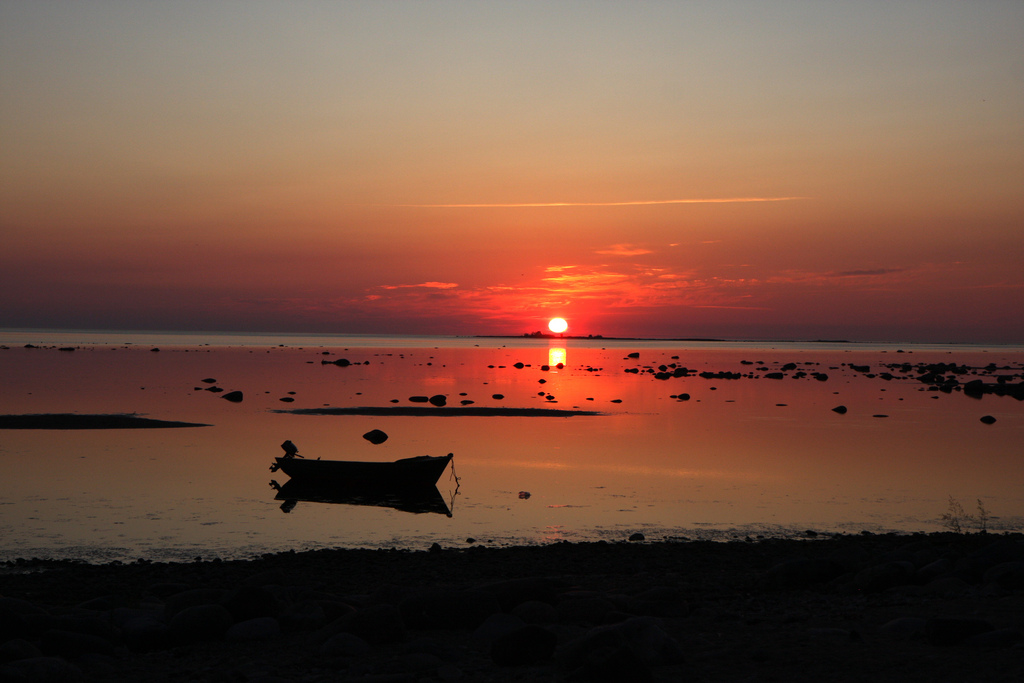
In late 1917, the German High Command was desperate to knock Russia out of World War I and devote more resources to the Western Front. Despite upheaval at all levels of society and especially within the military, Russia had remained a belligerent after the Russian Revolution in February 1917. The Russian military had essentially ceased to be an effective fighting force and yet the Provisional Government under Alexander Kerensky insisted on continuing the fight against Germany and Austria-Hungary. Thus the Germans devised a plan to invade a trio of islands in what is now Estonia. The operation would achieve two significant objectives and potentially force Russia to withdraw from the war. First, the Russian Baltic Fleet would be all but neutered by German control of the islands and, more importantly, the Russian capital of St. Petersburg would be threatened with invasion.

Dubbed Operation Albion, the plan called for a combined arms operation in which infantry and cyclist troops would land on October 12, 1917 on Saaremaa Island and isolate the garrison. Meanwhile, a naval task force would provide fire support and deal with any attempted intervention by the Russian Navy. Both land and sea forces would be supported by seaplanes which flew reconnaissance and bombing missions.

The Russians had formidable coastal batteries and garrisons on Saaremaa and nearby Muhn Island, however, a combination of poor morale and bold action by the German forces negated any Russian advantages. Russian morale was so low that some coastal batteries refused to engage the German ships in the hope that non-resistance would spare their batteries hostile fire. Russian forces were also hampered by poor communication and a lack of initiative by some commanders.

The German landings were achieved without serious opposition and cyclist troops quickly pushed to divide the Russian forces by occupying a dam which connected Saaremaa and Muhn. The cyclists reached their objectives and wreaked havoc on the Russian forces as they attempted to withdraw across the dam. Russian naval forces and 3 Royal Navy submarines attempted to intervene, however, their efforts were unsuccessful and resulted in the loss of the pre-dreadnought Slava, the destroyer Grom and a few smaller vessels. Apart from damage from mines, the Germans lost no capital ships during the operation.

battleship sinking

Pre-Dreadnought Slava Sinking
Photo: Wikimedia Commons

After little more than a week, the Germans had secured the three islands – Saaremaa, Muhu and Hiiumaa and captured 20,000 Russian troops. Most significantly, though, the Germans had successfully launched a combined air-land-sea operation and were now poised to invade St. Petersburg. Less than 6 weeks after the action, the Russians sued for peace and German troops were freed from the Eastern Front to launch a last ditch effort to win on the Western Front.

The operation also had a minor World War II connection. Lieutenant Ernst Lindemann, later the captain of the ill-fated Nazi battleship Bismarck, served in the operation as a wireless officer aboard the battleship SMS Bayern. In 1944, the Soviets would launch their own Operation Albion, this time to wrest control of the islands from Nazi forces garrisoned there.

Odysseus' and the sirens

CC Image Courtesy of Ken & Nyetta on Flickr

The Mediterranean Sea continues to give up the secrets it harbors from Greek and Roman times. This week, archaeologists working in Turkey discovered the well-preserved remains of 2 Roman-era shipwrecks. Excavations have been ongoing in the area since 1995 and are being performed by Italian archaeologists. The site was once the location of a Roman trading city named Elaiussa Sebaste which was founded in the 2nd century BC. One ship is from the Roman Imperial period and the other from around 500 AD. They both contain cargoes of amphorae and marble. Archaeologists hope that further excavations and study will supply insight into Roman trading patterns between Elaiussa Sebaste, Syria, Egypt and the Anatolian peninsula.

Work on a third wreck, this one from around 350 BC, is likely to assist archaeologists in their understanding of Greek shipbuilding techniques. Dubbed the Mazotos Wreck, the ship was discovered in 2006 and archaeological work began in 2007. This year the team found that approximately 45 feet of planking as well as the ship’s keel have been preserved and are useful for study. The ship was carrying ~1,000 jugs of wine when it sank and the remains of its cargo have helped researchers better understand the trade of ancient Greece.

These are not the only discoveries made this year in ancient Greek and Roman maritime archaeology. Earlier this year, surveyors for a gas pipeline discovered a Roman era wreck that dispelled the belief that Roman trading vessels hugged the shoreline and did not traverse open water. Robert Ballard also discovered two wrecks off the coast of Cyprus. With the continuation of exploration operations on the Antikythera Mechanism wreck, there could be even more revelations to come as the year draws to a close.

british warship

Mary Rose Museum & HMS Victory
CC Image Courtesy of Ian Stannard on Flickr

This week marks the 30th anniversary of the recovery of the 16th century English warship Mary Rose which sank on July 19, 1545 with nearly 500 officers and crew. Historians believe the ship was constructed around 1510 in Portsmouth and displaced 500 tons when it first entered service. The ship underwent two refits and during the second refit in 1536 the Mary Rose was strengthened and her displacement increased to 700 tons.

Mary Rose served the English Navy in wars against France and Scotland and it was during the Battle of Solent against a fleet of 200 French vessels that the Mary Rose was lost. Accounts differ as to the exact cause of the Mary Rose’s loss – the French believed they had sunk her while English accounts indicate that the ship most likely foundered due to poor seamanship by her crew.

Salvage efforts were launched immediately utilizing an age old technique used for recovery efforts the world over. Using two hulks and various winches, the salvors would straddle the ship with the two hulks, flood them, secure cables around the Mary Rose and then re-float the hulks. This process would be repeated until the ship reached water shallow enough where repairs could be made and the Mary Rose herself be re-floated. The salvors were unsuccessful in raising the ship and it remained hidden until 1965 when it was re-discovered by British diver Alexander McKee. The ship was finally recovered in 1982 and has been painstakingly preserved beneath a glassed-in drydock in Portsmouth. A permanent museum display is under construction and will be opened in early 2013. The museum is open to visitors during the transition period and visitors can also view Admiral Nelson’s flagship HMS Victory (not to be confused with Admiral Balchin’s HMS Victory) at the dockyard. More information can be found on the Mary Rose’s website.


gondola

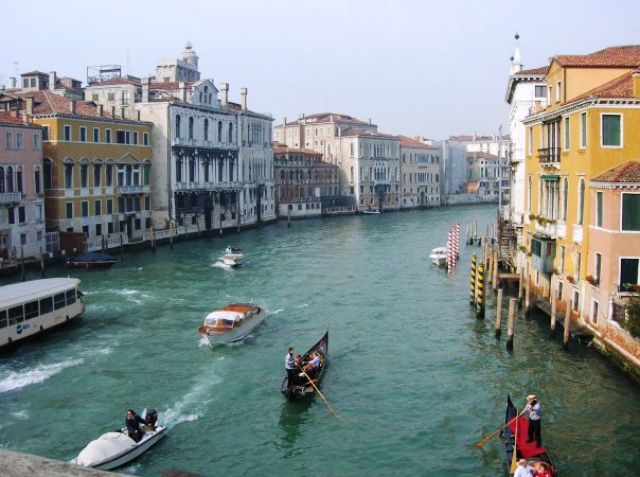
Today, Venice is best known for its graceful gondolas and idyllic streets of water, however, for several centuries it was a powerful city-state which exerted economic and political control over a large swath of northern Italy and the Adriatic Sea. Perhaps the Republic of Venice’s greatest accomplishment was on October 7, 1571 when naval forces led by Venice’s Doge Sebastiano Venier defeated Ottoman forces at the Battle of Lepanto.

For nearly a hundred years the Ottomans had waged an off and on war against various Italian city-states and the Kingdom of Spain. Prompted by the capture of a Venetian colony on the island of Cyprus, the Venetians and their Christian allies assembled a force of 212 galleys and galleasses to launch a punitive expedition against the Ottomans and free the imprisoned colonists. The Christian and Ottoman fleets encountered one another in the Gulf of Patras on October 7th and immediately engaged in combat. Although outnumbering the Christian fleet by nearly 40 ships, the Ottoman forces were decimated by the superior guns and seamanship of the Christian fleet. The Christians captured approximately 130 ships and destroyed another 80 while losing only 50 of their own with 1 captured by the Ottomans. Additionally, the Ottomans suffered 20,000 casualties to the 7,500 lost by the Christian fleet and more than 10,000 imprisoned Christian rowers were freed from slavery.

The battle was one of the most significant naval victories in history and marked the high-water mark of the Ottoman Navy. No longer would Venice or any of her sister Italian city-states be existentially threatened by the Ottoman Empire. Venice reasserted her economic dominance of the region, however, changes in technology and trading routes eventually led to the city’s graceful dive into impotence. The city lost her independence in 1797 when Napoleon Bonaparte captured the city and she became a pawn in European geopolitics for the next 80 years until her incorporation into the Kingdom of Italy in 1866. Today though, there are growing calls for Venetian independence amidst the Eurozone crisis and continuing Italian austerity.

The Battle of Lepanto has been honored by the naming of two ships in the Italian Navy after the battle. The Genoese commander of one wing of the Christian fleet, Admiral Andrea Doria, became one of Italy’s most famous naval heroes and is perhaps most associated with the wreck of his namesake, the Italian liner Andrea Doria, which sank after colliding with the Swedish ship Stockholm in 1956.