Amethyst Incident

Sunset on the Yangtze River
CC Image Courtesy of Dan Nelson on Flickr

On April 20, 1949, the Royal Navy frigate HMS Amethyst was cruising up China’s mighty Yangtze River as hundreds of western gunboats had done over the previous century. The Amethyst had been ordered to relieve HMS Consort which was guarding the British Embassy and British interests at the Chinese Nationalist capital of Nanjing. Around 9:30am, without warning, a People’s Liberation Army artillery battery opened fire on the vessel. The PLA battery rained a deadly barrage of shells on the ship, quickly disabling her and mortally wounding her captain, Lieutenant Commander Bernard Skinner. The vessel quickly found herself aground and unable to return fire due to the geometry of her grounding and damage sustained in the initial barrage to her fire control mechanisms. Non-essential personnel were ordered to evacuate the frigate, but the PLA began targeting the small boats with artillery and snipers. By the time the firing ceased at 11am, 22 Royal Navy sailors and officers lay dead with another 31 wounded.

HMS Consort arrived at 11am to lend her support and quickly suppressed the PLA fire. Unable to take the Amethyst in tow, the Consort concentrated on lashing out at the gathering horde of PLA soldiers. Another ten sailors were killed and three wounded during the Consort’s efforts. Not until later that night was Amethyst refloated, however, she was unable to escape and thus began a tense ten week siege during which the PLA refused to allow supplies to reach the vessel.

Finally, on the night of July 30th, the Amethyst slipped her chains and snuck down the Yangtze behind a passenger ship. Sadly the PLA, in their efforts to sink the Amethyst, sank the passenger ship with heavy civilian casualties. After a short sail of two days under escort from another Royal Navy vessel, the Amethyst arrived in the British colony of Hong Kong. The Amethyst had been trapped 101 days and upon her arrival famously signaled “Have rejoined the Fleet south of Woo Sung. No damage or casualties. God Save the King.”

For those to whom the British Empire represented, despite its flaws, a force for the rule of law and economic development, the Amethyst Incident represented the beginning of the sunset on Her Majesty’s Government’s influence in China. For those who viewed the expulsion of foreigners as the beginning of a great socialist experiment, the incident instilled pride which, unless one were a party elite, was crushed in the years following “Liberation” as Frank Dikotter has so eloquently elucidated in his latest book The Tragedy of Liberation.

Jack Cheevers

The events surrounding the capture of the USS Pueblo, a US Navy spy ship, rank among the most ignominious in the storied history of the United States Navy. Jack Cheevers’ book Act of War brings to life the capture of the Pueblo, the torture and humiliation of her crew at the hands of the North Korean government and the efforts to secure their return to the United States. Relying on period documents, interviews with crew members and government records, Cheevers reconstructs for readers not just the “exciting” parts of the capture and torture, but also the bureaucratic decision making that led to the capture of the Pueblo.

Cheevers devotes special attention to the captain of the Pueblo Commander Lloyd Bucher, his background, the agonizing decisions he had to make while under fire and his subsequent pariah status within the US Navy. One of the strongest aspects of the book is how the reader is presented with the facts of the capture of the Pueblo and allowed to decide on his or her own where the blame should lie for the capture of the Pueblo and whether more should have been done to prevent her capture. While not a light beach read, Act of War is an enlightening tome worthy of one’s time, especially given the continued saber rattling by an increasingly unhinged North Korean regime.

Petropavlosk

April 13, 2014 — Leave a comment

Russian battleship

On April 13, 1904 the Russian battleships Petropavlovsk and Poltava, four cruisers and an escort of destroyers sallied forth from Port Arthur to attack the Japanese fleet that had besieged the Russian port. The Japanese forces fell back beyond the reach of Russian shore batteries and as a result the Russian admiral, Stepan Makarov, ordered the squadron to return to Port Arthur. As the squadron steamed back to port, the Petropavlovsk struck two Japanese mines in quick succession and sank almost immediately. The loss of the Petropavlovsk devastated the Russian defenses as not only did it lose one of its most capable ships, but Admiral Makarov and a total of 27 officers and 652 sailors perished in the sinking.

Commissioned in 1898, the Petropavlovsk was armed with four 12-inch guns with a secondary battery of twelve 6-inch guns. The vessel saw service in the Boxer Rebellion and by the time the Russo-Japanese war broke out had been with Russia’s Far Eastern Squadron five years. The ship was succeeded by another battleship of the same name in 1911 which served the Imperial Russian Navy in World War I as well as the Soviet Navy in World War Two before being scrapped in 1953.

blucher

Sailing on the Oslo Fjord
CC Image Courtesy of Zen Whisk on Flickr

Operation Weserubung, the Nazi invasion of Denmark and Norway in April 1940, involved multiple aerial and naval thrusts up and down the Norwegian coastline. From Oslo in the south to Narvik in the north, German paratroopers and naval task forces worked in concert to establish footholds in Norway’s strategic centers. Kriegsmarine Group 5 was tasked with sailing through the Oslo Fjord to the Norwegian capital of Oslo where it was to secure the seat of government along with the Norwegian royal family.

The flagship of the naval task force was the newly completed heavy cruiser Blucher which also had embarked 1,500 assault troops for the capture of the capital. As the ships sailed through the narrow confines of the Oslo Fjord, alert Norwegian patrol vessels sounded the alarm and gave troops in the Oscarsborg Fortress precious minutes to prepare their defenses. In a double irony, the two 11-inch guns in the Norwegian fortress were named after Jewish heroes Joshua and Moses and had been built by Krupps in Germany in the late 1890s. Although each gun only fired a single shell, both struck home and inflicted enormous damage on the Blucher. As the cruiser labored further up the fjord, a shore based torpedo battery engaged the ship and struck home with two antique torpedoes.

The ship capsized and whisked nearly 1,000 sailors and soldiers to the bottom of Drobak Sound. With the loss of Blucher, the German task force withdrew and the capture of Oslo was left to Nazi airborne troops. Additionally, the sinking allowed the Norwegian royal family and other key members of the government to escape Oslo and organize resistance in other parts of the country and abroad. For the Kriegsmarine, Blucher would not be the only capital ship lost in Norwegian fjords during the war as Tirpitz would later succumb to Royal Air Force and Navy attacks.

MV Dara

April 8, 2014 — Leave a comment

terrorist bomb

Before the advent of cheap air transportation to and from the Middle East, medium size liners such as the M/V Dara transported both cargo and passengers to and from Europe, India and the Middle East. The Dara, soon to become like another British India Steam Navigation vessel, specialized in moving ex-pat workers between worksites in the Middle East and Bombay. During a port stop in Dubai on April 7, 1961, a brisk storm beset the port forcing the Dara to stand out to sea in the middle of unloading. In doing so, the ship carried with her passengers and non-passengers alike.

Early the next morning, around 4:40 am an explosion ripped through the bowels of the ship sparking a serious fire that swept through the ship. Panic ensued among those aboard and 238 passengers, crew and shore staff died in the mad scramble to get aboard lifeboats. Vessels from multiple navies along with a civilian salvage tug responded to the explosion and the vessel remained afloat for some time. While under tow, though, the ship slipped beneath the waves in only 100 feet of water. Thus the Dara has become a semi-popular wrecksite as its topmost wreckage is only a few feet below the waves.

Although an exact reason for the explosion has never been ascertained, it is widely believed Omani rebels slipped an anti-tank mine aboard the vessel. Not only was this a common bomb technique among the Omani rebels who had been driven out by the British in 1959, but also Royal Navy divers found evidence of an anti-tank device aboard the wreck. Despite this evidence, it has never been conclusively been proven who was responsible for the deadly attack.

Navy airship

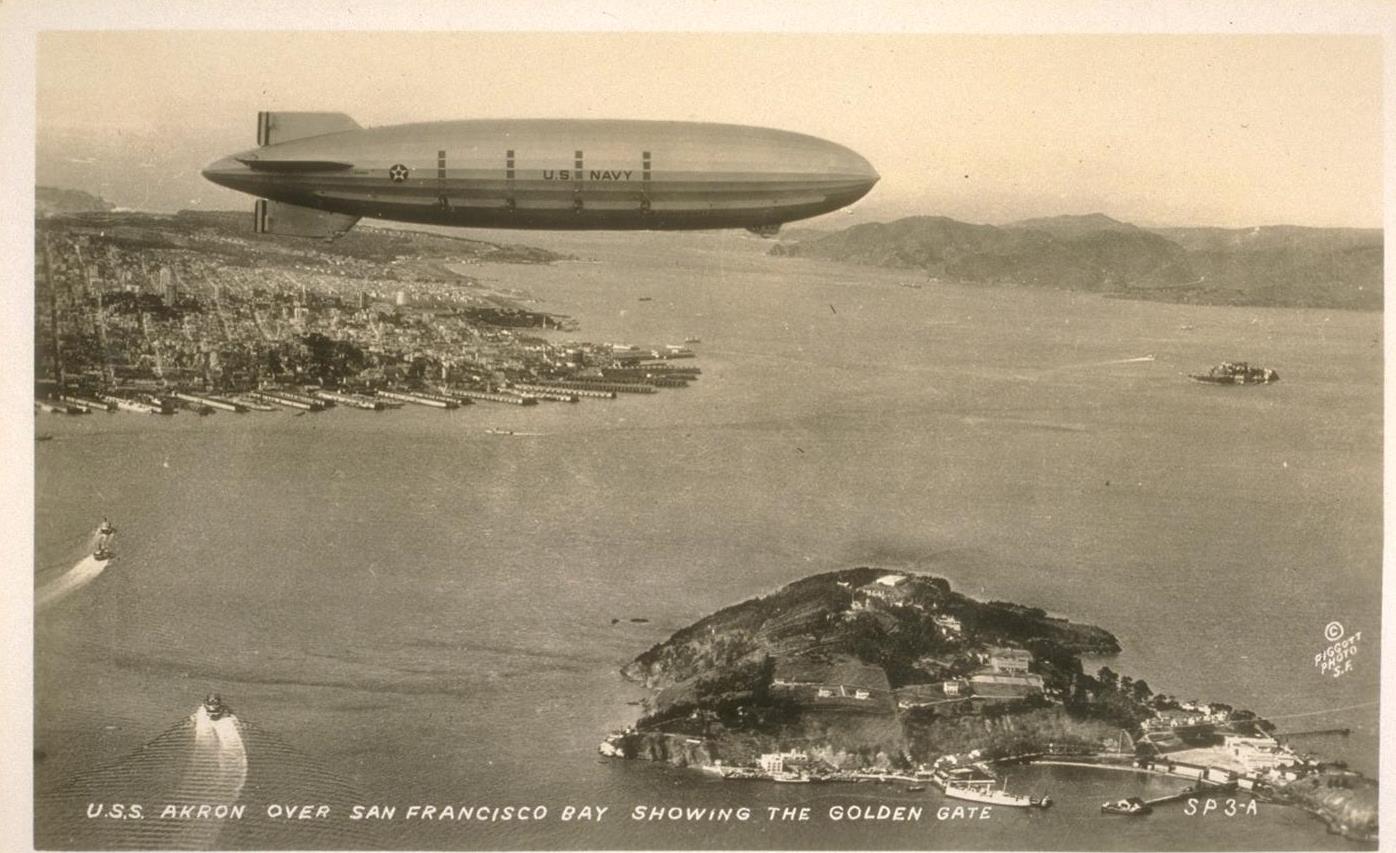
Much like dalliances with submarine aircraft carriers in the 1920s and ’30s, the US Navy also experimented with flying aircraft carriers. Perhaps this is where Marvel Comic’s writers got their inspiration for S.H.I.E.L.D’s helicarrier.  Launched in the early 1930s, the USS Akron and the USS Macon were among the largest dirigible airships in the world. Powered by eight 560 hp engines, the airships could reach speeds up to 83mph and had a range of 12,180 miles, Such range gave the airships the potential ability to act as the eyes of the US Navy’s battle fleets as well as assist in search and recovery missions. Both the Akron and the Macon were also designed with the ability to carry, launch and recover biplane fighter and reconnaissance planes. Thus they became the US Navy’s first flying aircraft carriers.


airship aircraft

USS Akron recovering a biplane in flight

Unfortunately for proponents of dirigibles as well as flying aircraft carriers both the Akron and Macon were accident prone, much of it from the relatively new design of the airships and the inexperience of the crews operating them. Just past midnight on the morning of April 4, 1933 the Akron was caught in stormy weather off the New Jersey coast. A combination of updrafts followed by sharp downdrafts resulted in collision between the sea and the dirigible’s lower fin. The airship quickly became uncontrollable and crashed into the stormy Atlantic. Sadly 73 of the 76 officers and crew aboard were lost before, in an eerie reversal of events at Lakehurst, NJ just a few years in the future, a German merchant vessel was able to quickly arrive on scene and rescue survivors.

The US Navy and Coast Guard dispatched multiple vessels to hunt for survivors, but one of the rescue vessels, the blimp J-3, was herself lost with the death of two men. A subsequent investigation resulted in the Macon being equipped with additional life preservers and rafts which were put to good use two years later when Macon crashed into the Pacific Ocean off the California coast with the loss of only two men.

airship wreckage

USS Akron Wreckage

The loss of the Akron and the Macon essentially ended the US Navy’s experimentation with dirigible airships and flying aircraft carriers. While the US military has flirted with dirigible airships in the 21st century, nothing has come of these efforts and, for the moment, flying aircraft carriers exist only on the pages of comic books.

War of 1812

Award winning author George C. Daughan’s latest book, The Shining Sea, is a timely narrative of the voyage of David Porter and the USS Essex from October 1812 until March 1814. As the bicentennial of the War of 1812 continues, Daughan’s book does an excellent job presenting the reader with an exciting tale of adventure on the high seas, a failed attempt at nation-building, diplomacy in South America and the South Pacific and, ultimately, the dangers of man’s hubris. Two particular points where Daughan’s work shines is his thorough but brief background to the War of 1812 as well as his vivid and readable descriptions of Porter’s voyage. Instead of getting bogged down in the minutiae of how the War of 1812 came about, Daughan provides just enough background to bring the reader up to speed and then sets sail on Porter’s epic adventure. By the same token, Daughan avoids the trap of making the work too dense with nautical terminology and sailing jargon and instead focuses on the incredible actions of Porter and his men.

For twenty-first century readers, imagining a world where a merchant raider could disappear into the mists of the sea for months at a time and leave the entire British Admiralty perplexed is something near unthinkable, but this is exactly what David Porter did with the Essex. Porter and his men laid waste to the British whaling fleet in the South Pacific in a feat only rivaled in its completeness by James Waddell fifty years later in the CSS Shenandoah. Also foreign to twenty-first century readers is Porter’s ability to act without constant communication with his chain of communication. In an age when the President can watch a raid in Abottabad, Pakistan in real-time, the ability to act under only the loosest of orders is a stunning reflection of the weight of command and responsibility assigned to ship captains. Functioning as a double-edged sword, this responsibility allows for both innovation but also the opportunity for poor decision making. Daughan’s conclusion to The Shining Sea makes light of this double-edged sword and will leave the reader both entertained and cautioned against man’s failings.

Finland Shipwreck Champagne
CC Image courtesy of David Parsons on Flickr

UPDATE 3/27/14 The Aland regional government has been reprimanded by the Deputy Chancellor of Justice for the sale of champagne in 2011 and 2012. The sale occurred before the government received a permit from the National Board of Antiquities. Although the permit had been applied for, it had not yet been granted. Additionally, the export licenses required for the sale are governed by the very authorities who conducted the sale and pocketed the proceeds. The Deputy Chancellor of Justice is alleging this dual role violates both national and EU law on the export of cultural artifacts.

ORIGINAL POST 9/5/12

According to the German publication Deutsche Welle, another 8 bottles from a 168 bottle collection of champagne are set to go under the auctioneers hammer. The champagne was discovered two years ago by diver and (ironically enough) brewery owner Christian Ekström. Ekström was exploring a wrecked schooner off the coast of the Åland Islands when he came upon the bottles at the site. Researchers believe the schooner sank in the 1840s making Ekström’s find the oldest champagne ever found. Now, two years after the discovery, 10 of the bottles have been sold at auction with one, a Veuve Clicquot, selling for a record breaking $26,700. Authorities on the Åland Islands plan to hold auctions of the champagne over the next few years as a method of bringing tourists to the area.

Ekström’s find isn’t the first fermented treasure trove found in the Baltic as there have been both beer and other champagne caches discovered in recent years. The discovery and re-creation of Antarctic explorer Sir Ernest Shackleton’s whiskey, though, is still perhap the most noteworthy alcoholic find of the past few years.

Texaco-Oklahoma

March 27, 2014 — 1 Comment

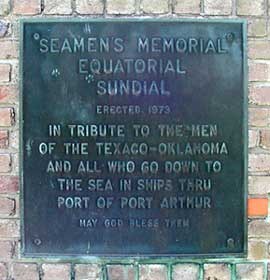
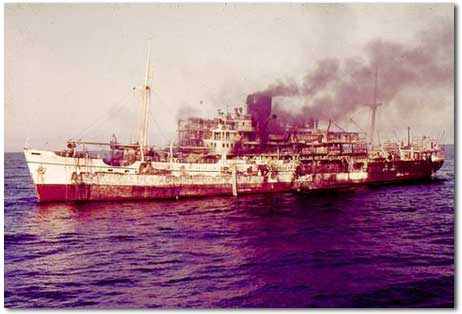
oil spillOn the night of March 27, 1971, the oil tanker SS Texaco Oklahoma was ploughing its way through heavy seas about 120 miles northeast of Cape Hatteras. Laden with 33,000 tons of crude oil bound from Port Arthur to Boston, the tanker was suddenly rent in two. The bow rolled over but stayed afloat while the stern section drifted for 32 hours. The thirteen crew members sleeping in the bow of the ship were never found, however, the remaining crew were able to abandon the stern section in a lifeboat. Unfortunately, only thirteen survivors were picked up.

The wreck resulted in extensive changes to American maritime safety regulations, including the decommissioning of 200+ WWII-era vessels. Five years later a memorial was erected to the fallen in Port Arthur and an annual memorial service continues to be held for all seaman lost at sea.

Taiwan missile corvette

Tuo Jiang

Late last week the Republic of China launched the first of a new class of stealth missile corvettes. Christened Tuo Jiang, the vessel is designed to operate with a low radar signature and is aimed at countering the threat of the People’s Republic of China’s growing aircraft carrier capability. The Tuo Jiang’s armament has not been fully publicized, however, Taiwanese news sources are reporting that it will be outfitted with a battery of Siung Feng III (HF-3) ramjet-powered supersonic anti-ship missiles. Combined with the stealth of the Tuo Jiang, the missiles give Taiwan’s navy a formidable indigenous option to discouraging and/or defeating an attack by the People’s Republic.

Despite the United States’ “Asia Pivot,” the new US policy of “leading from behind” has justifiably worried Taiwan and other Pacific nations. As such, Japan, Taiwan, South Korea and the Philippines are prescient to increase their indigenous options to defending their sovereignty in the face of an increasingly belligerent People’s Republic of China. With reports of hesitation in the Chinese economy, saber rattling in the Diaoyus/Spratlys/Senkakus/South China Sea will most likely increase much like Argentina and the Falklands in the ’80s and more recently under Christina Kirchner. If the People’s Republic’s saber rattling ever becomes more than mere noise, then the stealth missile corvettes of the Tuo Jiang class will allow Taiwan’s navy to punch above its weight class much like Israel’s missile boats did in the Yom Kippur War.