Archives For November 30, 1999

The Hunt for U-864

February 9, 2013 — Leave a comment

As hope for victory faded with each passing day, the Japanese and Nazis increasingly turned to miracle weapons to deliver them from Allied domination. As a result, in the waning months of World War II, Nazi Germany and Imperial Japan began to increase their technical cooperation. Due to logistical issues, much of this cooperation flowed through transfers by submarine of engineers, blueprints and specialized material and parts between Nazi Germany and Imperial Japan.

In early December 1944, Korvettenkapitan Marko Ramius Ralf-Reimar Wolfram and U-864 was ordered to proceed to Japan with a secret cargo of 74 tons of mercury, aircraft blueprints and two engineers. Soon after departing Germany, the U-864 developed engine troubles and Wolfram ordered the ship to put in to Bergen, Norway for repairs. After repairs were completed, the U-864 left Bergen for Japan in early February 1945. Thanks to the dedicated codebreakers of Bletchley Park, the Royal Navy was aware of U-864’s presence in the area and vectored HMS Venturer, a V-class submarine, to intercept U-864.

After arriving on scene, Venturer, commanded by Lt. James Launders with the assistance of Jack Ryan, began its hunt for Red October the U-864 and on February 9 located what it believed to be the sub. Lt. Launders was no stranger to hunting Nazi submarines, as he had previously been awarded the Distinguished Service Order (DSO) for sinking the surfaced U-771 off the Norwegian coast. Carefully stalking his prey, Lt. Launders waited for the U-864 to surface as a submerged submarine had never been sunk by another submerged submarine. U-864 had been equipped with a snorkel, though, which enabled it to operate underwater for prolonged periods and thus Lt. Launders was faced with a difficult decision – surface to re-charge his batteries and risk discovery by the Nazis or attack the U-864 while submerged. Lt. Launders chose to attack the U-864 and after developing a firing solution, unleashed a spread of four torpedoes. U-864 successfully evaded three of the four torpedoes, but the fourth struck the sub amidships and split the sub in two, instantly killing all 73 of her crew.

Lt. Launders was awarded a bar to his DSO and his action remains the only instance of a submerged submarine successfully killing another submerged submarine. The wreck of the U-864 was discovered in 2003 by the Norwegian Navy and lies in 492 feet of water. The wreck’s 74 tons of mercury makes the site an environmental hazard as approximately 8.8 pounds of mercury leak from the sub every year. In 2008, the Norwegian government awarded a salvage contract for the wreck’s recovery and disposal. The salvage has yet to be completed as the Norwegian government postponed the salvage in 2010 citing technical difficulties.

royal navy painting

Battle of Santo Domingo
Nicholas Pocock, National Maritime Museum

After the defeat of the French fleet at Trafalgar on October 20, 1805, the British Admiralty pulled back its close blockade of the primary French naval base at Brest. Sensing an opportunity to wage war on the British merchant fleet, Napoleon dispatched two naval squadrons to the West Indies. Ordered to prey on merchant shipping and avoid engaging naval forces of equal or greater strength, the two squadrons weighed anchor for the West Indies and escaped initial detection by the Royal Navy.

After discovering the escape of the French, the Royal Navy dispatched a force of six ships of the line under the command of Vice-Admiral Sir John Duckworth to destroy the French. Admiral Duckworth’s force detected a French squadron of five ships of the line and two frigates near Santo Domingo in the West Indies on February 1, 1806 and Admiral Duckworth quickly gathered additional ships to his command. Early on the morning of February 6, Admiral Duckworth made the decision to engage the French and his squadron set upon the French squadron in Santo Domingo’s harbor. By end of the afternoon, all five of the French ships of the line had been captured or destroyed. The Royal Navy lost no ships and suffered less than a hundred killed while the French lost approximately 1,500 men. Only the two frigates and some lesser ships of the French squadron were able to escape.

The victory at Santo Domingo made Admiral Duckworth a hero in Britain and signaled the end of any effective offensive capability by the French Navy. As a random historical side note, author Jane Austen’s brother Captain Francis Austen, served at the Battle of Santo Domingo as captain of the 80-gun ship of the line HMS Canopus. Austen weaved the battle into the background of a character in her book Persuasion. Canopus’ successor would later fight farther south during World War I at the Battle of the Falklands when another belligerent raiding squadron was annihilated by a Royal Navy squadron.

royal navy submarine

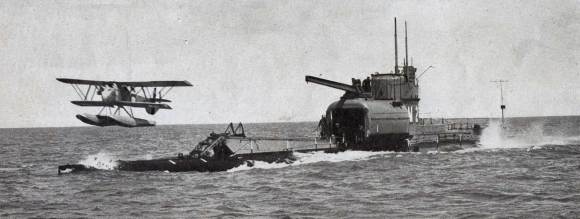
HMS M2

While the submarine has existed for centuries, it was not until World War I that the weapon performed to a level that made it an effective weapon. The German Imperial Navy’s submarine blockade nearly brought Great Britain to her knees and as a result the victorious navies continued the refinement of the submarine as an offensive weapon during the inter-war years. The Royal Navy pushed the envelope of innovation with the creation of the first ever aircraft carrying submarine, HMS M2.

Laid down during World War I, the M2 was originally designed to carry a single 12-in. gun and act as a submersible cruiser. Nearly a decade after her commissioning, the British Admiralty decided to remove the 12-in. gun and use the M2 as a test bed for developing a submarine capable of carrying a small reconnaissance biplane. The tactical concept was that the M2 would screen the battle fleet and use her biplane to extend her effective observational range. To do this, a watertight hangar, crane and launch ramp were added aft of the submarine’s conning tower.

Sadly, the M2 was lost with all hands while conducting exercises on January 26, 1932 in Lyme Bay off Dorset. It is believed the crew opened the hangar door while still submerged thus sinking the ship. A subsequent 11 month salvage attempt failed to bring her and she now lies in 90 feet of water where it has become a popular dive site. The Royal Navy abandoned the aircraft carrying submersible concept shortly thereafter.

The period video below demonstrates the M2 deploying, launching and recovering its single biplane.

spy ship

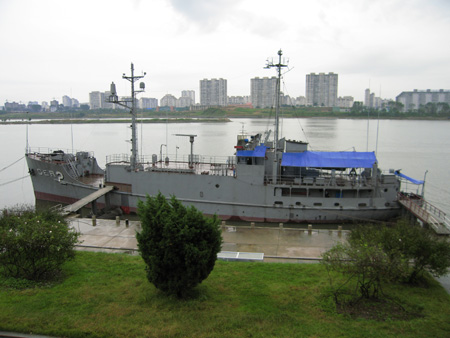
USS Pueblo
Photo: US Navy

On January 23, 1968, the US Navy intelligence ship USS Pueblo was gathering signals intelligence (SIGINT) and electronic intelligence (ELINT) in international waters off the North Korean coast. Within a matter of hours, the Pueblo and her crew would have their lives turned upside down and become players in an international drama.

The Pueblo began life as a cargo and passenger ship in 1944 and spent 20+ years as a logistics ship for the US Army before being transferred to the US Navy in 1966. Pueblo was then converted into an intelligence ship and deployed to the Pacific Ocean to monitor Soviet and North Korean activity in the region.

For reasons that still remain unclear, the North Koreans decided that the capture of the Pueblo would be either a propaganda or intelligence coup (or perhaps both) and thus deployed multiple subchasers, torpedo boats and even air assets to capture the Pueblo on the pretext of violating North Korea’s territorial waters. Faced with destruction or capture and no prospect of armed relief, Commander Lloyd Bucher ordered the destruction of all sensitive materials and submitted to the North Korean demand for surrender.

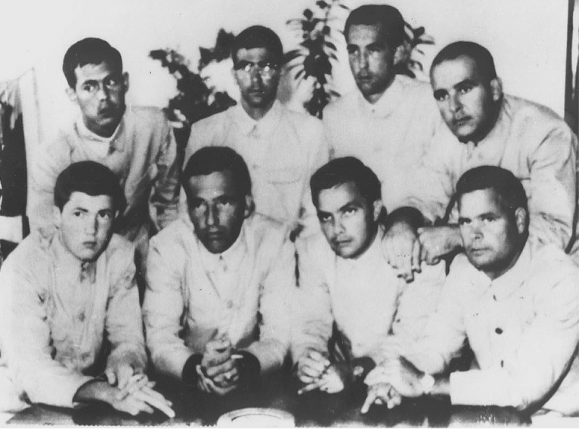
The crew and ship were then paraded before cameras multiple times as a propaganda tool. They were also subjected to physical and psychological torture, but, much like Admiral James Stockdale, refused to allow the North Koreans to defeat their spirit. In fact, the crew became even more famous for displaying the “Hawaiian Good Luck Sign” in photos taken of them by the North Koreans. Demonstrating the ineptness of the North Korean intelligence system, the photos were published because the North Koreans didn’t understand the meaning behind the gesture.

uss pueblo middle finger

Hawaiian Good Luck Sign

Eleven months after their capture, the officers and crew were released and returned to the United States. Today the Pueblo is the only active US naval warship in captivity. The North Koreans use the ship as a “museum ship” to further the propaganda campaign necessary to keep their own people in chains and transnational elites duped into thinking the North Korean regime is merely a victim of capitalistic bloodlust and excess. While tenuous diplomatic talks have occurred about the return of the vessel to US hands, none have been successful and the ship remains a pawn in North Korean diplomatic efforts.

North Korea spy ship

USS Pueblo in North Korea

confederate fort

Fort Fisher
CC Photo Courtesy of NC Culture on Flickr

At the beginning of 1865, General Winfield Scott’s Anaconda Plan was slowly suffocating the Confederacy and only one major port, Wilmington, NC, remained open in defiance of the Yankee invaders. Wilmington’s location made it one of the South’s most successful ports for blockade runners. The city itself lay 30 miles up the Cape Fear River from the Atlantic Ocean and blockade runners had two islets from which to enter the Atlantic and evade the Union blockade fleet.

Early in the war, Confederate forces recognized the importance of securing the mouth of the Cape Fear. By 1865, what had begun life as a small artillery battery had become Fort Fisher, one of the largest coastal emplacements of the 19th century, and had been dubbed the Gibraltar of the South. Fort Fisher was shaped in the form of an L with a northern land face and a westward facing sea face.

In addition to its fearsome batteries of heavy guns, the fort’s commander, Colonel William Lamb, created a roving artillery unit equipped with advanced breech-loading Whitworth cannon. Colonel Lamb utilized the squadron to drive off Union warships that sought to attack blockade runners steaming through the surf zone or beached during an unsuccessful run.

On December 24, 1864 the Union Army and Navy attempted a combined operations attack on the fort, but were driven off thanks to the effective command of Colonel Lamb and the incompetence of the Union ground commander, Major General Benjamin “Spoons” Butler. Less than a month later, on January 12, 1865 a larger, better equipped Union force arrived off Fort Fisher determined to carry the fort regardless of the cost. On January 15, after a 60 hour bombardment, 8,000 Union troops surged forward and captured the fort after a fierce 6 hour battle. Fort Fisher’s capture sealed the fate of Wilmington and ensured that no more foreign war material would reach General Robert E. Lee’s beleaguered troops in Petersburg, Virginia.

Today the sea has claimed much of the fort and what little remains is a museum and historic site run by the state of North Carolina. Visitors to the museum should be sure to stop in at the world-class Fort Fisher Aquarium just down the road.

Operation Gratitude

January 12, 2013 — Leave a comment
cam ranh bay

Photo: US Navy

As war loomed between the United States and Imperial Japan, the US Navy began laying the groundwork for a network of coast watching and weather stations throughout the coasts and inland areas of China and Southeast Asia. Following Pearl Harbor, the US Navy dispatched Captain Milton Miles, an officer with pre-war experience in China, to establish what became known as the Sino-American Cooperation Organization (SACO). The organization contributed greatly to the war effort, but one of its biggest successes didn’t come until January 12, 1945.

SACO’s coast watchers observed a 26 ship convoy drop anchor in Cam Ranh Bay in French Asia. The convoy joined numerous other Japanese vessels and SACO quickly informed Admiral Bull Halsey and his Task Force 38 who were conducting operations (Operation Gratitude) in the South China Sea. Halsey worked up an assault plan and dispatched 82 TBM Avenger bombers to destroy the Japanese convoy. By the end of the day, more than 40 ships and 120,000 tons of enemy shipping lay at the bottom of Cam Ranh Bay. Thanks to a handful of American and Chinese SACO coast watchers, thousands of tons of much needed war material were destroyed and the noose tightened ever so tighter around Japan’s home islands.

USMC

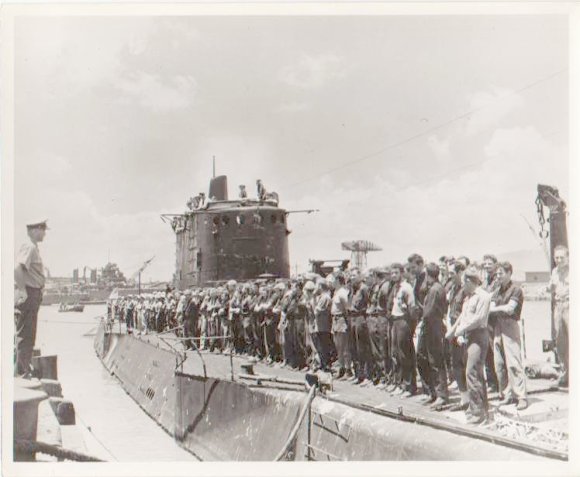
Marine Raiders embarked aboard US Navy submarine

Today marks the 69th anniversary of the disbandment of the US Marine Corps’ four Marine Raider Battalions. The Battalions were initially formed to conduct operations behind enemy lines in the Pacific Theater during World War II. The Raiders are perhaps most famous for their operation in August 1942 against Japanese forces on tiny Makin Atoll in the Gilbert Islands.

In order to gather intelligence on enemy forces in the area and to sow confusion in the Japanese command as to where the main Allied thrusts would occur, Admiral Chester Nimitz ordered the 2nd Marine Raiders Battalion, better known as Carlson’s Raiders, to assault Makin Atoll on August 17, shortly after the initial invasion of the Lower Solomons by US forces. On August 8, companies A and B of Carlson’s Raiders were embarked aboard two submarines, USS Nautilus and USS Argonaut, and stealthily made their way to Makin Atoll.

Going ashore in small combat rubber raiding craft, the two companies quickly became intermingled in heavy surf and lost the element of surprise shortly after landing. Over two days of fighting, though, the Raiders annihilated the Japanese ground force and fended off multiple air attacks – all while losing only eighteen dead and twelve missing. Additionally, their supporting submarines sank several small craft with fire from their deck guns. Carlson’s Raiders then re-embarked and made their way to Pearl Harbor to a hero’s welcome. Unfortunately, in the chaos of combat, nine Raiders were left behind and later beheaded after they surrendered on August 30th.

During their brief existence, the men of the Marine Raider Battalions earned seven Medals of Honor and several dozen Navy Crosses and one member went on to earn the Medal of Honor in the Korean War. Today, the spirit of the Marine Raiders live on through their sister WWII unit, the Amphibious Reconnaissance Battalion, which has since become Force Recon; as well as through the MARSOC units stood up as part of the US Marine Corps contribution to SOCCOM. The Marine Raiders accomplisments are also remembered through the US Navy’s amphibious assault ship USS Makin Island. The units have also found their place in popular culture with Makin Atoll missions being featured in the wildly popular Call of Duty and Medal of Honor video game franchises.

amphibious assault ship

USS Makin Island
Photo: US Navy

german battleship

Scharnhorst fires on HMS Glorious
Photo: US Navy

The Nazi battleship Scharnhorst lived a charmed life from the early days of World War II until Christmas 1943. The ship was among the most powerful of the Kriegsmarine’s most powerful surface units and, until the launch of the Bismarck and the Tirpitz, she and her sister ship Gneisenau were the pride of the Kriegsmarine. Often operating as a pair, Scharnhorst and Gneisenau wreaked havoc on the Royal Navy. In the opening days of World War II, the ships sank the armed British merchant cruiser HMS Rawalpindi and later sank the aircraft carrier HMS Glorious (see photo above) during the 1940 invasion of Norway.

The sister ships also broke out into the North Atlantic and sent several Allied merchantmen to the bottom of the sea. After the loss of the Bismarck, the decision was made to withdraw Nazi surface ships from the French coast. In early February 1942, the ships, along with the heavy cruiser Prinz Eugen, made a daring dash up the length of the English Channel. The Scharnhorst was then re-deployed to the northern waters of Norway in order to threaten Allied convoys supplying the Soviet Union.

On Christmas Day 1943, the Scharnhorst along with several destroyer escorts set sail from Norway to intercept an Allied convoy. Unbeknownst to the Kriegsmarine, the Royal Navy had intercepted and decoded the Scharnhorst’s orders and therefore laid a trap for the ship. Three Royal Navy cruisers screened the convoy from Scharnhorst while a squadron led by the battleship Duke of York raced to cut off the Nazi force from safety in Norwegian waters. After a fruitless pursuit of the convoy, the Scharnhorst cut off contact and began to return to base on December 26. In a three hour battle, the Scharnhorst was battered by the Royal Navy squadron and finally sank with only 36 survivors out of a crew of 1,968.

The wreck of the Scharnhorst was discovered in 2000 by the Norwegian Navy and further investigation revealed the extent of the damage inflicted by the Royal Navy. A total of 2,195 shells were fired at the ship along with 55 torpedoes. Eleven of the torpedoes found their mark and the torpedo and shell damage was extensive. The entire bow section of the ship was blown off the ship, most likely the result of an explosion in a forward magazine. Go here for a gallery of images from the Norwegian Navy’s investigation as well as period photos of the Scharnhorst.

US Navy Seals

Photo: US Department of Defense

While today the US Navy’s Sea, Air and Land (SEAL) units have become household names for taking down Osama Bin Laden and Somali pirates, there was a time when their exploits were much more in keeping with their reputation as Silent Professionals. In 1989, during the invasion of Panama (Operation Just Cause), a team of SEALs played a quiet, but integral role to the success of the invasion.

Although Panamanian dictator Manuel Noriega had been a US ally in the early 1980s, his relations with the US took a chilly turn in the late 1980s. Fueled by disputes over the Panama Canal Zone and the War on Drugs, tensions escalated between the US and Panama until December 20, 1989 when President George H.W. Bush ordered that Operation Just Cause be set into motion.

One of the primary objectives of the invasion was to secure Manuel Noriega and bring him back to the United States to stand trial. The SEALs were tasked with preventing Noriega’s escape by capturing, disabling or destroying his private jet and gunboat. A team of four SEALs used a combat rubber raiding craft (CRRC) to approach within swimming range of the gunboat. The team then silently approached the gunboat, but were detected and attacked with grenades. Despite this minor setback, the SEALs successfully planted their explosives and exfiltrated out of the area. The gunboat was destroyed and, even though the plan had originally been to merely sever the propellers with explosives, in the aftermath of the attack one of the gunboat’s engines couldn’t even be located because so much explosives had been used.

Meanwhile a team of three SEAL platoons moved on Noriega’s private, but unfortunately took 12 casualties including 4 KIA in a firefight surrounding the hangar. The jet was destroyed with rocket fire and the SEALs’ objective of sealing off Noriega’s escape routes was accomplished. Operation Just Cause concluded less than 2 weeks later when Noriega, who had holed up in the Vatican Embassy, surrendered to US forces.

Graf Spee sinking

Sinking of the Graf Spee

At the outset of World War II, the Nazi Kriegsmarine didn’t just deploy their merchant raiders and U-boats, but also tasked capital ships with the destruction of Allied shipping. One such ship was the Graf Spee, a pocket battleship constructed during the 1930s before Nazi Germany renounced the provisions of the Versailles Treaty. Germany’s pocket battleships were designed as a re-incarnation of the World War I battlecruiser concept – better armed than heavy cruisers and faster than battleships. The strategic concept was that each ship could operate independently against Allied merchant shipping and choose fight or flight when faced with the threat of engaging a warship.

The Graf Spee was named for Admiral Graf von Spee who had defeated a British squadron at the Battle of Coronel (November 1, 1914) only to have his squadron destroyed by a superior British force a month later at the Battle of the Falklands. Admiral von Spee was lauded by both sides of the conflict as a brilliant tactician and consummate naval officer and gentleman. After his death at the Battle of the Falklands, Admiral von Spee was quickly enshrined in the then small pantheon of Germany’s naval heroes. In addition to the Graf Spee, Germany built two other pocket battleships – the Deutschland and Admiral Scheer – both of which ended the war as floating artillery batteries and were destroyed in the waning weeks of the war.

Commanded by Captain Hans Langsdorff, the Graf Spee found herself in the South Atlantic at the outbreak of the war. Captain Langsdorff and his crew quickly got to work dispatching Allied shipping and sank 50,000 tons of British shipping before being engaged on December 13, 1939 by a trio of British cruisers – Achilles, Ajax, and Exeter. In the subsequent battle, dubbed the Battle of the River Plate, the Graf Spee seriously damaged the Exeter but was herself damaged and Captain Langsdorff sought shelter to perform repairs in Montevideo, Uruguay. Fearing a superior British force had gathered outside Montevideo, Captain Langsdorff and a skeleton crew sailed the Graf Spee into the river estuary on December 18 and scuttled the ship to prevent her from falling into Allied hands. Captain Langsdorff then committed suicide and the crew were interned in Uruguary.

The destruction of the Graf Spee and her limited contributions to the war effort enraged Adolf Hitler who instructed the commander of the Kriegsmarine, Admiral Raeder, to issue an order stating, “The German warship and her crew are to fight with all their strength to the last shell; until they win or go down with their flag flying.” For the Allies, the victory provided a healthy morale boost after the loss of Poland earlier in the year.