Archives For November 30, 1999

landing ship tank

Photo: US Navy

World War 2 saw the perfection of modern amphibious operations with successful landings in North Africa, Italy, Normandy and throughout the Pacific contributing to the demise of the Axis Powers. Among the innovations which made these operations successful was the Landing Ship, Tank (LST). LSTs were designed with massive bow doors and a bow ramp that enabled Allied forces to deliver tanks, half-tracks, deuce and a halfs and other vehicles directly to the beachhead. After disgorging their cargo, the LST’s crew could use a winch system to extricate the ship from the beachhead and return to port for another load. Of the 1,051 LSTs produced for Allied naval forces, most were scrapped or converted to use as merchant vessels after the war while a few saw service through the Vietnam War. One even served as a produce carrier for Los Angeles Mafioso Jack Dragna, hauling bananas between Latin America and California.

LST 393, one of only 2 surviving LSTs, now serves as a museum ship in Muskegon, Michigan. The ship delivered 9,000+ troops and 3,248 vehicles to the beaches of Salerno, Sicily, and Normandy. Following her wartime service, LST 393 was renamed M/V Highway 16 and plied the Great Lakes as an automobile carrier for decades. In 2000, a group began restoring the ship as a memorial to the officers and crew who served aboard these important vessels. The ship is open for tours and can be rented for special occasions. More information can be found at the ship’s website: http://www.lst393.org/

polish palace

Kazimierz Palace
Photo: Wikimedia Commons

Polish archaeologists and police are exploiting historically low water levels on the Vistula River to recover dozens of marble and alabaster decorative elements looted from Polish landmarks in the 17th century. Utilizing a Mil Mi-8 police helicopter, archaeologists are carefully lifting the sculptures from the riverbed and transporting them to drier locales for conservation and restoration. The decorative elements were looted from Poland’s Royal Castle and the Kazimierz Palace by Swedish forces after they captured Warsaw during the mid-17th century. The loot was loaded onto barges and prepared for transit to Sweden via the Vistula and then the Baltic. At least one barge, though, sank en route and scattered its precious cargo along the riverbed. Polish archaeologists have known about the treasures, but river conditions have rarely cooperated such that they could retrieve the pieces. Efforts over the last 3 years have yielded some results, but nothing like the finds archaeologists are making now.

Today, Sweden is most often associated with IKEA furniture, safe cars (cb radio optional), cars born from jets and ABBA, but the Swedish Empire once encompassed 1.1 million square kilometers and dominated its northern European rivals. By comparison, the Holy Roman Empire was 1 million sq. km. and modern Sweden is 450,000 sq. km. The Empire was founded in 1611 by Gustavus Adolphus, a brilliant military commander, who defeated his rivals in the Thirty Years War and began the expansion of Sweden’s borders. Between 1600 and 1721, the Poles and the Swedes clashed no fewer than 6 times in conflicts lasting up to 11 years. It was during one of these wars that the decorative structures being recovered today were looted from Poland’s Royal Castle and the Kazimierz Palace. In addition to waging war against the Poles, the Swedes also attacked and occupied territory in modern day Denmark, Estonia, Finland, Germany, Latvia, Lithuania, Norway, and Russia. The Great Northern War which concluded in 1721 marked the end of Sweden’s status as a great power and the empire’s territorial breadth began to slowly recede.

civil war navy

Pulitzer Prize winning author James M. McPherson’s latest book, War on the Waters, is a concise naval history of the American Civil War. Most authors and historians focus on the great generals (Lee, Jackson, Grant, Sherman, etc.) or the great battles (Antietam, Chancellorsville, Gettysburg, Shiloh etc.) and often ignore the vital role the navies played in the conflict both on the rivers of the western Confederacy and the high seas. Entire books have been written on various aspects of the naval war – riverine warfare in the west, blockade running, Confederate merchant raiders, foreign intrigue in Europe and the innovations that made their debut in the conflict. McPherson neatly summarizes each of these topics and arranges them in easily digestible chapters that proceed in chronological order.

McPherson’s organization and writing style allow both the uninitiated reader and the Civil War buff to understand the ebb and flow of the conflict and the various personalities, events and inventions that influenced the war. Perhaps most importantly, McPherson accompanies his chapters with strategic or tactical level maps that enable the reader to understand the events which occur in the chapter. McPherson understands the unwritten rule that the inclusion of a relevant map is worth multiple pages of text in helping a reader establish an awareness of the events being described. Along with the maps, various etchings and photos accompany each chapter and neither maps nor illustrations are confined to a few pages in the center or the beginning of the book. This allows the reader to visually grasp the crux of each chapter and makes both the maps and the illustrations more relevant to the narrative being told.

Overall, War on the Waters is a fantastic single volume history of the Civil War’s naval history. McPherson hits all of the highlights of the Civil War – CSS Virginia vs. USS Monitor, blockade running, William B. Cushing’s daring raid on the CSS Albemarle, and the first successful attack by a submarine – in only 225 pages. War on the Waters is a welcome addition to the naval literature of the Civil War and will be enjoyed by anyone interested in American history, naval history or the Civil War.

chinese porcelain

Blue & White Yuan Dynasty Porcelain
Photo: history.cultural-china.com

Earlier this year Vietnamese fishermen in the province of Quang Ngai came across a shipwreck full of Chinese porcelain. The fishermen recovered several artifacts and later tried to illegally sell them, but the items were intercepted by Vietnamese authorities. After examination by archaeologists and porcelain experts, the porcelain bowls and incense burners have been determined to be from the 14th century Yuan Dynasty. The porcelain is among the oldest artifacts found in Vietnam and the find is believed to be relatively well preserved beneath sand and silt. Recovery operations have not been announced, but the wreck would undoubtedly yield increased knowledge about trading patterns from the period along with priceless porcelain.

Porcelain has long been an important export for the Chinese economy. The Pacific Ocean, South China Sea and even the Atlantic Ocean are littered with porcelain carrying shipwrecks from every Chinese dynasty. During the American Colonial Period, Chinese porcelain from Jingdezhen in Jiangxi province was considered one of the highest forms of conspicuous consumption. New England merchants made fortunes importing porcelain from China and one item in especial demand was porcelain decorated with the owner’s coat of arms – “armorial porcelain.” Even President George Washington owned a dinner service set of the trendy armorial porcelain. Pieces of Washington’s porcelain are now housed at Washington & Lee’s Reeves Center – one of the largest collections of Chinese export porcelain in the world.

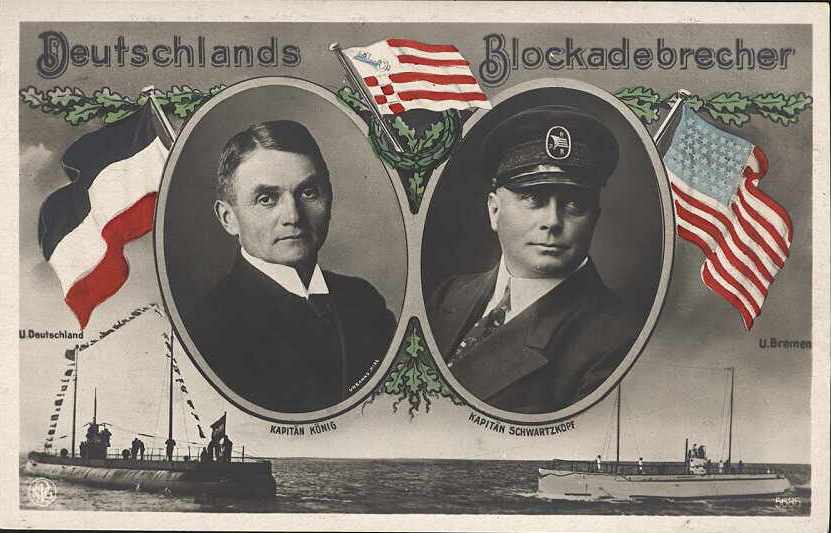
Merchant submarine

German Merchant Submarines Deutschland & Bremen
Photo: Kevin Heath

During World War I, the Royal Navy blockaded Germany’s North Sea ports and cut off all imports into the country. Desperate for imports of rubber, tin, nickel and other resources unavailable within their borders, the German merchant marine took a page from Jules Verne’s 20,000 Leagues Under the Sea and developed blockade running merchant submarines. The subs were built for the North German Lloyd Line and were designed to maximize cargo carrying capacity – unusual for vessels normally viewed as tools of war and not of trade.

The first sub, Deutschland, made her maiden voyage in June of 1916 and arrived in Baltimore, Maryland a month later carrying dyes, gemstones and pharmaceuticals. Deutschland had successfully threaded the needle of the Royal Navy blockade without even being detected. Returning with a load of valuable nickel, tin and rubber, the Deutschland’s maiden voyage not only paid for itself, but it netted a massive profit for her North German Lloyd Line owners.

The Deutschland made one more voyage to the United States before deteriorating relations between the US and Germany precluded further trade. Deutschland was later converted to u-boat use by the Imperial German Navy, sank 42 vessels and was turned over to the Royal Navy after the Armistice. The Deutschland’s sister ship, Bremen, sailed for the US in September of 1916, however, she never arrived and was presumed lost at sea. One of Bremen’s oil stained life preservers was discovered near Cape Elizabeth, Maine indicating the ship may have made its way as far the American coast. The ship’s disappearance, though, remains a mystery. Various reports indicate she might have been depth charged or mined by Royal Navy vessels, but perhaps Bremen felt drawn to her Jules Verne origins and fell prey, like Captain Nemo and the Nautilus, to the Moskstraumen.

russian nuclear powered icebreaker

Icebreaker off Antarctica
CC Image Courtesy of Matt Geske on Flickr

Russia recently commissioned the building of the world’s largest nuclear powered icebreaker in an effort to increase traffic in the Northern Sea Route and better compete for resources in the Arctic. Global warming (anthropogenic or not) has made use of the Northern Sea Route a viable possibility in the past few years and the Barents Observer is reporting that a record amount of cargo may transit the route this year. The current record is 820,789 tons of cargo and 749,706 tons have already made their way through the shipping lane in 2012. Russia hopes to increase trade at its northern ports as the Northern Sea Route stays open longer and longer each season and through the artificial extension of the shipping season via use of its yet to be named icebreaker.

The new icebreaker will be 558 feet long and 102 feet wide, making the vessel 46 feet longer and 12 feet wider than any other icebreaker in Russia’s fleet. The ship’s enormous size will enable it to break up thicker sheets of ice than other ships. In addition to being vastly larger than anything currently in the Russian icebreaking fleet, the ship will have on-board ballast tanks allowing it to raise and lower its draft from 28 to 35 feet. Thus the ship will be able to sail up previously inaccessible Siberian rivers. Powering the icebreaker will be dual nuclear reactors producing 60 megawatts of power which make it capable of towing ships displacing up to 70,000 tons through Arctic waters. While the selection of nuclear reactors as a power source for civilian ships may seem strange, Russia’s first nuclear powered icebreaker, Lenin, first sailed in 1959 and the country currently operates around a dozen nuclear powered icebreakers. As a sidenote, the US experimented with nuclear powered civilian vessels beginning with the launch of the NS Savannah in 1959, but ceased operating her in 1972 due to cost inefficiencies.

While the icebreaker is chiefly intended for improving the commercial flow of goods in the Arctic, the ship’s strategic value can not be ignored. Russia, Norway, Denmark, Canada and the US have all laid claim to parts of the region in order to secure access to the oil and gas believed to be located beneath the seabed. Just as China views its deep water oil rigs as “strategic weapons,” Russia’s possession of the most capable icebreaker in the world will have serious implications in who exercises control of the region.

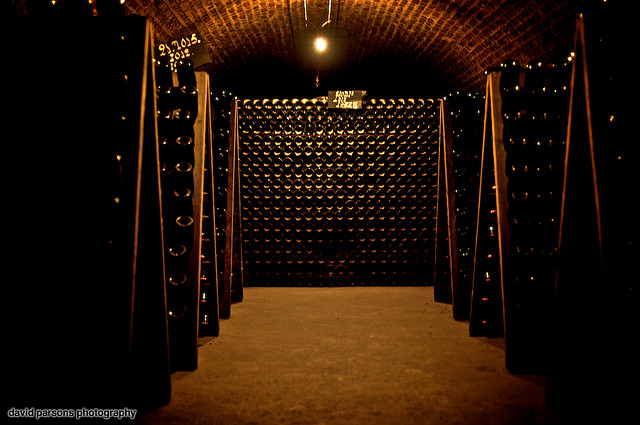
Finland Shipwreck Champagne

CC Image courtesy of David Parsons on Flickr

According to the German publication Deutsche Welle, another 8 bottles from a 168 bottle collection of champagne are set to go under the auctioneers hammer. The champagne was discovered two years ago by diver and (ironically enough) brewery owner Christian Ekström. Ekström was exploring a wrecked schooner off the coast of the Åland Islands when he came upon the bottles at the site. Researchers believe the schooner sank in the 1840s making Ekström’s find the oldest champagne ever found. Now, two years after the discovery, 10 of the bottles have been sold at auction with one, a Veuve Clicquot, selling for a record breaking $26,700. Authorities on the Åland Islands plan to hold auctions of the champagne over the next few years as a method of bringing tourists to the area.

Ekström’s find isn’t the first fermented treasure trove found in the Baltic as there have been both beer and other champagne caches discovered in recent years. The discovery and re-creation of Antarctic explorer Sir Ernest Shackleton’s whiskey, though, is still perhap the most noteworthy alcoholic find of the past few years.

Merchant Navy Flag

UK Merchant Navy Ensign
CC Image courtesy of L2F1 on Flickr

Today the United Kingdom, along with Australia, Canada and New Zealand, remembers the sacrifices of their merchant marine from World War One to the present day. The Merchant Navy has served in WWI, WWI, Korea, the Suez Crisis, the Falklands War, and Gulf Wars I & II. More than 14,500 seamen lost their lives in World War I and another 30,000 perished during World War II. September 3rd was chosen as the date to honor the Merchant Navy because September 3, 1939 marked the first loss of British shipping in World War 2 – the SS Athenia. Two shipwrecks, SS Storaa and M/V Atlantic Conveyor, have subsequently been designated protected places under the UK Protection of Military Remains Act. Storaa was lost in World War One to a German u-boat while Atlantic Conveyor is the most recent Merchant Navy loss, having been sunk while supporting British efforts to free the Falkland Islands from their Argentinian invaders.

HMS Ajax

HMS Ajax
CC Image courtesy of Charles McCain on Flickr

Only two days after the Nazi invasion of Poland on September 1, Great Britain declared war on Germany and dispatched the Royal Navy to clear the seas of Germany’s merchant fleet and warships. Within hours of the commencement of hostilities, the light cruiser HMS Ajax encountered the German merchantman Olinda off the coast of Uruguay and promptly destroyed the ship with gunfire. Shortly thereafter, Ajax found and sank another Nazi freighter, the Carl Fritzen. Ajax continued to serve on the South American Station until February 1940 when it returned to the UK for a refit. While on station, Ajax along with HMS Exeter and HMS Achilles accounted for the destruction of several more German merchant ships. Additionally, Ajax, Exeter and Achilles engaged the German pocket battleship Graf Spee which was scuttled by her crew after the Battle of the River Plate. Thus began a nearly six year struggle between the Royal Navy and the Kriegsmarine, Regia Marina, the Imperial Japanese Navy and even the Vichy French Navy.

Robert Ballard Cyprus

CC Image courtesy of Erik Charlton on Flickr

Legendary underwater explorer Robert Ballard has added two more shipwrecks to his already incredible list of discoveries (RMS TitanicBismarck, USS Yorktown and John F. Kennedy’s PT 109). Ballard and his team spent two weeks off the Cypriot coast exploring the Erastosthenes Seamount, a 120km by 80km undersea mountain that was previously above water. The expedition’s chief goal was to survey the seamount’s geology through the use of submersibles and high definition cameras. Ballard plans to return in several weeks after the Nautilus is equipped with a new sonar system that will allow him and his team to map the seamount. Previously the seamount was believed to contain only limestone, but the expedition located a formation of volcanic rock that doesn’t fit the area’s geologic profile. Additionally, the team found a curious methane source on the formation which requires further investigation.

It was in the process of completing their geologic mapping that the team discovered the two wrecks. One ship is believed to have sunk 2,300 to 2,500 years ago and carried cargoes between Greece and Cyprus. Among the artifacts photographed at the scene are a variety of ceramics, two anchors, a possible bun ingot and several other unidentified objects. The second ship appears to be an Ottoman war galley and an 18th century flintlock pistol and black rum bottles were located amongst the wreckage. One question left unanswered by the expedition is the speculation that Ballard’s team was searching for a WWII-era wreck containing a gold cargo. There exists little grounds for such speculation, though, as Ballard is known for not seeking to directly profit from his underseas exploration.

Prior to this month’s expedition, Ballard helped Turkey locate the two Turkish pilots lost when their F-4 crashed under mysterious circumstances near the Syrian border.