Archives For November 30, 1999

Last night marked the 38th anniversary of the tragic sinking of the SS Edmund Fitzgerald, a record breaking bulk carrier that operated on the Great Lakes from 1958 until 1975. Launched on June 7, 1958, the Edmund Fitzgerald was, for a time, the longest ship on the Great Lakes. Owned by Northwestern Mutual Life Insurance, but operated by Ogleby Norton Corporation, the Edmund Fitzgerald hauled ore from Minnesota’s iron mines to iron works in Michigan and Ohio. During her 17 years of service, the ship set multiple haulage records and became a local legend in her own time.

On the of afternoon of November 9, 1975, the Edmund Fitzgerald departed Superior, Wisconsin bound for Zug Island, Michigan with a cargo of 26,000 tons of ore pellets. As the ship made its way along the Canadian coast, it ran into a storm at 1am on November 10th. The Fitzgerald reported winds of 52 knots and 10 foot waves, but soldiered on through the night. As November 10th wore on, the storm increased in intensity with rogue waves as tall as 35 feet assaulting the ship with massive walls of water. Suddenly, shortly after her last radio communication at 7:10pm, the Fitzgerald plummeted to the lake floor and disappeared from the radar screen of a nearby ship. Despite a search by both nearby commercial vessels and the US Coast Guard, not a single member of the Fitzgerald’s 29 crew was found.

A subsequent search by the US Navy and the US Coast Guard discovered the wreck of the Fitzgerald in 530 feet of water. The ship had been rent in two and the bow and stern sections approximately 150 feet apart from one another. Several expeditions to the wreck site have occurred over the years, including one by two intrepid deep sea scuba divers. The expeditions have recovered the ship’s bell and helped clarify some of the facts surrounding the cause of the ship’s sinking which has never been fully explained.

Emir Farouk

Egyptian Warship King Farouk

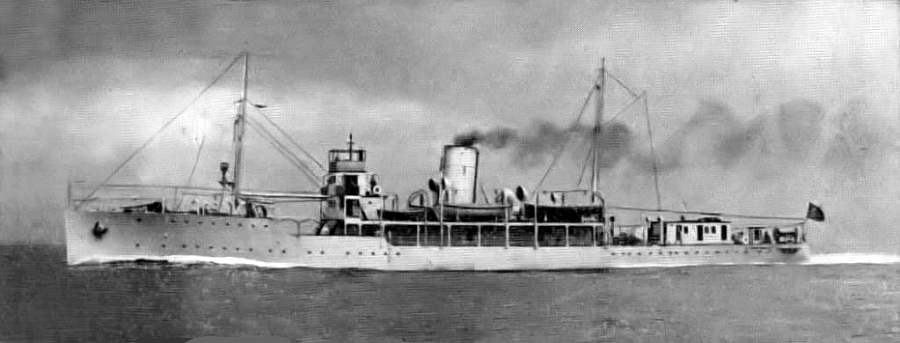
Israel’s elite Mossad and commando forces are well known for their daring operations such as the Raid on Entebbe and the snatching of Adolf Eichmann from Argentina. Less well known, though, are the naval commandos of Shayetet 13 who scored their first major victory on October 22, 1948. As a cease-fire loomed between Israel and Egypt, the Israeli Navy identified an opportunity to destroy the flagship of the Egyptian Navy – the King Farouk. Built on the River Clyde in Great Britain the King Farouk had spent ten years as a passenger ship before being converted into a warship in 1936 for the Egyptian Navy.
Lacking the resources and time to build a traditional blue-water navy, the Israelis decided to create a small group of special forces capable of pinpoint attacks. This force, which later became Shayetet 13, procured explosive motorboats from the Italian Navy. The boats had been developed for Italy’s highly successful frogmen during World War Two and were an off-the-shelf solution to creating an Israeli navy from thin air. Designed to explode upon impact, the boats would be vectored to their target by commandos who would abandon ship just prior to detonation. After only a few months of training, the commandos were thrust onto center stage as the King Farouk and an Egyptian minesweeper sailed into waters where the ships were particularly vulnerable to attack.

After heated internal debate about whether or not to attack with the ceasefire agreement looming, the Israeli mother ship was ordered to a point where it could release the small craft. After a short sprint down the Gaza coastline, the Israeli assault boats began their attack on the King Farouk and the accompanying minesweeper. Both ships were successfully struck and within five minutes the King Farouk was lying on the bottom of the Mediterranean. Although not widely publicized at the time, the sinking of the King Farouk and crippling of her accompanying minesweeper put the Arab world on notice that the Israeli Navy was a force to be reckoned with.

Brummer & Bremse

October 17, 2013 — Leave a comment

german cruiser

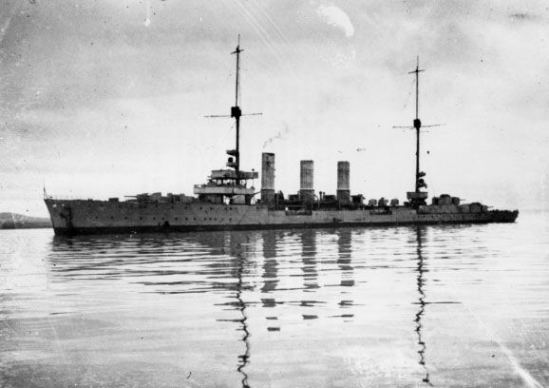
During World War One, Germany’s Kaiserliche Marine often sallied forth with light units and sometimes even battle cruisers to harass English fishing and merchant vessels and to bombard English coastal towns. One of these minor raids occurred early in the morning on October 17, 1916 when the German cruisers SMS Brummer and SMS Bremse chanced upon a convoy of twelve merchantmen escorted by 2 armed trawlers and 2 destroyers – the HMS Strongbow and Mary Rose. The Brummer and Bremse had been designed as minelaying light cruisers and were among the most modern ships in the German cruiser fleet at the time of the action.

Mistaking the German ships for British cruisers, the Strongbow and Mary Rose failed to engage the Brummer and Bremse until they were fired upon at the relatively close range of 2,700m. By comparison, the opening salvos of the Battle of Jutland earlier in the year had occurred at 14,000m. The two British destroyers were quickly sunk (the Mary Rose joining her earlier namesake in Davy Jones’ Locker) and the German cruisers proceeded to attack the now vulnerable merchantmen. The Brummer and Bremse sank 9 of the vessels before breaking off the engagement to avoid any Royal Navy response. The cruisers successfully returned to port and survived the war only to be scuttled in Scapa Flow in 1919.

Scapa Flow

SMS Brummer on the Scapa Flow seafloor
Sonar Image Courtesy of UK Department for Transport

royal navy

Scapa Flow Anchorage
CC Image Courtesy of John Haslam on Flickr

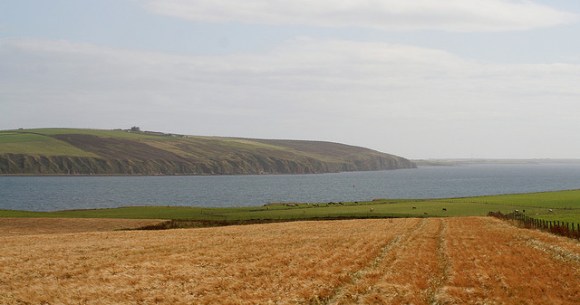
On the night of October 13, 1939, Kriegsmarine Kapitanleutnant Gunther Prien and the crew of U-47 launched one of the most daring submarine raids of World War II. With hostilities barely a month old, the Kriegsmarine dispatched Prien to the Royal Navy’s vaunted Scapa Flow anchorage with orders to penetrate the harbor and sink one of the Royal Navy’s capital ships. Scapa Flow, situated in the Orkney Islands north of Scotland, provided the Royal Navy with a vast secure anchorage in which it could maintain its Home Fleet. Basing the Home Fleet in Scapa Flow allowed the Royal Navy to more effectively deny the Kriegsmarine access to the Atlantic via the North Sea. A succesful strike within the protected confines of Scapa Flow would not only cause serious consternation in the British Admiralty, but it would also serve as a propaganda coup for the Kriegsmarine as Scapa Flow was the site of the internment and scuttling of the German Imperial High Seas Fleet following World War I.

Prien and his crew deftly negotiated the outlying islands, blockships and harbor defenses and shortly after midnight on the morning of October 14, arrived within the anchorage. By an act of Divine Providence, the Royal Navy had recently removed its most important capital ships from the anchorage and Prien was forced to settle upon a World War I vintage Revenge class battleship, the HMS Royal Oak, as his target. Two years later, a similar act of Divine Providence would occur when the US Navy’s aircraft carriers were notably absent from Pearl Harbor on December 7th. Prien lined up his boat and launched a salvo of four torpedoes, only one of which found its mark. After two more attempts, Prien’s torpedoes finally struck home and the Royal Oak swiftly capsized and disappeared beneath the cold waters of Scapa Flow.

A combination of Prien’s skill and confusion within the anchorage allowed the U-47 to successfully escape. Upon their arrival back in Germany, Prien and his crew were feted and presented with Iron Crosses for their incredible feat. Britain, meanwhile, mourned the loss of 833 of Royal Oak’s crew, many of whom were mere boys in training. Although the strike was successful, it failed to accomplish anything strategically significant. The Royal Oak, while an important capital ship, was already obsolete and not essential to Britain’s continued naval dominance. Nor did the strike enable the Kriegsmarine to have a clearer route to the North Atlantic. The Royal Oak was never salvaged and today still lies at the bottom of Scapa Flow.

british battleship

3-D Sonar Imagery of Wreck of HMS Royal Oak
Photo: Divernet

presidential yacht

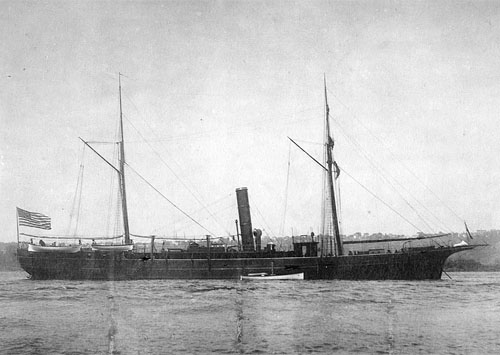
For approximately 100 years, from the 1870s to the 1970s, US Presidents often feted various dignitaries or conducted diplomacy from the cabins of government owned yachts. The first of these, USS Despatch, was launched in November 1873 as a wooden hulled steamship. Acquired in 1880, the 174 foot ship first hosted President Rutherford B. Hayes on a cruise of the Potomac on November 9, 1880. The vessel went on to serve dutifully as a refuge and office for Presidents Garfield, Arthur, Cleveland and Harrison.

On the night of October 10, 1891, the Despatch was en route from New York City to Washington to pick up President Harrison and Secretary of the Navy Benjamin Tracy for an inspection of the naval proving grounds on the Potomac. Unfortunately for the American taxpayer, the vessel ran aground in the shoals off Assateague, Virginia. The ship’s lieutenant confessed to having mistaken the Assateague lighthouse’s orange light for the red light of the Winter Quarter Shoals lightship – a 1.5 mile difference that cost the vessel her life.

The entirety of the crew were able to safely make it ashore, however, the Despatch was a complete wreck and was lost to the shifting sands off Assateague. In 1997, explorer Ben Benson mistakenly believed he had discovered the Despatch in 22 feet of water, however, he was incorrect and the vessel remains undiscovered.

Baychimo Ghost Ship

SS Baychimo
Photo: Wikimedia

This year the MV Lyubov Orlova became a news sensation as reports of its ghost ship status and subsequent sightings flitted about the internet. As strange as the Orlova’s story is, though, it can never rival its sister ghost ship, the SS Baychimo. The Baychimo began life as the SS Ångermanelfven in Sweden in 1911 and quietly plied the Sweden-Germany trade route until she was handed over to the British government as part of Germany’s war reparations after World War One. Acquired by the Hudson’s Bay Company, the ship was renamed Baychimo and dispatched to the New World to carry goods, especially furs throughout Canada’s upper reaches.

The saga of the Baychimo took a strange turn when, on October 1, 1931, she became trapped in pack ice and was abandoned by her crew. The next few months witnessed several on-again, off-again attempts to winter with the Baychimo in order to bring her safely to port. At one point, the Baychimo broke free of the ice and, unbeknownst to her crew, floated away. After successfully locating the vessel, the crew offloaded the ship’s cargo and abandoned her to the vagaries of the Arctic.

Over the next 8 years, the vessel was sighted several times and even boarded on occasion. Although the vessel was last physically boarded in 1939, Inuits reported sighting the Baychimo as late as 1969. This last sighting has often been called into question, but what is without question is that the ship continued her ghostly haunting of the Arctic Sea for years after her abandonment. The Baychimo’s final resting place, if she has indeed sunk, has yet to be determined. Who knows, perhaps she is still wandering the vast expanse of the Arctic in search of her next cargo.

Battle of Cape Espartel

September 29, 2013 — Leave a comment
gibraltar

CC Image Courtesy of NASA’s Marshall Space Center on Flickr

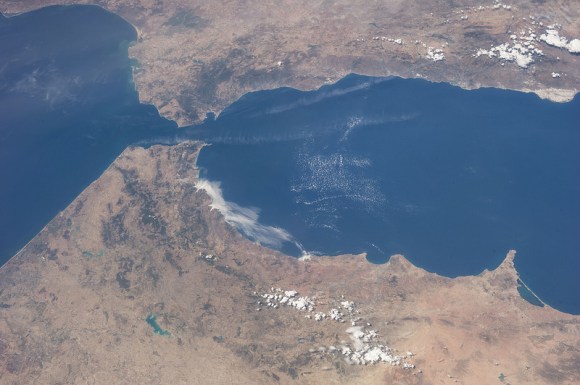
The outbreak of the Spanish Civil War in 1936 found many of the troops loyal to the Nationalists not in Spain proper, but across the Strait of Gibraltar in Spanish held Morocco. Hoping to bottle up these forces and pave the way for an easy Republican victory, Republican naval forces established a blockade off the Moroccan coast. Realizing the importance of breaking this blockade, the Nationalists dispatched two cruisers, the Almirante Cervera and Canarias to sink or drive off the Republican forces.

On September 29, 1936, the Nationalist cruisers encountered two Republican destroyers, Almirante Ferrandiz and Gravina in the western end of the Strait. Over the course of a running gun battle, the Canarias sank the Almirante Ferrandiz and the Gravina was forced to retreat after being damaged. The quick and sharp action opened the straits for Nationalist forces to make their way across the Strait and reinforce the ailing Nationalist forces.

Both the Canarias and the Almirante Cervera would go on to fight for the Nationalist forces in the Spanish Civil War including the Battle of Cape Palos. The Almirante Cervera would eventually be scrapped in 1966 while the Canarias followed her to the breakers in 1977.

French battleship

Early on the morning of September 25, 1911, the citizens of Toulon were awakened to a series of violent explosions that rocked the city’s naval base. Four small explosions followed by a massive fifth one aboard the French battleship Liberte rent the ship asunder. Wreckage from the ship was hurled as far as a mile away and several small craft in the harbor were damaged or sunk.

French battleship

In total 250 men lost their lives in the disaster including the commander of a vessel anchored a mile away. Subsequent investigation (this was only the latest in a series of disastrous explosions over the last four years) found that the fire was caused by defective “B” powder. The same powder caused explosions aboard the battleship Patrie that thankfully were not fatal to the vessel.  In addition to destroying the Liberte, the explosion put three other battleships out of commission for an extended period: the Verite, Republique and Democratie. The wreck of the Patrie remained in Toulon harbor until the mid-1920s when it was broken up for scrap.

French shipwreck

U-Boat

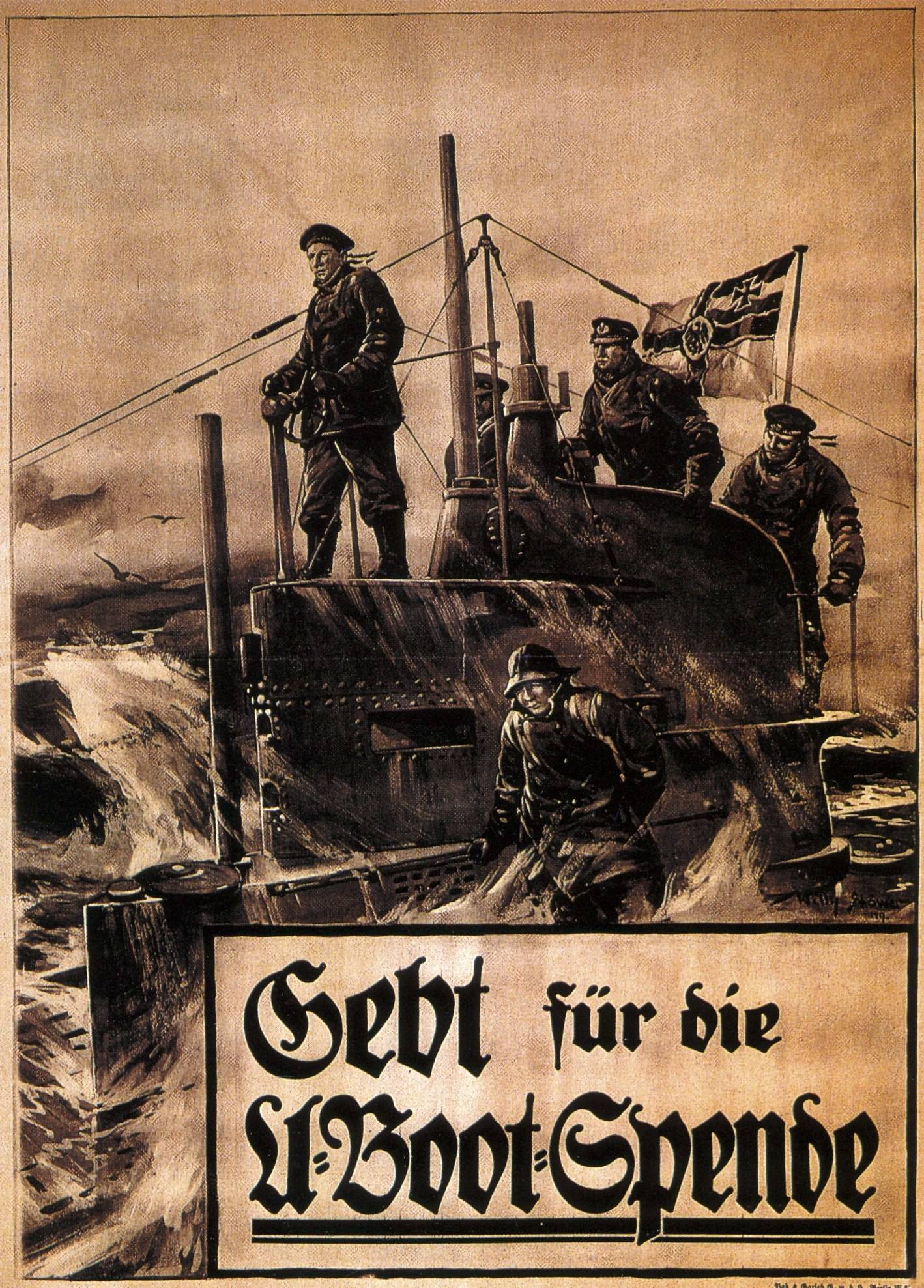
September 2, 1917 brought happy hunting to Commander Georg Schmidt and his crew aboard the U-28 as they came upon a convoy of helpless Allied merchantmen. Commander Schmidt navigated the U-28 among the Allied vessels and opened fire on the British steamer SS Olive Branch. All but one of the crew aboard the Olive Branch were able take to lifeboats and they immediately put as much distance as possible between themselves and their former ship. The crew knew something the doomed U-28 didn’t – that the Olive Branch was loaded to the gunwales with a load of highly volatile ammunition.

As more of the U-28’s shells found their mark, one struck the Olive Branch’s less than peaceful cargo and a spectacular explosion destroyed the Olive Branch and heavily damaged the U-28. Instead of extending an olive branch to the now shipwrecked German crew of the U-28, the convoy sailed on and all 39 hands aboard the U-28 were lost to the clutches of the Arctic Ocean.

Danish Defiance

August 29, 2013 — Leave a comment
Danish Navy

Peder Skram Scuttled in the Royal Dockyard
Photo: Royal Danish Naval Museum

Following the Nazi invasion in April 1940, Denmark entered an uneasy period of occupation by their Nazi overlords. Because of their ethnic heritage as a Nordic/Scandinavian people, the Danes were generally treated better than other occupied peoples, however, King Christian X famously rode his horse through Copenhagen on a daily basis as a symbol of silent resistance. Among the institutions left to function with only a modicum of Nazi intervention was the Danish Navy which performed minor minesweeping duties off the nation’s islands to prevent the sinking of coastal ferries.

As the war progressed and it became clearer that the Nazis would soon confiscate their warships, the naval high command devised a plan to deprive the Nazis of the entire Danish Navy. The Danish Navy had once been among the most powerful in the world and it wasn’t until Admiral Nelson’s successful attacks on Copenhagen that it was reduced to a minor fleet. By August 1943 it consisted of two coastal defense ships, ten torpedo boats, seven minelayers, a dozen submarines, five ocean patrol vessels, seventeen minesweepers and a handful of auxiliary vessels. The Nazis decided to take over the Danish Army and Navy on August 29, 1943, however, the officers of the Danish Navy were determined not to let even their meager force fall into enemy hands. As the Nazi forces approached the Royal Dockyard in Copenhagen early on the morning of the 29th, a pre-arranged signal was hoisted which instructed each of the vessel’s commanders to scuttle their ships.

Within 30 minutes, 32 of the Danish Navy’s vessels lay at the bottom of Copenhagen harbor and another four were on their way to internment in neutral Sweden. Out of 52 vessels, the Nazis were only able to seize 14 untouched. Nine Danish sailors perished in the scuttling, another ten were wounded and a significant portion of the Danish Navy’s personnel were interned by the Nazis. While it may not have deprived the Kriegsmarine of any significant warships, the defiance exhibited by the Danish Navy strengthened the morale of the Danish Resistance and told the world that the Danes would not go quietly into the night.

fish wrap