Oliver Hazard Perry

CC Image courtesy of Archives de la Ville de Montreal on Flickr

Today marks the 199th anniversary of the Battle of Lake Erie fought between American and British forces for control of the Great Lakes region on September 10, 1813. After British forces captured Detroit, MI, American military planners decided to build a small fleet near Presque Isle to wrest back control of Lake Erie and allow the recapture of Detroit. A force of 9 ships were quickly hewn from local forests and Master Commandant Oliver Hazard Perry sent to take command of the force.

On the morning of September 10, 1813, 6 ships under the command of Royal Navy Commander Robert Heriot Barclay moved to sweep the American force from the lake. While outnumbered 6 to 9, the Royal Navy squadron possessed more cannons (63) than the Americans (54) and the British cannons had a longer range than the Americans which had primarily equipped their ship with close-range carronades.

In a tribute to Captain James Lawrence who had lost his life aboard the USS Chesapeake earlier that year, Perry’s battle flag stated “Don’t Give Up the Ship.” At the outset of the battle, Barclay’s squadron had the advantage over the American vessels as possession of the weather gauge allowed his ships to outmaneuver the Americans and use their longer range fire power to pound the Americans. The British used their advantage to batter Perry’s flagship USS Lawrence into a hulking wreck, but undeterred, Perry transferred his flag from the Lawrence to the USS Niagara where he continued the action. Perry’s fleet had not let the British escape unscathed, though, as Commander Barclay and several of his officers had been wounded, putting command of the ships in the hands of less experienced officers. The British attempted to wear-to in order to bring their opposite broadsides to bear on Perry’s bruised fleet, but miscommunication and poor seamanship caused two of the British vessels to collide. Perry then split the British column, a maneuver even more deadly than “crossing the T,” allowing his ships to pour fire from both broadsides into the British squadron. This effective maneuver by Perry and his squadron devastated the British ships and one by one the squadron surrendered, giving Perry and his squadron the greatest American naval victory of the War of 1812.

Perry’s victory at the Battle of Lake Erie opened the door for an American invasion of Canada and the recapture of Detroit. It also was the first time an entire British squadron had surrendered in battle. Oliver Hazard Perry became an overnight American hero and his notification of victory, “We have met the enemy and they are ours,” has been forever written in American naval history. More than half a dozen ships, including a class of modern-day frigates, have been named in his honor and the latest ship to bear his name is currently under construction in Perry’s home state of Rhode Island.

Viking Longboat

The Viking by C. Graham. 1893.

In 1892, Norwegian Magnus Andersen embarked on an ambitious project – building a full-size replica of the Gokstad Viking ship that had been discovered 12 years earlier in a burial mound near Gokstad, Norway. As if replicating a nearly 80 foot wooden ship wasn’t enough, Andersen then sailed the ship from Norway to New York City up the Hudson River to the Erie Canal through the Great Lakes and finally to Chicago for the World’s Columbian Exposition. Andersen’s exploits made waves both literally and figuratively at the Exposition and later as he sailed to New Orleans and back to Chicago.

The ship is now housed in Geneva, IL just outside Chicago and is considered one of Illinois’ most endangered historical landmarks. Friends of the Viking Ship have stepped up to preserve the ship and are currently resolving legal ownership issues so they can raise money to permanently house the ship in a climate controlled facility. The ship is open to the public from 1 – 4pm this Saturday (September 15, 2012) as well as October 20, 2012. For more information, see the Friends of the Viking Ship website.

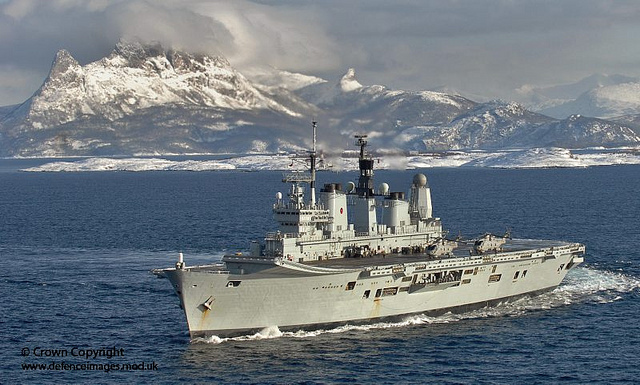
British aircraft carrier

HMS Ark Royal off Norway in 2008
Photo: MOD

The Telegraph is reporting that the HMS Ark Royal, the Royal Navy’s only remaining aircraft carrier, is finally being sold for scrap. The ship was originally to remain in service until 2016 or 2017 when it would have been replaced by HMS Queen Elizabeth, the first of the Queen Elizabeth class aircraft carriers. Budgetary issues, though, caused the Ministry of Defence to rethink their time table and remove the ship from service early. The Ark Royal was decommissioned in March of 2011 and an internal debate within the UK government about its final disposal has caused delays in the decision. Among the various scenarios considered for the Ark Royal’s ultimate fate were it being sunk as a wreck site for divers, converted to use as a London heliport, converted into a Hong Kong casino, refitted for hotel use (much like the former Soviet carrier Kiev) or sold for scrap. Ultimately the Ministry of Defence chose to scrap the vessel for £3 million.

The Ark Royal was laid down in 1978 and commissioned in 1985. She was the third and final ship of the Invincible class carriers and was designed to operate short take-off and vertical landing (STOVL) aircraft and helicopters from her flight deck. Her sister ship HMS Invincible saw service in the Falklands War and was sold for scrap earlier last year. Her other sister ship HMS Illustrious served in the Balkans conflict of the 1990s and has since joined HMS Ocean as a helicopter carrier. Ark Royal was the fifth Royal Navy ship to carry the name with previous ships having fought against the Spanish Armada, the German High Seas Fleet, the Nazi Kriegsmarine (lost to a u-boat in 1941) and in post-World War 2 service. The current Ark Royal provided air cover for operations in the Balkans in 1993 – 1994 and in the invasion of Iraq in 2003.

Following the retirement of the the Ark Royal in March 2011, the UK Ministry of Defence sold its remaining Harrier STOVL jets to the US Marine Corps to be used for spare parts. This decision has left the Royal Navy with only 1 fixed wing aircraft until the entry of the F-35 into service. While the Ministry of Defence is much better prepared to resist an invasion of the Falklands than it was in the 1980s, the loss of its seaborne fixed-wing aircraft capability until 2016 has left the UK increasingly reliant on allies (such as the French in their agreement to jointly operate the Charles de Gaulle) in the shaping of its foreign policy. Gone are the days when an enlightened British citizenry could call for the outlawing of the slave trade and the Royal Navy unilaterally enforce the prohibition. This further erosion of British autonomy has most assuredly set Lord Nelson and Winston Churchill to spinning in their graves.

Morro Castle Fire

Photo: Wikimedia Commons

78 years ago today, a devastating fire destroyed the passenger liner SS Morro Castle off the coast of New Jersey. Operating between Havana and New York City, the liner had been built in 1930, but her builders failed to incorporate the latest safety features into her design. The fire began in a storage room around 3am and quickly spread throughout the ship. The ship’s highly flammable materials, de-activation of the trip wires for the ship’s fire doors and poor structural design allowed the Morro Castle to be engulfed in flames in just minutes. 135 passengers and crew perished in the disaster and the Morro Castle was beached and later sold for scrap. 

Partly because the Morro Castle burned so close to shore (and was a beach front attraction for several weeks before being towed to the breaker’s yard), the disaster served as the catalyst for more stringent maritime safety laws in the form of the Merchant Marine Act of 1936. It also influenced an entire generation of naval architects, including William Francis Gibbs the designer of the SS United Statesto introduce multiple safety innovations in the next generation of passenger liners. Earlier this year, New Jersey authors Gretchen Coyle and Deborah Whitcraft published Inferno At Sea documenting the Morro Castle disaster. The authors interviewed survivors and archival materials to produce the most recent account of the maritime tragedy.
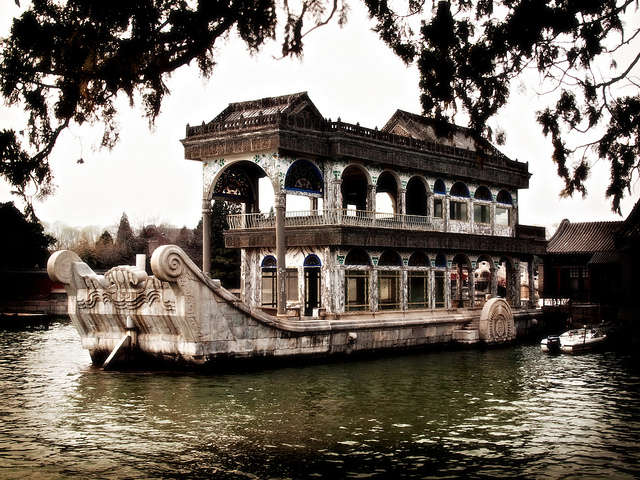
Ci Xi Marble Boat

CC Image courtesy of Kevin Poh on Flickr

Today marks the 111th anniversary of the end of the Boxer Rebellion. Inspired by anti-imperialist sentiment and religious mysticism, the Boxers were a nationalist Chinese group which rose up against Westerners across China in late 1899. Thousands of Chinese Christian converts, Western missionaries and other Western ex-pats were slaughtered in the ensuing violence. The Rebellion culminated in a 55 day siege of the foreign embassies in Peking which was finally lifted when 20,000 troops from Austria-Hungary, Germany, Great Britain, France, Italy, Japan, Russia and the US fought their way into Peking.

In a strange twist, the Boxer Rebellion owes much to the marble edifice pictured above – the Marble Boat on the grounds of the Summer Palace in Peking. Originally built in 1755, the structure was renovated in 1893 by order of the Empress Dowager Ci Xi with funds intended for modernizing the Chinese navy. Instead of funding the construction of a modern navy that could have kept Western forces at bay and prevented the further divvying up of China between competing Western nations, the Chinese built a ship useful only for delighting courtesans and guests of the Empress.

Blackbeard

Edward Teach, aka Blackbeard
Photo: Wiki Commons

An archaeological team from the North Carolina Underwater Archaeology Branch will spend eight weeks excavating the Queen Anne’s Revenge, the flagship of famous pirate Blackbeard. The vessel was discovered in 1996 near Beaufort, NC and several excavations have been conducted by the state’s Underwater Archaeology Branch over the past few years. Numerous cannons, the ship’s anchor and approximately 16,000 artifacts have been recovered thus far. A permanent exhibit at the Beaufort branch of NC’s Maritime Museum opened in June 2011 to display the artifacts and educate visitors about the life of a pirate. Blackbeard’s name has become synonymous with 18th century piracy even though his career lasted a mere two years before he was killed in 1718 during a fight with Royal Navy forces near Ocracoke, North Carolina. The Queen Anne’s Revenge is only the second pirate ship to be discovered and excavated, with the other being the Whydah off the Massachusetts coast.

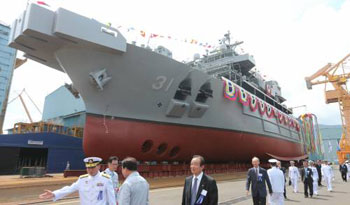
Korean Rescue Ship

Photo: Naval Open Source INTelligence

Yesterday, South Korea launched the Tongyeong, its first domestic manufactured rescue and salvage ship. The Tongyeong was laid down in October of 2010 and will join the ROK Navy next year after final fitting out and trials are completed. The ship is intended to broaden the ROK Navy’s salvage and rescue capabilities which are currently served by two former US Navy Vessels.  Both vessels are nearing the end of their service lives and the ROK Navy will now be able to respond in half the time to disasters in far-reaching islands.

The Tongyeong displaces 3,500 tons and is capable of 21 knots. Armed with an ROV, side-scan sonar, a dynamic position system and various winches, the Tongyeong can search on and below the seas for wrecked vessels and is capable of towing vessels displacing up to 15,000 tons. The ship has onboard medical facilities for treating survivors at sea and can medevac patients via its helipad. With South Korean shipyards now some of the largest in the world, it is only fitting that the ROK Navy can benefit from domestically produced ships and not rely on second-hand ships for rescuing stranded mariners.

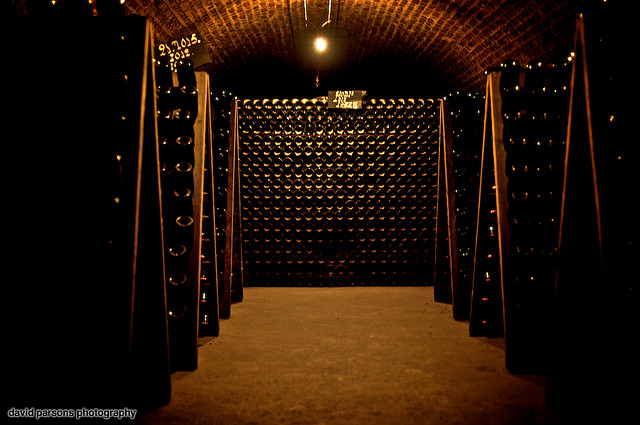
Finland Shipwreck Champagne

CC Image courtesy of David Parsons on Flickr

According to the German publication Deutsche Welle, another 8 bottles from a 168 bottle collection of champagne are set to go under the auctioneers hammer. The champagne was discovered two years ago by diver and (ironically enough) brewery owner Christian Ekström. Ekström was exploring a wrecked schooner off the coast of the Åland Islands when he came upon the bottles at the site. Researchers believe the schooner sank in the 1840s making Ekström’s find the oldest champagne ever found. Now, two years after the discovery, 10 of the bottles have been sold at auction with one, a Veuve Clicquot, selling for a record breaking $26,700. Authorities on the Åland Islands plan to hold auctions of the champagne over the next few years as a method of bringing tourists to the area.

Ekström’s find isn’t the first fermented treasure trove found in the Baltic as there have been both beer and other champagne caches discovered in recent years. The discovery and re-creation of Antarctic explorer Sir Ernest Shackleton’s whiskey, though, is still perhap the most noteworthy alcoholic find of the past few years.

89 years ago today, air power advocate General Billy Mitchell sank the battleships USS New Jersey and USS Virginia in his third demonstration of the potential of air power in naval warfare. General Mitchell proved that only a handful of bombers and airmen could render impotent 2 former crown jewels of the US Navy.

Two years earlier, in July of 1921, General Mitchell had successfully sunk the former German dreadnought SMS Ostfriesland and vindicated his theory that precision bombing could sink naval vessels. General Mitchell followed up several months later with further tests on the USS Alabama. While tactical bombing had been performed on both sea and land during World War I, no naval vessel had yet fallen prey to air power until Mitchell’s successful tests off the Virginia coast.

After World War I, General Mitchell returned to the US convinced that air power could fundamentally change the way naval warfare was waged. Facing opponents both within the military and in the halls of Congress, Mitchell’s tests on the Alabama, New Jersey, Ostfriesland and Virginia helped pave the way for the age of the aircraft carrier and the obsolescence of the big-gun battleship. General Mitchell was later court-martialed for statements he made about the competence of certain Army commanders. Although Mitchell passed away prior to World War II, his foresight proved prescient as numerous battleships succumbed to air power during the war, most notably HMS Prince of Wales & HMS Renown and the Japanese super-battleship Yamato. The North American B-25 Mitchell bomber was named for General Mitchell – 16 of which would later be launched from the USS Hornet in the Doolittle Raid against the Japanese home islands in 1942.

HMS Hood

CC Image courtesy of Patrick McDonald on Flickr

An expedition led by Microsoft co-founder Paul Allen aboard his mega-yacht Octopus has been forced to abandon their efforts to recover the ship’s bell of the Royal Navy battlecruiser HMS Hood. Allen and his team have been operating out of Reykjavik, Iceland for the last two weeks, but a combination of weather and mechanical issues with their ROV have caused the team to end its efforts on the Hood this recovery season. Named for Admiral Samuel Hood, the Hood was the second ship to bear his name. The ship entered service in 1920 and is best known for its role in the hunt for the German battleship Bismarck.

HMS Hood and the battleship HMS Prince of Wales intercepted the Bismarck on May 24, 1941 as the Bismarck and heavy cruiser Prinz Eugen attempted to break out into the North Atlantic in hunt of British merchantmen. In a running battle lasting less than 20 minutes, the Bismarck sank the Hood and damaged the Prince of Wales. The Hood took with it 1,415 of her 1,418 man crew. The engagement became known as the Battle of the Denmark Straits and was merely the opening act of a massive 3 day manhunt culminating in the sinking of the Bismarck on May 27th. The Prince of Wales went on to serve in the Pacific Theater where it, along with the battleship HMS Repulse, was sunk by a Japanese air attack. Prinz Eugen survived the war and was later used as a target ship by the US Navy for atomic bomb tests.