st. louis low water ship

Wreck of USS Inaugural
Photo: Dillon Fulcher

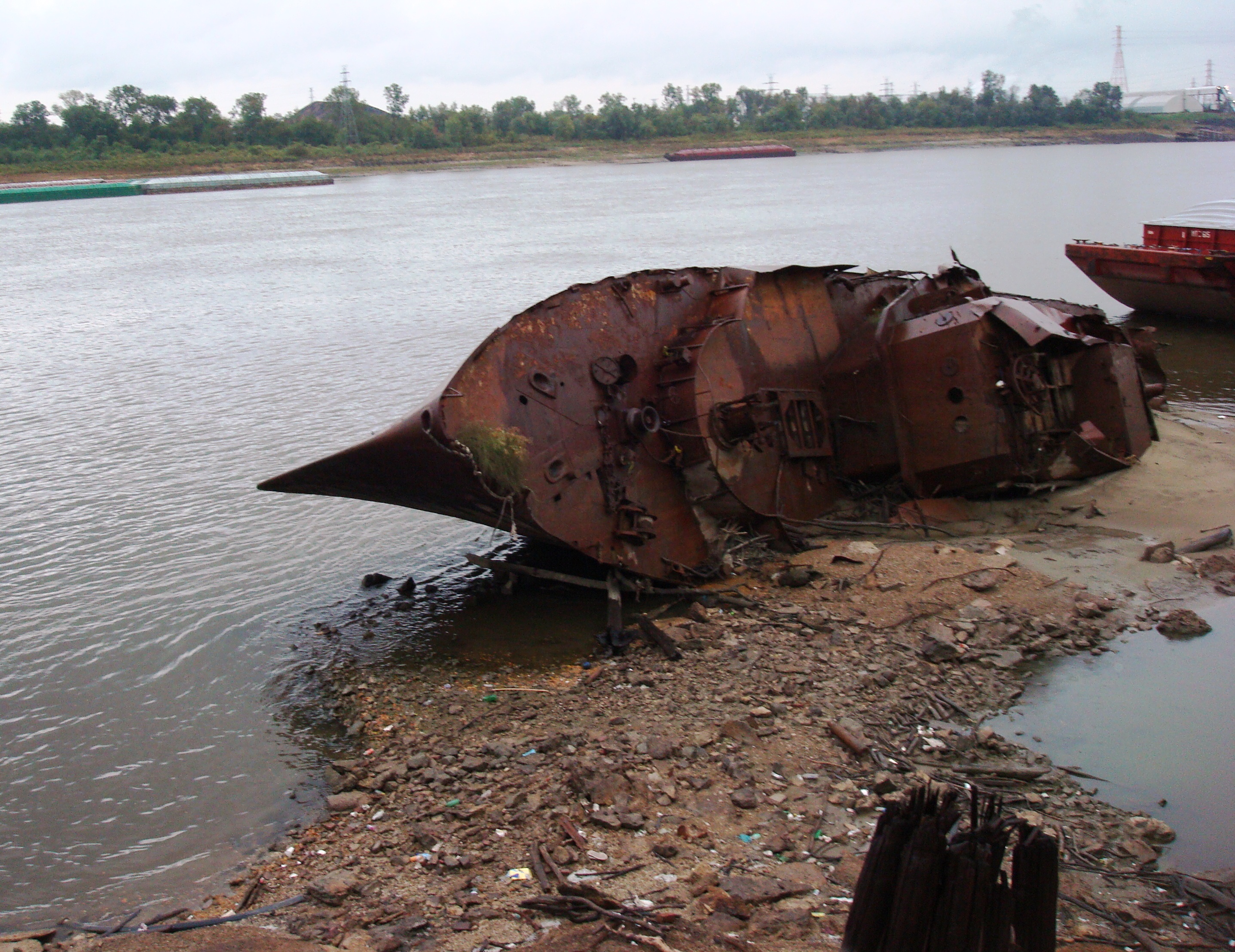
Low water levels on the Mississippi have revealed the wreck of the USS Inaugural, a World War II minesweeper which sank in the Great Flood of 1993. The Inaugural began life in Washington state where it was built for the US Navy during World War II. A member of the Admirable class of minesweepers, the ship was commissioned in December of 1944 and earned two battle stars for its service in the Pacific Theater. Inaugural and her crew fought in the Okinawa campaign and swept more than 80 Japanese mines from the Pacific.

Following World War 2, the ship was mothballed in Texas as a member of the Atlantic Reserve Fleet until an enterprising St. Louisan named Robert O’Brien discovered the ship in a military surplus catalog. O’Brien purchased the ship and moved it to St. Louis where he charged $1 per person to tour the Inaugural. The Inaugural changed hands several times throughout the intervening years until she was ripped from her moorings during the Great Flood of 1993. Efforts by the US Coast Guard and other vessels allowed the ship to be safely beached just south of downtown St. Louis, however, the ship sank a few days later in what some believe to be mysterious circumstances – possibly flowing out of the owner’s desire to collect insurance on the vessel and pay off looming creditors.

The ship now breaks the surface every time the river level is below average and under current conditions is almost completely above water. The Inaugural is not the only recent maritime oddity on the St. Louis riverfront as a cement barge sank while at anchor just last year and a fire claimed the steamboat Robert E. Lee in 2010.

Go here for more pictures of the wreck.

clipper shipWhen America First Met China provides readers with a fast paced and highly readable account of America’s first commercial encounters with China. Author Eric Jay Dolin traces the origins of America’s trade with China in the years following the end of the American Revolution through the tumultuous period of the Opium Wars and concludes with the role of Chinese laborers in tying the nation together with the Transcontinental Railroad.

Throughout the book, Dolin introduces the various American, British and Chinese personalities who made the early China trade one of the most colorful periods in maritime history. Men such as Robert Morris, Samuel Shaw, Dr. Peter Parker (no relation to Spiderman), Amasa Delano (a distant relative of President Franklin Delano Roosevelt), Charles Elliot, Lin Zexu, and Howqua all come to life through Dolin’s writing. Many of the men, while not household names today, made lasting contributions to American trade, prestige and foreign relations. For instance, a gift from one of the personalities involved in the early China trade, Stephen Girard, helped establish Girard College in Philadelphia – a school for white male orphans which has since become a full scholarship grade 1 – 12 school for children of low-income single parent families.

Additionally, the products involved in the China trade – tea, fur, silk, opium, sandalwood and beche-de-mer are all described in detail. The reader is given a thorough understanding of the economics and production techniques of each commodity without being driven to boredom. Having previously written about both whaling and the fur trade, Dolin is experienced in describing the details of 19th century industries.
Overall, Dolin does an excellent job of detailing the origins of America’s commercial trade with China and its ebb and flow through the post-Civil War Reconstruction years. The numerous illustrations of period engravings, sketches and paintings help the reader better grasp the locations, ships and products involved in the China trade. When America First Met China is accessible to readers with any level of knowledge about maritime or Chinese history and is worth the read.

china naval battle

Lake Poyang from Space
CC Image Courtesy of Richard Petry on Flickr

More than 650 years ago, Lake Poyang, China’s largest lake, was the scene of quite possibly the largest naval battle in human history. As many as a million sailors (although the number is more likely closer to 500,000) fought one another during a series of maneuvers lasting from August 30th through October 4th, 1363. The Yuan Dynasty, founded by Genghis Khan’s grandson Kublai Khan, was in its death throes during the mid-14th century and multiple factions vied to fill the resulting power vacuum. Two of the most powerful factions were the Han and Ming and it was these two groups whose navies collided in epic fashion in the fall of 1363.

Determined to capture the strategic Ming stronghold of Nanchang, Han naval forces led by Chen Youling sailed across the waters of Lake Poyang and laid siege to Nanchang. Unfortunately for Chen Youling and his men, the lake shrinks every year during the summer and fall dry months. As the waters receded, Chen’s siege ships became ineffective and gave the Ming time to deploy forces from Yingtian (modern day Nanjing). Led by Zhu Yuanzhang, the Ming fleet relieved the besieged army in Nanchang and assaulted the Han fleet with fire ships. The Han fleet retreated down the lake and in a final battle on October 4th were utterly annihilated after Chen Youling died from an arrow to the head. Many of the Han sailors chose suicide over capture and estimates place the death count as high as 600,000. Perhaps this is why the lake has taken on a mythical role as China’s Bermuda Triangle. Leveraging his victory at Lake Poyang, Zhu Yuanzhang established the Ming dynasty in 1368. The dynasty would last nearly 300 years before falling to the Qing in 1644.

hong kong ferry

CC Image Courtesy of Trey Menefee on Flickr

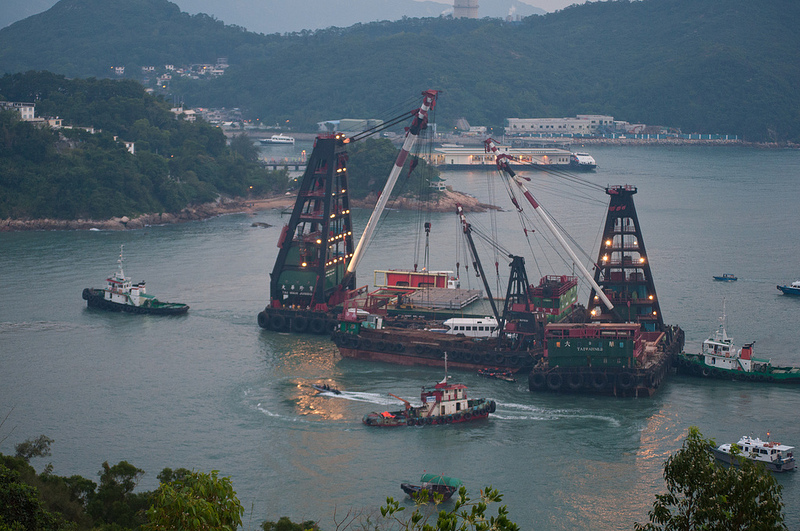
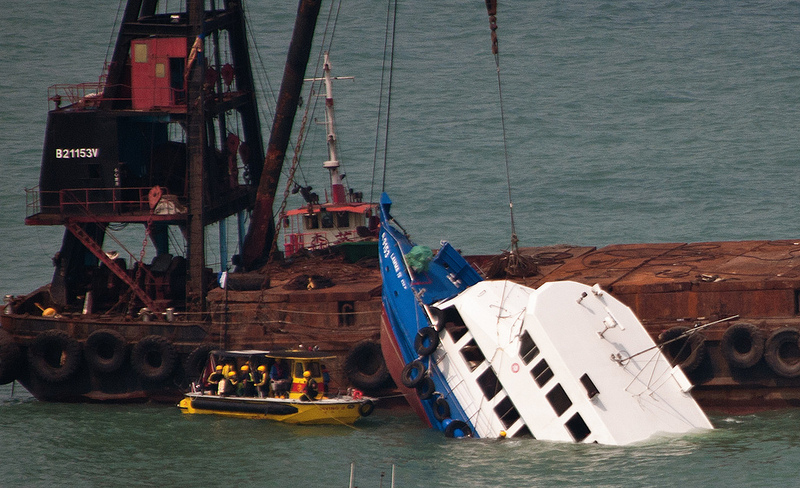
A commuter ferry and a boat full of Hongkong Electric Co. employees collided Monday night around 8:30pm. The Hongkong Electric boat, Lamma IV, was carrying 120 passengers on their way back from a tour of a power facility and were about to take in a fireworks display in Victoria Harbor. The ferry, Sea Smooth, collided with the Lamma IV’s stern and caused the Lamma IV to sink quickly by the stern, stranding dozens of passengers below deck.

So far 38 people have been declared dead of the 120 aboard while only minor wounds were suffered by the Sea Smooth‘s passengers and crew. Authorities have towed the Lamma IV to a nearby beach and discovered a large hole on the port side of the vessel’s stern. Both captains and several of the crew from each vessel have been arrested and released on bail. Hongkong Electric has already pledged to pay $25,800 to each victim’s family. The exact cause and responsibility for the wreck has yet to be determined.

hong kong ferry

CC Image Courtesy of Trey Menefee on Flickr

More than 100 years ago, Greek skin divers discovered the remains of an ancient shipwreck nearly 200 feet below the surface of the Aegean Sea near the Greek island of Antikythera. For 2 years, divers utilized crude diving gear to recover items from the wreck. Among the items discovered was what appeared to be a random assortment of cogs and gears. Not until 2006 were scientists able to discern that the object was in fact an ancient computer designed for use as a calendar as well as to show the positions of the sun, moon and planets in the sky. The computer, termed the Antikythera Mechanism, could evn predict the timing of eclipses. The device is believed to have been built in the 1st century BC and the video above shows a Lego recreation of the device.

The diving technology of the early 20th century prohibited a full survey of the site and 2 divers were left paralyzed from the bends and another killed during the work. Apart from a few brief dives on the site, it has remained undisturbed until this year. Scientists with the Woods Hole Oceanographic Institute are set to begin surveying the site this week after reaching a deal with the Greek government. Using rebreather gear and self-propelled dive scooters, the scientists will be able to dive deeper and go farther than earlier expeditions and hope to learn more about Greek trade patterns and technology from the expedition.

Canadian coast guard cutter

CCGS Terry Fox in St. John’s Harbour, Newfoundland
Photo: Canadian Coast Guard

The Canadian Coast Guard has announced its plan to spend $332,000 to investigate the feasibility of incorporating fuel cell technology into its new offshore fishery science vessels. Under the current proposal, the vessels would have hybrid diesel-fuel cell propulsion systems. While at sea, the ship will be able to rely on its diesel engines and then switch to the fuel cell system to generate electricity while in port. The system is designed to both reduce emissions and fuel costs as diesel technology operates most efficiently at sea, but has a high amount of energy waste when used simply to produce electricity while docked. This feasibility study is in addition to a delayed project at the University of Victoria where the British Columbia approved $13.3 million for converting an existing ship to the technology.

The Canadian Coast Guard isn’t the first to experiment with alternative fuel technologies for marine propulsion. Maritime consultancy group Germanischer Lloyd Group has also developed plans for a hydrogen powered commercial container vessel. In addition, Norwegians have been operating several dozen liquefied natural gas (LNG) fueled vessels for a decade. The vessels have reduced emissions and their fuel costs can be as much as 25% less than a traditionally powered ship. Less than two weeks ago, the Central Commission for the Navigation of the Rhine and the United Nations Economic Commission for Europe approved a LNG powered vessel for use on all international inland waterways. This move could spur additional adoption of LNG technology as the EU passes ever more stringent emissions regulations. Nuclear powered vessels have also seen limited commercial experimentation, but for now are reserved almost exclusively for icebreaking and military functions.

If the current path of ever more onerous emissions regulations is continued, then shipowners will migrate in ever greater numbers to LNG and other alternative fuel sources for propulsion. Adoption of LNG technology by US shipowners might occur even faster considering natural gas prices are at near historic lows and the country is experiencing a boom in supply.

Coast Guard Cutter Ingham

CC Photo Courtesy of Kay Gaensler on Flickr

During a career spanning more than 50 years, the USCGC Ingham kept the shores of the United States safe for mariners in both war and peace. Commissioned in 1936, the cutter protected the Bering Sea and the fisheries of the Grand Banks until ordered to participate in neutrality patrols upon the outbreak of World War 2. After America’s entry to the war, Ingham helped convoy hundreds of Allied ships across the Atlantic. On December 15, 1942, during routine convoy operations, the Ingham detected and sank the German U-boat U-626. In late July 1944, the Ingham underwent alterations in the Charleston Navy Yard to prepare it to serve as a combined operations and headquarters and ship in the Pacific Theater. Ingham served briefly as a headquarters ship for General Douglas MacArthur prior to his landing in the Philippines.

Following World War 2, the ship returned to peacetime service and her missions included maritime rescue and oceanographic surveying. Ingham was called upon once again to serve in wartime during the Vietnam War. During the war she and her crew became the only Coast Guard cutter to earn 2 Presidential Unit Citations for her naval gunfire support and replenishment missions. Ingham responded to yet another crisis when Cuban dictator Fidel Castro allowed thousands of dissidents to flee his autocratic regime in what became known as the Mariel Boatlift. The Ingham rescued several boaters and towed half a dozen vessels to freedom in the United States. At the time of her decommissioning, the ship was the oldest and most decorated Coast Guard cutter in service. The ship now resides in Key West, Florida as a memorial to the 581 Coast Guardsmen killed in action during World War 2 and the Vietnam War. The ship is open for tours Monday thru Saturdays and more information can be found on their website.

chinese ice breaker

Chinese Ice Breaker Xue Long
Photo: Ajai Shukla

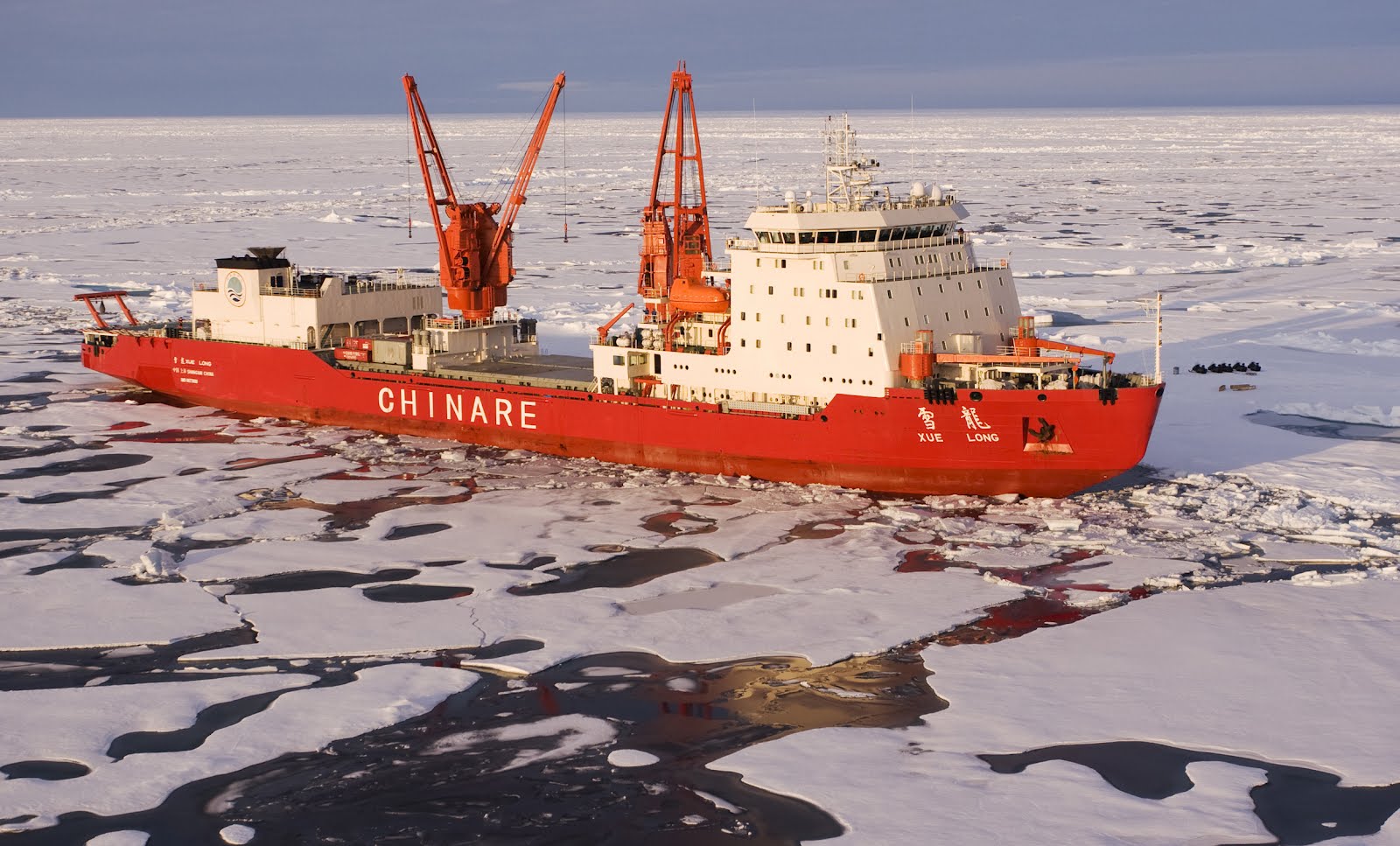
This week has proven to be a historic one in Chinese naval affairs. On Tuesday, the Chinese Navy commissioned its first aircraft carrier, Liaoning. Although still lacking a naval air wing capable of operating from the carrier, the Chinese Navy has joined the exclusive club of nations which operate aircraft carriers and set itself on a path to developing the skills requisite to its efficient operation. In addition, crowds in Shanghai welcomed home the ice breaker Xue Long (Snow Dragon) as it completed a historic 18,500 mile scientific voyage and became the first Chinese ship to sail through the Northern Sea Route.

Manned by 119 scientists and crew, Xue Long departed Qingdao (best known for its Tsingtao beer, a relic of its Imperial German colonial past) on July 2nd. During her 3 month voyage, the Xue Long and her crew conducted various geophysical surveys and installed an automatic meteorological station. The ship also stopped over in Iceland to collaborate with scientists there and to perform joint oceanic surveys.

These two events further mark the strides China has made towards projecting its power on a global scale. Not since Admiral Zheng He’s 15th century sailing expeditions has China reached this far afield. A final event this week which could either end up a small footnote in diplomatic history or the catalyst to an Asian conflagration was the cruising of Chinese maritime surveillance cutters and naval frigates to the disputed Diaoyu/Senkaku Islands. Long a subject of dispute between China and Japan and to a lesser extent Taiwan, Japan purchased the islands earlier this month from a private party. The presence of large oil reserves in the waters around the islands make them, like the Falklands, quite valuable economically. It remains to be seen whether the dispute is simply kicked down the road, spurs Japan to acquire a nuclear deterrent or erupts in limited to full scale conflict.

Viking Sally

Photo: Wikicommons

Eighteen years ago today, the Baltic ferry M/V Estonia sank in heavy seas while en route from Talinn, Estonia to Stockholm, Sweden. Designed for use as a ferry, the Estonia was launched in 1980 as the Viking Sally. Following Estonian independence, the ship was purchased by Estlines in 1993 and was the largest ship flying the Estonian flag at the time of its sinking.

The loss of the Estonia is one of the world’s 10 worst maritime disasters and 1 of 2 to have occurred in the Baltic Sea. The official explanation for the wreck is that the bow door locks failed due to the heavy seas the Estonia encountered and the failure resulted in the ship taking on large amounts of water in its vehicle deck. Eventually the incoming water in the vehicle deck caused the vessel to capsize and then sink. Termed the free surface effect, this phenomenon of a ferry sinking from water flooding its vehicle deck is widely associated with roll-on, roll-off ferries such as the Estonia and could have been a contributor to the sinking of the M/V Le Joola.

Alternative conspiracy theories have circulated claiming the Estonia sank due to the explosion of a secret military cargo being transported by Britain’s MI-6 and the American CIA. Fueling the conspiracy claims is the prohibition of diving on the wreck site which has prevented independent analysis of the wreckage. Conspiracists claim the prohibition is to prevent the true reason for the sinking from coming to light while the Estonian government states it is to preserve the site as a monument to the 852 souls who perished in the sinking. The conspiracy has even made it to the big screen in the form of the movie Baltic Storm

british destroyer

HMS Edinburgh Firing Sea Dart Missiles
© UK MOD/Crown Copyright 2012

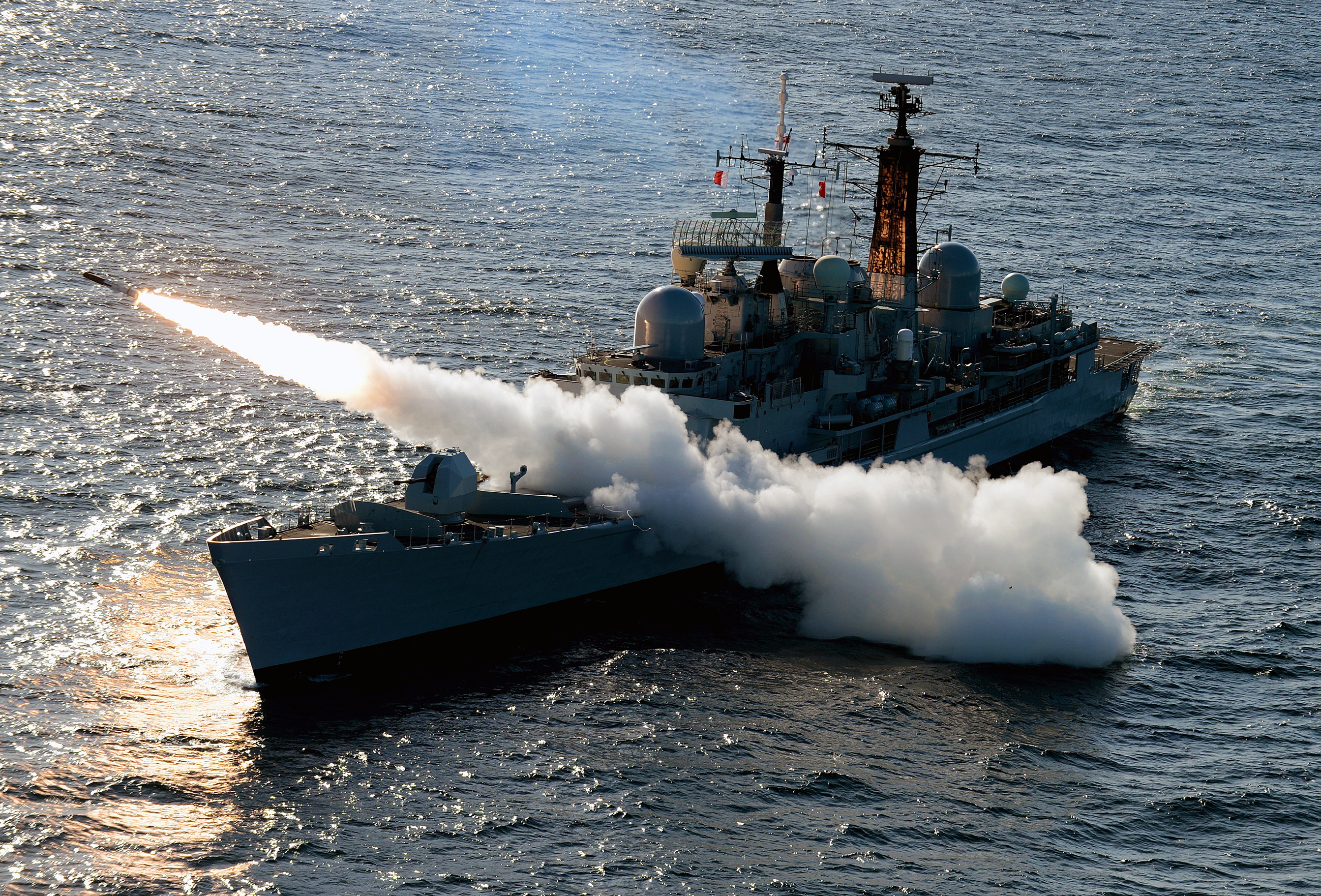
Today the Royal Navy retired the HMS York, its second to last Type 42 destroyer. Its last Type 42, HMS Edinburgh, sailed on its final deployment earlier this week and will be retired upon its return. The Type 42 destroyer class has served the Royal Navy since the 1970s and two were lost in the Falklands War. York and Edinburgh will soon be replaced by new Type 45 destroyers which are among the most powerful and sophisticated anti-aircraft vessels in the world.

During her long career, York sailed 750,000 miles in defense of British interests and saw service in Iraq (2003), Lebanon (2006) and most recently Libya (2011). Her sister ship Edinburgh also served in the 2003 Iraq conflict and has deployed on numerous anti-terrorism and narcotics interdiction missions around the globe. Both ships are currently for sale on the UK MoD’s disposal site and their sale will be used as a diplomatic tool to further relations with another nation(s). Another notable warship sale occurred earlier this year when the US Navy sold for scrap the Sea Shadow, a copy of which appeared in the James Bond film Tomorrow Never Dies.

The last vessel to bear the Edinburgh name was a Town-class cruiser lost in World War 2 in the Arctic Sea. The ship fell prey to Nazi sea and air forces while escorting a convoy from Murmansk, Russia to Great Britain. Aboard the vessel was 465 bars of gold bullion weighing 4.5 tons. Several salvage efforts were launched but it wasn’t until September 1981 that the first bar of gold was recovered. Over the course of two dive seasons, 460 of the 465 bars were successfully recovered. The recovery operations were performed under a contract similar to that between the UK government and Odyssey Marine for the Gairsoppa and Mantola recoveries in 2012.