Archives For November 30, 1999

soviet submarine baltic sea

Wreckage of Soviet WWII Submarine S-6
Photo: Försvarsmakten

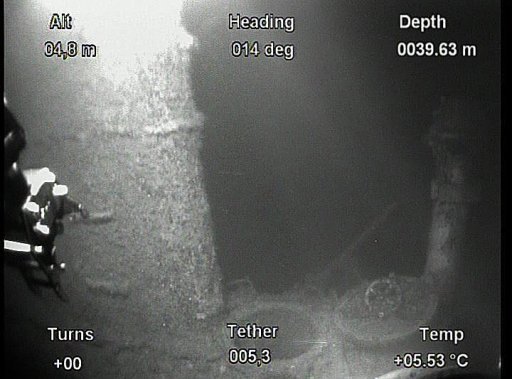
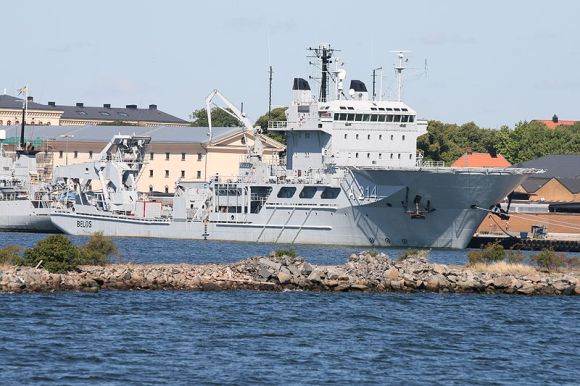
Earlier this summer civilian divers reported discovering what they believed to be a sunken submarine in 130 feet of water near Sweden’s island of Oland in the Baltic Sea. The Swedish Navy returned to the site with its submarine salvage ship HSWMS Belos to further inspect the wreck and determine its identity. Swedish news site The Local reports that the Swedish military believes the vessel is the Soviet submarine S-6 which never returned from its September 1941 patrol. Cyrillic text and a Soviet hammer and sickle are visible on the wreck providing evidence that the wreck is indeed a Soviet sub.

The Swedish military further believes that while cruising on the surface of the Baltic the sub struck a Nazi mine and was blown to pieces. This hypothesis flows from the fact that a hatch (seen above) was open on the vessel and it was found in multiple pieces on the sea floor. The large size of the debris field rules out the possibility the sub struck a mine below the surface and that the crew were able to make an attempt at escape. Thus it is most likely the sub was cruising on the surface, possibly re-charging its batteries at night, with hatches open to circulate air within the boat when it struck the mine.
submarine salvage ship

HSWMS Belos
Photo: Wikimedia

argentina navy

ARA Libertad
CC Image Courtesy of maduroman on Flickr

Earlier this October, a court in Ghana ordered the Argentinian naval training vessel ARA Libertad to be held until the Argentinian government posts a $20 million bond to release the ship. The action ultimately stems from Argentina defaulting on its debt in the early 2000s. Argentina’s default wiped its balance sheet clean of billions in bond liabilities while leaving bondholders with bonds worth 30% of their face value. Because Argentinian courts will not force repayment of the bonds, some bondholders who are holding out for the full value of the bonds have turned to more novel methods of collecting on Argentina’s sovereign debts.

One of the most time tested techniques for securing a judgment and payment on a debt is arresting the debtor’s assets when they are in a jurisdiction favorable to the bondholder. Thus, when Libertad arrived in Ghana, Elliott Capital Management sued for the vessel to be held until the Argentinian government pays the bond. While some would characterize the technique as nothing more than holding the ship hostage in exchange for a ransom, the bondholders merely seek to recoup the money the Argentinian government received from the sale of the bonds and promised to repay.

Elliott Capital Management, a New York based hedge fund, manages money for large institutional investors which often includes the likes of pension funds for firemen in Peoria, teachers in Chicago or trash collectors in Milwaukee. The Argentinian government has protested Ghana’s actions with their usual populist rhetoric and decried Elliott Capital Management’s actions as “trickery” instead of accepting it as simply the rule of law. Elliott Capital Management and other bondholders have received more than 100 court judgments against the Argentinian government, none of which the Argentinians have honored.

Yesterday the International Tribunal for the Law of the Sea ordered Ghana to release the Libertad. Because both Argentina and Ghana are signatories to the Law of the Sea Treaty, the International Tribunal’s decision is binding and Ghana must release the ship. The United States has thus far not signed the treaty and this incident is yet another example of why signing the treaty would be a serious mistake for the US and would impede US sovereignty.

Canada WWII Navy

HMCS Sackville
CC Image Courtesy of Paul B on Flickr

The HMCS Sackville was laid down in early 1940 and was 1 of 267 Flower-class Corvettes built for the Allied navies during World War II. The U-boat threat to the Atlantic shipping lanes required hundreds of small, nimble ocean going warships to fend off U-boat and Luftwaffe bomber attacks on Allied convoys. The Flower-class were intended to fulfill this role and helped get American and Canadian men and war material across the Atlantic safely.

The Sackville first saw service in early 1942 when she was deployed to the Northern Atlantic to protect convoys off the coast of Newfoundland. The ship damaged several U-boats during her wartime patrols and even forced two U-boats to completely break off their attacks and return to occupied Europe for extensive repairs. Unfortunately, the Sackville was herself damaged in August 1944 when a massive explosion damaged one of her boilers. The cause of the explosion is still unknown, but was most likely the result of one of her depth charges exploding a Nazi torpedo close to the Sackville’s hull.

Relegated to harbor duty the ship was later converted into a research vessel for use by the Canadian Department of Marine and Fisheries. Finally retired in 1982, the Sackville avoided the scrap heap and is now the last remaining Flower-class corvette in the world. She now continues in service as a museum ship and Canada’s Naval Memorial in Halifax, Nova Scotia. The ship can be visited during the summer months and more information can be found here.

Photo: US Navy

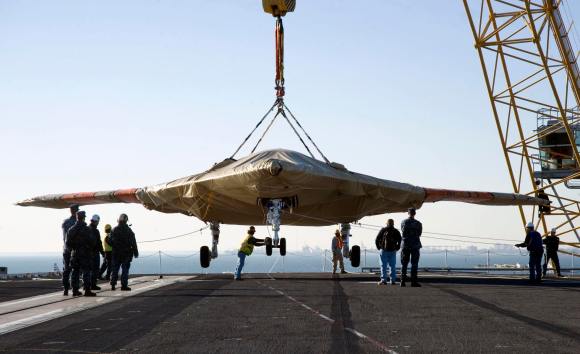
Earlier this week the first of two test X-47B unmanned carrier aircraft systems was hoisted aboard the aircraft carrier USS Harry S Truman. The aircraft will continue a slate of tests that have occurred primarily at the Patuxent River Naval Air Station. Completion of the shipboard tests will bring the X-47B one step closer to proof of concept.

As illustrated below, the X-47B is a fighter sized unmanned aircraft system designed by Northrop Grumman. The X-47B is intended to provide the US Navy with an unmanned strike capability and, while the X-47B is merely a test bed for further development, the craft has been outfitted with two internal weapons bays capable of carrying a 4,500 lb, payload. Unlike most drones, the X-47B was designed to fly a specified route and return to base as opposed to being actively flown. If the X-47B’s concept is brought into production, then sometime in the next decade or two the US Navy will be able to strike targets without risking a single naval aviator.

Photo: Northrop Grumman

Below is official US Navy footage of the X-47B’s first test flight.

More photos of the X-47B can be found here.

CSS Florida

November 28, 2012 — 1 Comment
Confederate merchant raider

CSS Florida
19th Century Phototype Print by F. Gutekunst

During the American Civil War, an integral piece of Confederate naval strategy was the deployment of numerous unconventional merchant raiders to devastate Yankee shipping. Utilizing seaborne tactics closely akin to those employed by guerrillas such as Colonel John Singleton Mosby, Confederate raiders played a deadly game of hide and seek with Union warships and merchantmen. One of the more successful raiders was the CSS Florida, a twin-stacked ship built in the United Kingdom and commissioned into the Confederate Navy in August 1862.

Captained by Lieutenant John Newland Maffitt, the Florida preyed on Yankee shipping throughout the North and South Atlantic. Under Maffitt, the Florida and her crew captured or sank 22 ships until she sought safe harbor in Brest, France for a re-fit during the winter of 1863. In addition to the 22 ships Maffitt directly captured, he was also indirectly responsible for another 23 captures performed by CSS Tacony and CSS Clarence – both prizes Maffitt had equipped as raiders.

In February 1864, the ship sailed again, this under the command of First Lieutenant John M. Morris. Morris and his crew captured another 11 ships before anchoring in Bahia, Brazil. While in Bahia on October 7, 1864, Florida was boarded and towed out to sea by the USS Wachusetts. The captain of the Wachusetts, Commander Napoleon Collins, had acted in clear violation of Brazilian neutrality by capturing the ship in Brazilian territorial waters. Even though convicted by courts-martial, Collins was cleared by  Secretary of the Navy Gideon Welles and became a hero in the North. Less than 8 weeks after capture, on November 28, the Florida sank under mysterious circumstances after a collision with a troop transport in Hampton Roads, Virginia. Had the ship not mysteriously sunk, international law would have required for her to be handed back over to Brazil and eventually back to her Confederate crew.

French Navy World War II

Aerial View of the Vichy French Fleet Scuttled in Toulon

Despite the overwhelming success of Nazi Germany’s Blitzkrieg assault on France in May 1940, Adolf Hitler chose not to occupy the entirety of the country. Along with a small zone occupied by Italy, a significant slice of southern France was allowed to remain nominally free. Dubbed Vichy France and headed by Marshall Petain, the “country” effectively functioned as a satellite state of Nazi Germany. In November 1942, Adolf Hitler ordered the occupation of Vichy France after the Allies landed in Vichy French North Africa.

One of the highest value targets in the Vichy French zone was the Vichy French fleet stationed in Toulon. Consisting of 3 battleships, 7 cruisers, 18 destroyers and 21 submarines, the addition of the Vichy French fleet to Italy’s Regia Marina or Germany’s Kriegsmarine could have had a significant effect on the balance of power in the Mediterranean theater. Aiming to deprive the Allies of the Vichy French fleet, Hitler ordered Operation Lila as a part of the larger takeover of Vichy France. Lila was intended to capture the Vichy French fleet at their anchorage in Toulon and turn the ships over to the Regia Marina.

At the same time Nazi forces were setting in motion Operation Lila, Vichy French forces were planning to either flee to North Africa or, in the event they couldn’t escape, scuttle their ships at anchor. Unfortunately for the Vichy French and for the greater Allied war effort, only a handful of submarines and a single surface vessel were able to escape the clutches of the advancing Nazi war machine. Instead, the majority of the fleet was scuttled in Toulon and rendered combat ineffective to the Nazis and Italians. In total, 77 ships were scuttled including all of the French capital ships and, while 30+ small vessels were captured, Operation Lila was essentially a complete failure for the Axis.

Resande Man

November 26, 2012 — Leave a comment
Swedish shipwreck

Diving on the Resande Man

Three hundred and fifty-two years ago today, the Swedish warship Resande Man sank near Stockholm while en route to Poland. Embarked aboard the Resande Man was Count Karl Kristopher von Schlippenbach who had been dispatched on a diplomatic mission to Poland. Count Schlippenbach was charged with negotiating an alliance with Poland against Russia and the Resande Man was carrying royal treasure to help aid diplomatic discussions.

The wreck of Resande Man proved King Solomon’s axiom that there is nothing new under the sun. Swedish legend states that the ship’s captain, much like the Costa Concordia’s Francesco Schettino, was focused on a woman he had taken aboard and thus failed to tend to the proper navigation of the ship. The captain’s negligence led to the Resande Man foundering in a strong storm on November 26, 1660. While 37 onboard perished, 25 were able to make it to dry land.

Despite salvage efforts on the ship in 1661, the ship is rumored to still contain a rich cargo. Because of this, she has achieved mythical status in Swedish maritime circles, much akin to the Merchant Royal in Great Britain. Divers believe they have found the ship and conducted several dives on the ship earlier this year. The Resande Man was featured on a map compiled by Anders Franzen (see below), the discoverer of the Vasa, and if the wreck is indeed the Resande Man, then the final wreck on the map has been located.

Swedish shipwreck map

Anders Franzen’s Map of Historic Swedish Shipwrecks

BB-55

USS North Carolina
CC Image Courtesy of Jay Turner on Flickr

Although today the USS North Carolina floats peacefully in Wilmington, NC, the ship was once at the tip of the US Navy’s spear in the Pacific during World War II. The North Carolina had originally been planned for construction in the 1920’s and her keel was even laid down, however, the approval of the Washington Naval Treaty caused the ship to be scrapped to honor the United States’ treaty commitments. Not until the gradual re-armament of the 1930s was the ship brought back off the drawing board. The ship was finally commissioned on April 9, 1941 and bristled from end to end with nine 16-inch guns, twenty 5-inch dual purpose guns and dozens of 20mm and 40mm anti-aircraft guns.

The North Carolina first tasted blood in the Guadalcanal campaign of August 1942 and participated in every major naval offensive of the war. Nicknamed the Showboat, the North Carolina earned 15 battle stars during World War II, survived being torpedoed, sank a Japanese troopship, participated in 9 shore bombardments and downed 24 enemy aircraft. Additionally, the pilots of her Kingfisher aircraft assisted in the rescue of numerous Allied pilots and aircrew and on one occasion Lt. John Burns used his Kingfisher to rescue 10 airmen.

Following the war, the North Carolina was placed in the Inactive Reserve Fleet and, after a fundraising effort by North Carolina schoolchildren, was dedicated as a museum ship in 1962. As the most decorated battleship of World War II, the USS North Carolina now serves as a memorial to North Carolina’s World War II service men and women. The ship is open for tours and even hosts an annual 5-K and 1/2 Marathon.

HMAS Sydney

CC Image courtesy of Horatio Kookaburra on Flickr

German naval strategy during World War II was similar to that employed in World War I – strangle the United Kingdom by sinking or disrupting its merchant shipping. In addition to the ubiquitous U-boat, the Kriegsmarine utilized surface warships and camouflaged merchant vessels to target Allied shipping in all theaters of the war. One such camouflaged merchant vessel was the HSK Kormoran. Formerly the merchantman Steiermark, the ship was converted in 1940 to carry mines and hidden armaments as well as two float planes. Departing Germany in December 1940, Kormoran captured or sunk 11 merchant ships as it cruised through the Atlantic and Indian Oceans.

The Kormoran’s luck ran out, though, when it happened upon the Australian cruiser HMAS Sydney on November 19, 1941. Sydney was returning to port from escorting a troopship and decided to investigate what appeared to be a suspicious vessel. The two ships exchanged signals until the Kormoran, posing as the Dutch ship Straat Malaka, failed to identify itself by the Straat Malaka’s secondary secret signal. Realizing he could no longer keep up the ruse, Kormoran’s captain ordered the Dutch ensign struck, raised the German naval ensign and opened fire. The two ships engaged in their deadly duel for about an hour at which point the heavily damaged Sydney, struck by hundreds of rounds of 5.9 inch shells as well as several torpedoes, drifted off to the southwest.

The Sydney disappeared with its entire crew complement of 645 officers and sailors. The Kormoran, irreparably damaged by Sydney’s broadsides, was ordered scuttled by her captain and the crew took to the lifeboats. Only 317 of the Kormoran’s 400 man crew were rescued. While Sydney’s sinking of the Kormoran was a pyrrhic victory for her crew, it helped eliminate the threat of continued predation on Allied merchant shipping and the lives of Sydney’s crew were not lost in vain. On March 12, 2008, searchers from the Finding Sydney Foundation located the wreck of the Kormoran in 2,500 meters of water. Five days later, the wreck of the Sydney was finally located approximately 11 miles from the Kormoran. Today, a new HMAS Sydney proudly serves the Royal Australian Navy and its replacement will be christened with the same name when it enters service in 2017.

Arkansas Inland Maritime Museum

USS Razorback
CC Image Courtesy of thomas23 on Flickr

Much like in Muskogee, Oklahoma, one would not expect to find a submarine museum ship in Little Rock, Arkansas. Beginning in 1963, though, the US Army Corps of Engineers embarked on a project that opened the Arkansas River in 1971 to commercial traffic from Tulsa, Oklahoma to its confluence with the Mississippi. Thus arose the opportunity for museum ships such as the USS Batfish in Muskogee and the USS Razorback in Little Rock to be created.

The Razorback has the unique distinction of being one of the longest serving submarines in the world. The boat served from 1944 to 1970 with the US Navy and from 1971 to 2001 with the Turkish Navy. Commissioned in April 1944, the Razorback was not named after the University of Arkansas’ mascot, but rather a species of whale. During her 5 war patrols, the sub sank over half a dozen Japanese merchant and warships, rescued multiple Allied airmen, participated in the surrender ceremony in Tokyo Bay and earned 5 battle stars.

Following the war, the Razorback continued her service and received upgrades from 1952 to 1954 based on knowledge derived from captured Nazi U-boats. The boat patrolled the waters of the South China Sea during the Vietnam War and earned an additional 4 battle stars before being decommissioned in 1970. Following decommissioning, the Razorback was transferred to the Turkish Navy where she was renamed TCG Muratreis.

In 2001, the boat was sold to the city of North Little Rock and opened as a museum ship at the Arkansas Inland Maritime Museum. If visiting, also be sure to take a stroll across the Big Dam Bridge, the longest pedestrian bridge in the US never having been open to vehicle traffic. Today the USS Razorback stands as a silent sentinel guarding Little Rock and the Arkansas River.