

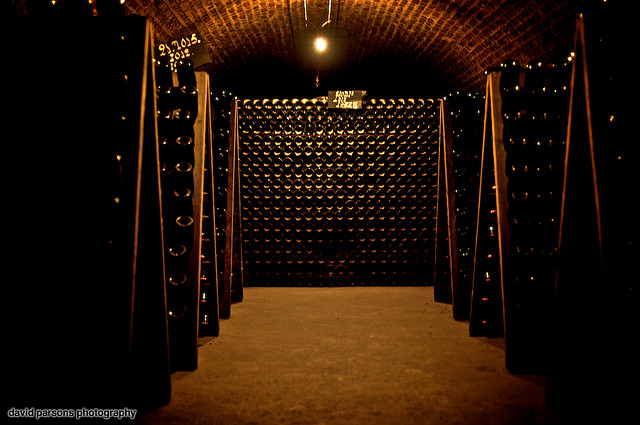
CC Image courtesy of David Parsons on Flickr
According to the German publication Deutsche Welle, another 8 bottles from a 168 bottle collection of champagne are set to go under the auctioneers hammer. The champagne was discovered two years ago by diver and (ironically enough) brewery owner Christian Ekström. Ekström was exploring a wrecked schooner off the coast of the Åland Islands when he came upon the bottles at the site. Researchers believe the schooner sank in the 1840s making Ekström’s find the oldest champagne ever found. Now, two years after the discovery, 10 of the bottles have been sold at auction with one, a Veuve Clicquot, selling for a record breaking $26,700. Authorities on the Åland Islands plan to hold auctions of the champagne over the next few years as a method of bringing tourists to the area.
Ekström’s find isn’t the first fermented treasure trove found in the Baltic as there have been both beer and other champagne caches discovered in recent years. The discovery and re-creation of Antarctic explorer Sir Ernest Shackleton’s whiskey, though, is still perhap the most noteworthy alcoholic find of the past few years.


 ) and suffered a reactor accident in 1965. Reports vary on the extent of repairs to the reactor, but the ship returned to active service and was retired in 1989. The K-159 lay derelict in a Russian naval yard for fourteen years with minimal maintenance until the decision was made to scrap the ship in 2003. Due to extensive rusting of the ship’s outer hull, pontoons were secured to the K-159 to provide additional flotation.
 Shipwreckology