Archives For November 30, 1999

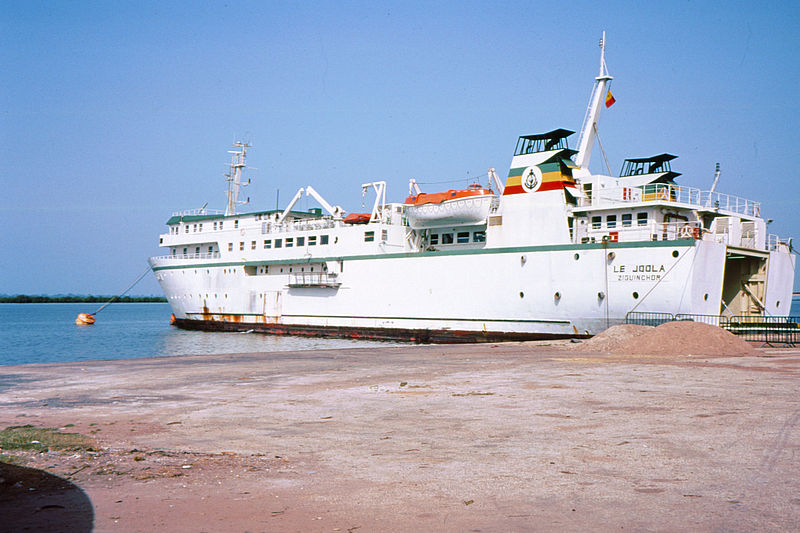
african ferry

CC Image Courtesy of Yaamboo on Wikimedia Commons

Today marks the tenth anniversary of the capsizing of the Sengalese ship, M/V Le Joola, on September 26, 2002. Le Joola was a government owned roll-on, roll-off ferry which operated between Senegalese ports on the Atlantic Ocean. At the time of its sinking, ferry travel was a popular option because a civil war made the land route prohibitively dangerous. The ferry’s maximum capacity was approximately 550, however, there were nearly 2,000 passengers aboard the ship when it capsized 35 kilometers off the Gambian coast.

A combination of overcrowding and gross neglect (the ship had only recently returned to service after a multi-year hiatus) contributed to the ship’s capsizing although the exact cause of the sinking has never been conclusively proven. It was also alleged that political considerations regarding the appeasement of separatist groups within Senegal encouraged the Senegalese government to return the ferry to service before it was fully seaworthy.

Sadly, only ~60 of the nearly 2,000 souls aboard survived and an exact body count has never been determined. The disaster is one of the worst sinkings in history with more lives lost than that of RMS Titanic, however it pales in comparison to the ~9,000 lives lost aboard the M/V Wilhelm Gustloff in 1945. The ship’s sinking continues to have ramifications today with survivors and victims’ families demanding a new inquiry into the causes of the sinking.

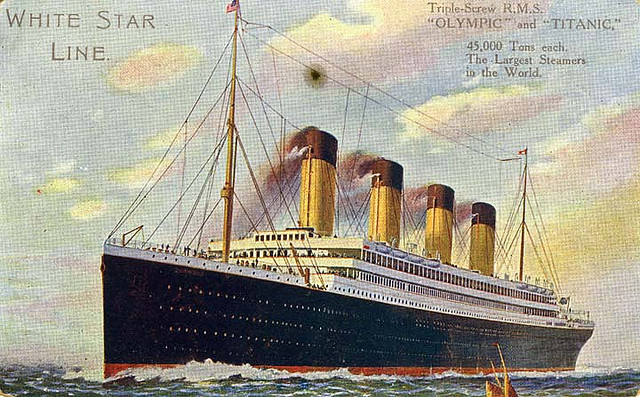
Titanic & Olympic

Much like the Apostle Paul, Violet Jessop survived a trio of maritime disasters, including the sinking of RMS Titanic. Jessop began work as a stewardess for White Star Line in early 1911. White Star is best remembered in history as the owner and operator of the Titanic, but in the late 19th and early 20th century the company ferried thousands of immigrants from Europe to the United States. Jessop first assignment was aboard Titanic’s sister ship RMS Olympic. While cruising off the Firth of Forth on September 20, 1911, the Olympic and the Royal Navy armored cruiser HMS Hawke collided resulting in significant damage to both ships. Neither Jessop nor any of the other passengers and crew aboard either ship were injured even though two of Olympic’s watertight compartments were flooded and the Hawke nearly capsized.

Jessop’s next brush with death occurred merely 7 months later on April 14, 1912 when Titanic sank after its infamous collision with an iceberg. For four years Jessop enjoyed smooth sailing aboard her employer’s ships until November 1916. RMS Brittanic, which had been converted to a hospital ship, struck a mine on November 12, 1916 and once again Jessop found herself scrambling for the lifeboats. Despite her three near-death experiences, Jessop continued to work aboard passenger liners and retired to England where she passed away in 1971.

One of the most unusual clashes in naval history occurred on September 14, 1914 when two former passenger liners fought one another off the coast of Brazil’s Trinidada Island. At the outbreak of World War 1, both the British and German navies put into effect plans calling for the arming of certain ships as auxiliary cruisers to act as wartime supplements to their naval forces. Two such ships were the SS Cap Trafalgar and RMS Carmania.

The SS Cap Trafalgar had been built in 1913 and operated between Hamburg, Germany and South American ports. Following the declaration of war, her civilian crew was replaced by officers and seaman of the German Imperial Navy and she was armed with 2 4.1in. guns. Thus she became SMS Cap Trafalgar and was charged with hunting down and sinking Allied shipping in the South Atlantic. SMS Cap Trafalgar’s opponent, RMS Carmania, was a British mail liner built in 1905 for the Cunard line’s Liverpool to New York route. Similar to SMS Cap TrafalgarRMS Carmania was commandeered by the British Admiralty and became HMS Carmania on August 8, 1914 when she was armed with 8 4.7 in. guns. Unlike Germany’s auxiliary cruisers, Britain utilized its cruisers to protect merchantmen or assist in the hunt for Germany’s merchant raiders.

The two ships were destined to come across one another after each were given orders to proceed to Trindade Island – the Germans were to rendezvous with colliers and the British suspected the island was being used by the Germans as a supply point. Caught with two colliers in broad daylight, the Cap Trafalgar at first fled from the pursuit of the Carmania, however, the Germans reversed course and turned to engage the Carmania. After a brisk 70 minute battle, with both ships ablaze and holed below the waterline the Cap Trafalgar capsized and sank with the loss of 51 officers and crew. While the Cap Trafalgar had been sunk, it had inflicted serious damage on the Carmania and she required extensive repairs at Gibraltar’s dry dock. The Carmania finished out the war in British service and was eventually scrapped in 1932. Even though it involved two of the largest, fastest and most expensive ships in the world, the engagement was of little strategic consequence and is now merely a strange footnote in naval history.

Morro Castle Fire

Photo: Wikimedia Commons

78 years ago today, a devastating fire destroyed the passenger liner SS Morro Castle off the coast of New Jersey. Operating between Havana and New York City, the liner had been built in 1930, but her builders failed to incorporate the latest safety features into her design. The fire began in a storage room around 3am and quickly spread throughout the ship. The ship’s highly flammable materials, de-activation of the trip wires for the ship’s fire doors and poor structural design allowed the Morro Castle to be engulfed in flames in just minutes. 135 passengers and crew perished in the disaster and the Morro Castle was beached and later sold for scrap. 

Partly because the Morro Castle burned so close to shore (and was a beach front attraction for several weeks before being towed to the breaker’s yard), the disaster served as the catalyst for more stringent maritime safety laws in the form of the Merchant Marine Act of 1936. It also influenced an entire generation of naval architects, including William Francis Gibbs the designer of the SS United Statesto introduce multiple safety innovations in the next generation of passenger liners. Earlier this year, New Jersey authors Gretchen Coyle and Deborah Whitcraft published Inferno At Sea documenting the Morro Castle disaster. The authors interviewed survivors and archival materials to produce the most recent account of the maritime tragedy.

Wilhelm Gustloff

Photo: German Federal Archive

The worst maritime disaster in recorded human history occurred in the closing days of World War II and is little known in popular history. The torpedoing of the M/V Wilhelm Gustloff claimed ~9,000 lives including as many as 4,000 children. By comparison the RMS Titanic disaster cost 1,517 lives. In the waning days of World War II, the once vaunted German Wehrmacht was pressed into ever shrinking pockets of territory by advancing Soviet armies. Admiral Karl Donitz, desperate to evacuate 2 million German personnel and civilians from isolated pockets of German territory on the Baltic Coast, initiated Operation Hannibal – an evacuation almost six times the size of Dunkirk.

Among the ships used in the evacuation was the Wilhelm Gustloff, a former luxury liner built in 1938 to provide holiday excursions as part of Hitler’s “Strength Through Joy” program. Confiscated by the Kriegsmarine at the outbreak of hostilities in September, 1939, the ship served as a hospital ship and floating barracks. The Wilhelm Gustloff departed Gotenhafen on January 30, 1945 with more than 10,000 refugees and military personnel. Less than 9 hours after leaving Gotenhafen, the ship was spotted by the Soviet submarine S-13 which loosed a four torpedo salvo. Three of the four torpedoes (the fourth jammed in the tube) found their mark and within 70 minutes the Wilhelm Gustloff lay 150 feet beneath the Baltic Sea. More than 9,000 souls perished in the sinking, but for propaganda reasons the Nazi regime kept news of the sinking from spreading within the crumbling Third Reich. For numerous reasons, most importantly the overshadowing of the tragedy by the ending of the war and the exposure of Nazi death camps, the disaster is not a pop culture icon like the sinking of the RMS Titanic or the RMS Lusitania.

Some historians have speculated that the looted Amber Room might have been aboard and the Soviets allegedly launched an expedition to the wreck site during the Cold War. Evidence pointing to the Amber Room being aboard is circumstantial at best. The last known sighting of the room was in nearby Konigsberg Castle just days before the ship sailed. The room had been packaged into 27 crates and eyewitnesses report the moving of similar sized crates from trucks to the ship prior to its departure. In the most thorough analysis of the fate of the Amber Room to date, authors Catherine Scott-Clark and Adrian Levy posit that the Amber Room was destroyed on land sometime during the frantic evacuations from East Prussia and has been forever lost.

SS United States

Launched in 1951, the trans-Atlantic passenger liner SS United States was a triumph of American engineering. Designed for speed, safety, comfort and easy wartime conversion to a troopship, the ship incorporated numerous innovations in its construction. During her maiden voyage, she captured the speed record known as the Blue Riband for both the eastern and western crossings of the Atlantic. Commercially operated from 1952 to 1969, the SS United States carried thousands of passengers between Europe and New York City in speed and style. Among her passengers were such notables as John Wayne, Bob Hope, Salvador Dali and the Duke and Duchess of Windsor.  Historian Steven Ujifusa’s recently published A Man and His Ship is a history of the SS United States and her designer, William Francis Gibbs. In his book, Ujifusa masterfully weaves together the biography of William Francis Gibbs, his quest to design the ultimate passenger liner and the construction and life of the SS United States.

Neatly divided into two parts, Ujifusa opens the book with William Francis Gibbs’ life prior to the construction of the SS United States. Gibbs had no formal training as a naval architect and yet he went on to a wildly successful career in naval architecture after designing and pitching a ship in collaboration with his younger brother. Ujifusa lays out Gibbs story in a manner compelling to any reader interested in what drives individuals to the pinnacle of success in their field. The second half of the book focuses on Gibbs’ crowning achievement – the design, construction, life and record-breaking performance of  the SS United States. Ujifusa writes with a style easily accessible to a layperson and doesn’t require a knowledge of the minutiae of naval architecture.

Ujifusa concludes with the recent history of the ship including an unsuccessful attempt by Norwegian Cruise Lines to utilize the ship as a cruise liner and the current plan by the SS United States Conservancy to convert the ship to a floating hotel/conference center in Philadelphia or New York City. In sum, A Man and His Ship is a page turning tome celebrating the ingenuity, self-motivation and indomitability of the American spirit.

Photo: Nick Messinger

A century old mystery may soon be solved in the frigid depths off Alaska’s coast. The SS Islander, a 240 foot liner operated by the Canadian Pacific Navigation Company, sank on August 15, 1901 while en route from Skagway, Alaska to Vancouver, British Columbia. Approximately 40 people perished in the sinking including the highest government official of the Yukon Territory. The steamer was purportedly carrying 6 tons of gold which led to a series of salvage efforts beginning only weeks after the ship’s sinking. Not until 1934, though, were any successful attempts made due to hazardous working conditions and primitive salvage equipment. The 1934 expedition used a process similar to that employed on the Swedish Vasa shipwreck to raise a 175 foot section of the ship and beach it on shore. The tremendous efforts expended to float the ship are documented in Sunken Klondike Gold written by the expedition’s official photographer, Leonard Delano. Unfortunately for the salvors, only $75,000 in gold dust and nuggets was found – not even enough to cover the expedition’s costs. Either the 6 tons of gold was never aboard or it had been stored in the Mail and Storage Room in the bow of the ship which wasn’t recovered.

Eight decades later another group, Ocean Mar, Inc., has returned to (hopefully) complete the salvage of the ship. Ocean Mar began its efforts in the early 1990s, but were stymied by legal wranglings with another salvage company – Yukon Recovery LLC. A federal court finally resolved the dispute in June of 2012 and the state of Alaska issued Ocean Mar, Inc. a work permit for the site this week, nearly 111 years to the day since the ship’s sinking. The permit extends through December 31 and the Alaska State Museum will serve as a repository for salvaged artifacts. If recovered, the melt value of the gold alone would be worth more than $300,000,000.00 in 2012 dollars. Ocean Mar has a salvage agreement in place with Salvage Association of London whereby Ocean Mar would pay Salvage Association 25% of any recovery in order to pay off any insurers’ claims.

Lost in an Atlantic hurricane in 1857, the SS Central America took with it ~550 passengers and several tons of gold.  For more than a century it remained lost to the sea until an enterprising Ohioan named Tommy Thompson assembled a team to find and recover the ship. Utilizing cutting edge technology Thompson and his team located the wreck in 1987.  The group salvaged approximately $50 – 100 million in gold from the wreck, however, the conclusion of recovery operations was just the beginning of the story for Thompson. Two days ago, nearly 25 years since the discovery of the wreck, Thompson was to appear in a federal district court to reveal the location of millions of dollars from the recovered gold due to a payment dispute filed by former employees. Unfortunately for salvors, lengthy legal proceedings are not unusual in the realm of admiralty law – another recent example is that of Odyssey Marine’s Black Swan epic court battle which involved the US State Department, sunken Spanish treasure, artwork looted by the Nazis and WikiLeaks.

Thompson’s search for the SS Central America was well documented in Gary Kinder’s Ship of Gold in the Deep Blue Sea as well as several television programs. Although an ingot from the SS Central America is expected to garner $140,000 at auction on September 2 and another ingot sold for a record breaking $8.1 million, Forbes reported in 2006 that Thompson’s last known address was a Florida trailer park.