Archives For November 30, 1999

Viking Longboat

The Viking by C. Graham. 1893.

In 1892, Norwegian Magnus Andersen embarked on an ambitious project – building a full-size replica of the Gokstad Viking ship that had been discovered 12 years earlier in a burial mound near Gokstad, Norway. As if replicating a nearly 80 foot wooden ship wasn’t enough, Andersen then sailed the ship from Norway to New York City up the Hudson River to the Erie Canal through the Great Lakes and finally to Chicago for the World’s Columbian Exposition. Andersen’s exploits made waves both literally and figuratively at the Exposition and later as he sailed to New Orleans and back to Chicago.

The ship is now housed in Geneva, IL just outside Chicago and is considered one of Illinois’ most endangered historical landmarks. Friends of the Viking Ship have stepped up to preserve the ship and are currently resolving legal ownership issues so they can raise money to permanently house the ship in a climate controlled facility. The ship is open to the public from 1 – 4pm this Saturday (September 15, 2012) as well as October 20, 2012. For more information, see the Friends of the Viking Ship website.

Blackbeard

Edward Teach, aka Blackbeard
Photo: Wiki Commons

An archaeological team from the North Carolina Underwater Archaeology Branch will spend eight weeks excavating the Queen Anne’s Revenge, the flagship of famous pirate Blackbeard. The vessel was discovered in 1996 near Beaufort, NC and several excavations have been conducted by the state’s Underwater Archaeology Branch over the past few years. Numerous cannons, the ship’s anchor and approximately 16,000 artifacts have been recovered thus far. A permanent exhibit at the Beaufort branch of NC’s Maritime Museum opened in June 2011 to display the artifacts and educate visitors about the life of a pirate. Blackbeard’s name has become synonymous with 18th century piracy even though his career lasted a mere two years before he was killed in 1718 during a fight with Royal Navy forces near Ocracoke, North Carolina. The Queen Anne’s Revenge is only the second pirate ship to be discovered and excavated, with the other being the Whydah off the Massachusetts coast.

Finland Shipwreck Champagne

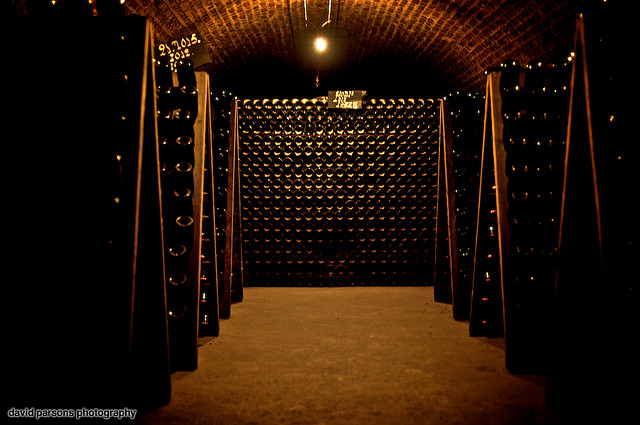
CC Image courtesy of David Parsons on Flickr

According to the German publication Deutsche Welle, another 8 bottles from a 168 bottle collection of champagne are set to go under the auctioneers hammer. The champagne was discovered two years ago by diver and (ironically enough) brewery owner Christian Ekström. Ekström was exploring a wrecked schooner off the coast of the Åland Islands when he came upon the bottles at the site. Researchers believe the schooner sank in the 1840s making Ekström’s find the oldest champagne ever found. Now, two years after the discovery, 10 of the bottles have been sold at auction with one, a Veuve Clicquot, selling for a record breaking $26,700. Authorities on the Åland Islands plan to hold auctions of the champagne over the next few years as a method of bringing tourists to the area.

Ekström’s find isn’t the first fermented treasure trove found in the Baltic as there have been both beer and other champagne caches discovered in recent years. The discovery and re-creation of Antarctic explorer Sir Ernest Shackleton’s whiskey, though, is still perhap the most noteworthy alcoholic find of the past few years.

HMS Hood

CC Image courtesy of Patrick McDonald on Flickr

An expedition led by Microsoft co-founder Paul Allen aboard his mega-yacht Octopus has been forced to abandon their efforts to recover the ship’s bell of the Royal Navy battlecruiser HMS Hood. Allen and his team have been operating out of Reykjavik, Iceland for the last two weeks, but a combination of weather and mechanical issues with their ROV have caused the team to end its efforts on the Hood this recovery season. Named for Admiral Samuel Hood, the Hood was the second ship to bear his name. The ship entered service in 1920 and is best known for its role in the hunt for the German battleship Bismarck.

HMS Hood and the battleship HMS Prince of Wales intercepted the Bismarck on May 24, 1941 as the Bismarck and heavy cruiser Prinz Eugen attempted to break out into the North Atlantic in hunt of British merchantmen. In a running battle lasting less than 20 minutes, the Bismarck sank the Hood and damaged the Prince of Wales. The Hood took with it 1,415 of her 1,418 man crew. The engagement became known as the Battle of the Denmark Straits and was merely the opening act of a massive 3 day manhunt culminating in the sinking of the Bismarck on May 27th. The Prince of Wales went on to serve in the Pacific Theater where it, along with the battleship HMS Repulse, was sunk by a Japanese air attack. Prinz Eugen survived the war and was later used as a target ship by the US Navy for atomic bomb tests.

Pouto Point Shipwreck

CC Image courtesy of NASA on Flickr

Thirty years ago locals discovered the remains of a wooden ship off Pouto Point in New Zealand. The group salvaged a few wooden timbers before the vagaries of the sea buried the wreck under more than 90 feet of sand. Through the use of radio carbon dating and tree ring sequencing, scientists now believe the ship to have sunk around 1705 – making it 65 years earlier than Captain Cook’s exploratory voyages to New Zealand.

New Zealand was first located by European explorers in 1642 when Dutchman Abel Tasman landed on the islands. Although numerous places and items have been named after Tasman, he is perhaps best known for the Tasmanian Devil Looney Tunes character. The current historical narrative asserts that the next European to visit the islands was Captain Cook in 1769; however, the dating of this ship calls into question whether Cook was indeed the next European to visit the islands. The types of wood recovered have led researchers to believe the ship was refitted at Genoa or Java before wrecking off Pouto Point, New Zealand. British admiralty maps dated 1803 suggest the Portugese may have discovered New Zealand in the 1550s. The wood recovered from the wreck and the timing of its sinking in 1705 would be in line with the supposition that the wreck was the result of another expedition to New Zealand as both Genoa and Java were transit stations for Portuguese ships. One researcher had believed it to be the wreck of the Portuguese ship Cicilla Maria, however the new dating information now precludes that possibility. Irregardless, the dating of the wreck sheds further light on the origins of European settlement in New Zealand.

Robert Ballard Cyprus

CC Image courtesy of Erik Charlton on Flickr

Legendary underwater explorer Robert Ballard has added two more shipwrecks to his already incredible list of discoveries (RMS TitanicBismarck, USS Yorktown and John F. Kennedy’s PT 109). Ballard and his team spent two weeks off the Cypriot coast exploring the Erastosthenes Seamount, a 120km by 80km undersea mountain that was previously above water. The expedition’s chief goal was to survey the seamount’s geology through the use of submersibles and high definition cameras. Ballard plans to return in several weeks after the Nautilus is equipped with a new sonar system that will allow him and his team to map the seamount. Previously the seamount was believed to contain only limestone, but the expedition located a formation of volcanic rock that doesn’t fit the area’s geologic profile. Additionally, the team found a curious methane source on the formation which requires further investigation.

It was in the process of completing their geologic mapping that the team discovered the two wrecks. One ship is believed to have sunk 2,300 to 2,500 years ago and carried cargoes between Greece and Cyprus. Among the artifacts photographed at the scene are a variety of ceramics, two anchors, a possible bun ingot and several other unidentified objects. The second ship appears to be an Ottoman war galley and an 18th century flintlock pistol and black rum bottles were located amongst the wreckage. One question left unanswered by the expedition is the speculation that Ballard’s team was searching for a WWII-era wreck containing a gold cargo. There exists little grounds for such speculation, though, as Ballard is known for not seeking to directly profit from his underseas exploration.

Prior to this month’s expedition, Ballard helped Turkey locate the two Turkish pilots lost when their F-4 crashed under mysterious circumstances near the Syrian border.

Charleston, SC Civil War

The Attack on Fort Sumter, Currier & Ives

Archaeologists from the University of South Carolina just completed a 4 year long survey of Charleston, South Carolina’s Civil War naval battlefield. While many associate Charleston with the attack on Fort Sumter or the CSS Hunley, the city was the scene of multiple naval engagements and an important port for Confederate blockade runners. The archaeological team created a map of wrecks, gun emplacements and harbor obstructions in 2010 and has spent the last 2 years surveying some of those sites.

Among the sites are the wrecks of several Union ironclads that were sunk in action with Confederate land batteries or by “torpedoes” – early versions of what are mines in today’s naval parlance. The archaeologists also sought the wrecks of the “Stone Fleets” – a fleet of approximately 30 ex-whaling ships and merchant vessels purchased by the US Navy, stripped of all valuable implements, loaded with stone and then sunk as block ships in the approach channels to Charleston Harbor. Because the ships were wooden hulled and had been stripped of most of their metal fittings, the USC team had to rely on side scan sonar, further complicating the task of locating the ships. The remains of Confederate blockade runners were also surveyed by the team, including a set of three wrecks that are now buried beneath dry land due to the shifting sands of the beach. The survey will be helpful not only to historians, but also to the US Army Corps of Engineers and other planning entities for the avoidance of wrecks and other obstructions in the harbor.

Viking longboat

CC Image courtesy of TNDrumGuy on Flickr

Divers operating near the Swedish village of Birka announced the discovery yesterday of underwater jetties dating back to the Vikings. The stone foundations found by the dive team were deeper than historians had believed Vikings could build. The discovery is causing archaeologists to re-examine some of their basic understandings of the Birka village and Viking building techniques. Historians have long thought Birka to merely have had small jetties and a trading post, but the foundations now lead them to believe the village could have been 30% larger than previously thought. They also now believe that it functioned as a port with a marketplace near the wharf

The village of Birka on the Swedish island of Björkö has long been the site of archaeological excavations because of its Viking history. Work in the area first began in the late 19th century and continues today. The village is a UNESCO world heritage site and contains a reconstructed Viking village and museum.

Shackleton’s Whiskey

August 22, 2012 — 1 Comment
Shackleton's Whisky

CC Image courtesy of sandwichgirl on Flickr

Two years ago, three bottles of whisky were recovered from the base camp Sir Ernest Shackleton used during his British Antarctic Expedition (1907 – 1909). Shackleton and his team approached to within ~100 miles of the South Pole and turned back after Shackelton decided it would be too risky to continue. Two years later Captain Robert Scott’s Terra Nova expedition would return to successfully reach the South Pole (although they were beaten by a month by Norwegian Roald Amundsen), but perished on the return journey. Shackleton had been on Captain Scott’s Discovery Expedition in 1904 and later returned to the South Pole as commander of the Imperial Trans-Antarctic Expedition (1914 – 1917). The Imperial Trans-Antarctic Expedition is most famous for the loss of the ship Endurance and the subsequent account of the travails of the crew.

Fast-forward to 2010 and the recovery of the three bottles of whisky by the Antarctic History Trust. Although the whisky was not frozen due to its alcohol content, the bottles were slowly thawed in a New Zealand conservation lab. In 2011, they were then turned over to Whyte & Mackay, the distillery that succeeded the originally producer of the whisky. Using a painstaking process chronicled here and here, scientists at Whyte & Mackay discerned the whisky’s recipe and the distillery has released a limited run of 50,000 bottles of the whisky for sale.

SS United States

Launched in 1951, the trans-Atlantic passenger liner SS United States was a triumph of American engineering. Designed for speed, safety, comfort and easy wartime conversion to a troopship, the ship incorporated numerous innovations in its construction. During her maiden voyage, she captured the speed record known as the Blue Riband for both the eastern and western crossings of the Atlantic. Commercially operated from 1952 to 1969, the SS United States carried thousands of passengers between Europe and New York City in speed and style. Among her passengers were such notables as John Wayne, Bob Hope, Salvador Dali and the Duke and Duchess of Windsor.  Historian Steven Ujifusa’s recently published A Man and His Ship is a history of the SS United States and her designer, William Francis Gibbs. In his book, Ujifusa masterfully weaves together the biography of William Francis Gibbs, his quest to design the ultimate passenger liner and the construction and life of the SS United States.

Neatly divided into two parts, Ujifusa opens the book with William Francis Gibbs’ life prior to the construction of the SS United States. Gibbs had no formal training as a naval architect and yet he went on to a wildly successful career in naval architecture after designing and pitching a ship in collaboration with his younger brother. Ujifusa lays out Gibbs story in a manner compelling to any reader interested in what drives individuals to the pinnacle of success in their field. The second half of the book focuses on Gibbs’ crowning achievement – the design, construction, life and record-breaking performance of  the SS United States. Ujifusa writes with a style easily accessible to a layperson and doesn’t require a knowledge of the minutiae of naval architecture.

Ujifusa concludes with the recent history of the ship including an unsuccessful attempt by Norwegian Cruise Lines to utilize the ship as a cruise liner and the current plan by the SS United States Conservancy to convert the ship to a floating hotel/conference center in Philadelphia or New York City. In sum, A Man and His Ship is a page turning tome celebrating the ingenuity, self-motivation and indomitability of the American spirit.