Archives For November 30, 1999

ironclad sinking

Lt. Cushing Sinks the CSS Albemarle

Before there were the Navy’s UDT, SEAL or SWCC units, there was Lieutenant William B. Cushing. Only a few days before his 22nd birthday, Cushing led 15 men in a daring raid behind Confederate lines against the ironclad CSS Albemarle. The Albemarle had been built by the Confederate Navy in a cornfield astride the Roanoke River in eastern North Carolina. Shortly after her launch in April 1864, the Albemarle sortied down the Roanoke River in a combined operation with General Robert F. Hoke’s infantry brigade. Hoke’s brigade retook the town of Plymouth, North Carolina while Albemarle sank the USS Southfield and drove the remaining US Navy forces downriver.

The re-capture of Plymouth and the presence of Albemarle on the Roanoke River threatened Union dominance of the North Carolina coast. A successful sally by the ironclad could break the blockade then strangling the economic lifeblood of the dying Confederacy. Desperate to destroy the threat of the Albemarle, Union commanders entertained a unique proposal by young Lt. Cushing. Cushing proposed piloting a small picket boat up the Roanoke River and destroying the Albemarle with a spar torpedo. Spar torpedoes, the forerunners of modern self-propelled torpedoes, were a new innovation consisting of crude explosive devices mounted to a long wooden pole that were detonated either manually or on impact.

On the night of October 27, 1864, Cushing and his men silently steamed up the Roanoke River. Protecting the Albemarle was a barrier of chained logs and several sentries. Cushing maneuvered his boat to strike the Albemarle and opened the throttle to full speed. As the launch struck the log boom and rode up over it, Cushing detonated the spar torpedo and blew a massive hole in the Albemarle’s hull. Two of Cushing’s men perished in the attack, 11 were captured and Cushing and another escaped. The Albemarle settled on the river bottom and, unable to raise her, the Confederates quickly lost control of the Roanoke River and were forced to cede back to the Yankees. The Albemarle was raised by the Union and later sold for scrap in 1867.

Cushing continued his exploits with the capture of 3 blockade runners after the fall of Fort Fisher in January of 1865. The blockade runners, unaware Fort Fisher had fallen, were lured into Cushing’s trap when he continued to operate the fort’s signal lights as if it were still in Confederate hands.

Trafalgar

Admiral Nelson’s Flagship HMS Victory
CC Image Courtesy of Nigel Swales on Flickr

Today marks the 207th anniversary of the Battle of Trafalgar – perhaps the most noted victory by the Royal Navy in its 400 year history. Fought during the Napoleonic Wars of the early 1800s, the battle was the result of Napoleon Bonaparte’s efforts to invade Great Britain. Napoleon dispatched a fleet to rendezvous with a Spanish fleet in the Caribbean and then return to France to provide an armed escort for Napoleon’s invasion fleet. The combined French and Spanish fleet numbered 41 ships and was commanded by Admiral Pierre-Charles Villeneuve. After the rendezvous in the Mediterranean, the fleet sailed to Cadiz, Spain where they were found by Admiral Horatio Nelson and his 33 ship fleet.

Napoleon had changed his plans for an invasion of Great Britain and decided instead to have Villeneuve sail to the Mediterranean to support his operations there. Eager to engage the enemy, Admiral Nelson kept only a few frigates on station close to Cadiz in order to lure Villeneuve into making a run for the Mediterranean. Sensing an opportunity to break out of Cadiz, Villeneuve ordered his ships to weigh anchor.

Upon receiving the signal that Villeneuve was setting sail, Nelson laid out a daring and audacious plan to his officers in the cabin of his flagship, HMS Victory. Instead of following the traditional tactics of the day and sailing abreast of the Franco-Spanish fleet, Nelson divided his fleet into two squadrons. Each squadron was to sail perpendicular to Villeneuve’s fleet and slice through their battle line. If successful, the plan would split Villeneuve’s fleet and allow Nelson’s fleet to riddle them with broadsides from both sides.

Before engaging the Franco-Spanish fleet, Nelson ordered the signal “England expects that every man will do his duty” to be raised from the Victory. Nelson’s plan worked brilliantly and before the day was over more than 21 ships of the Franco-Spanish fleet had been sunk or captured. Tragically, Nelson paid for his triumph with his life as a French marine mortally wounded him with a musket shot.

Today, Admiral Nelson is honored as one of, if not the, greatest admiral who ever served in the Royal Navy. His statute guards Trafalgar Square in London and the HMS Victory serves as the flagship of the First Sea Lord and as a museum ship alongside the Mary Rose.

America's Cup

America Replica
CC Image Courtesy of Greg Bishop on Flickr

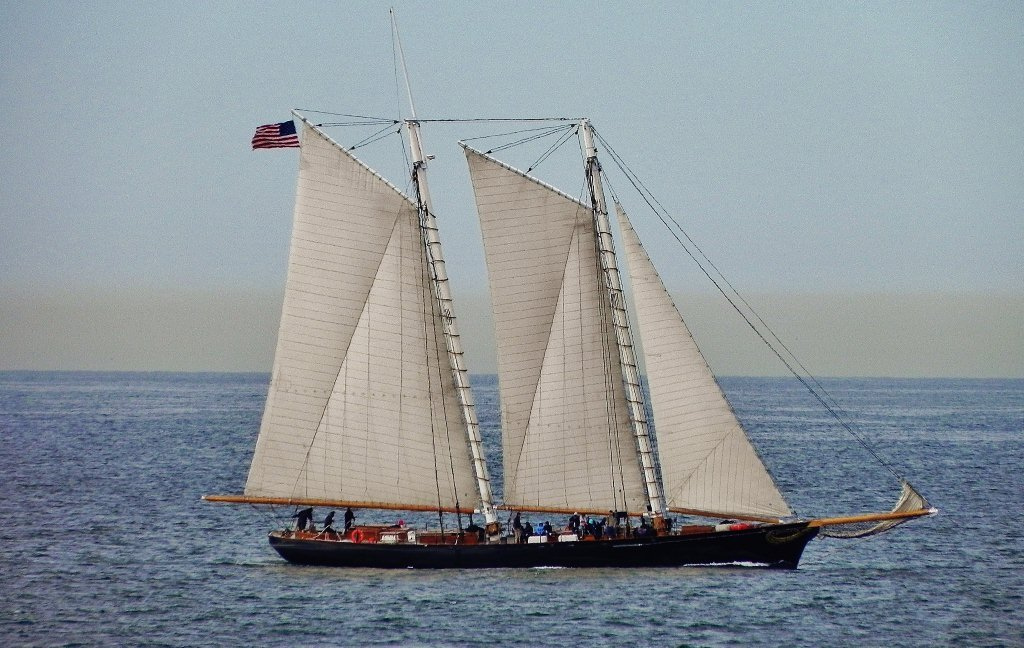
The America’s Cup yacht race has a storied history including a connection to the American Civil War. The race traces its origins to 1851 when the newly built American yacht America bested Britain’s finest yachts in the Royal Yacht Squadron’s annual 100 Guinea Cup.  Bringing the trophy back to the New York Yacht Club, America became the namesake for the America’s Cup – a race that is older than even the modern-era Olympics. Today the race is held in various port cities around the world.

Following the 100 Guinea Cup, the America was sold between various parties and eventually found itself in the hands of the Confederate Navy. Instead of using the ship as a blockade runner or merchant raider, the Confederates scuttled the ship as a block ship to prevent the Union Navy’s capture of Jacksonville, Florida. Despite their efforts, the Union captured Jacksonville and raised and repaired the yacht. Intending to utilize the yacht’s immense speed, the Union armed the ship as a blockader and assigned her to patrol the approaches to Charleston harbor. The yacht was successful on October 12, 1862 when it captured the blockade runner David Crockett.

In March 1863, America caught the CSS Georgiana attempting to run the blockade and helped direct other vessels into a chase that ended with the grounding and destruction of the Georgiana. Historians continue to dispute whether the Georgiana was intended to be fitted out as a merchant raider or was merely another blockade runner. Georgiana’s remains were re-discovered in 1965 and limited excavations have been carried out on the site. America completed her wartime service, slid into obscurity and was eventually scrapped in 1945. Today a replica of the yacht offers guests sailing trips throughout the San Diego bay area and is berthed at the San Diego Maritime Museum.

british destroyer

HMS Edinburgh Firing Sea Dart Missiles
© UK MOD/Crown Copyright 2012

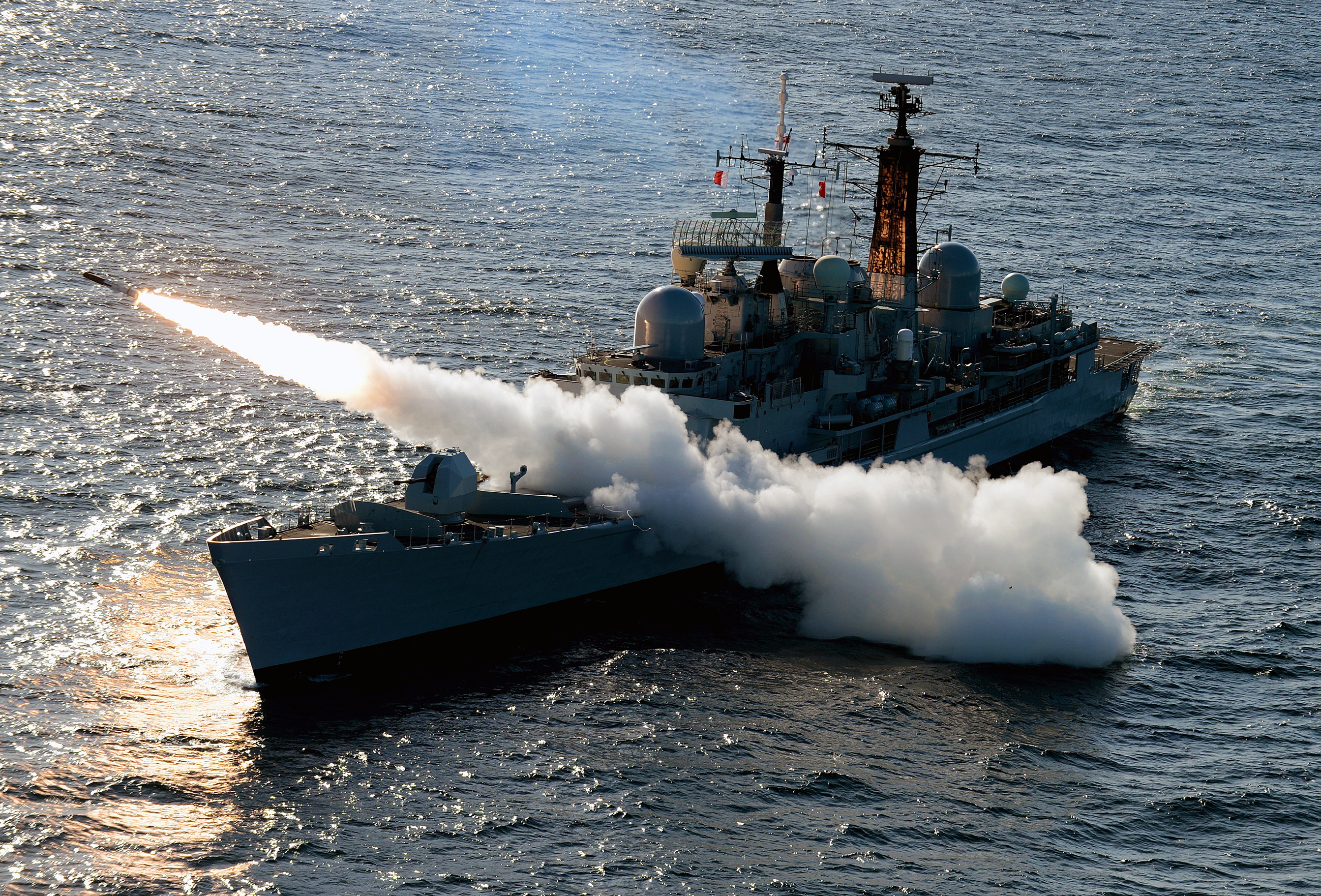
Today the Royal Navy retired the HMS York, its second to last Type 42 destroyer. Its last Type 42, HMS Edinburgh, sailed on its final deployment earlier this week and will be retired upon its return. The Type 42 destroyer class has served the Royal Navy since the 1970s and two were lost in the Falklands War. York and Edinburgh will soon be replaced by new Type 45 destroyers which are among the most powerful and sophisticated anti-aircraft vessels in the world.

During her long career, York sailed 750,000 miles in defense of British interests and saw service in Iraq (2003), Lebanon (2006) and most recently Libya (2011). Her sister ship Edinburgh also served in the 2003 Iraq conflict and has deployed on numerous anti-terrorism and narcotics interdiction missions around the globe. Both ships are currently for sale on the UK MoD’s disposal site and their sale will be used as a diplomatic tool to further relations with another nation(s). Another notable warship sale occurred earlier this year when the US Navy sold for scrap the Sea Shadow, a copy of which appeared in the James Bond film Tomorrow Never Dies.

The last vessel to bear the Edinburgh name was a Town-class cruiser lost in World War 2 in the Arctic Sea. The ship fell prey to Nazi sea and air forces while escorting a convoy from Murmansk, Russia to Great Britain. Aboard the vessel was 465 bars of gold bullion weighing 4.5 tons. Several salvage efforts were launched but it wasn’t until September 1981 that the first bar of gold was recovered. Over the course of two dive seasons, 460 of the 465 bars were successfully recovered. The recovery operations were performed under a contract similar to that between the UK government and Odyssey Marine for the Gairsoppa and Mantola recoveries in 2012.
african ferry

CC Image Courtesy of Yaamboo on Wikimedia Commons

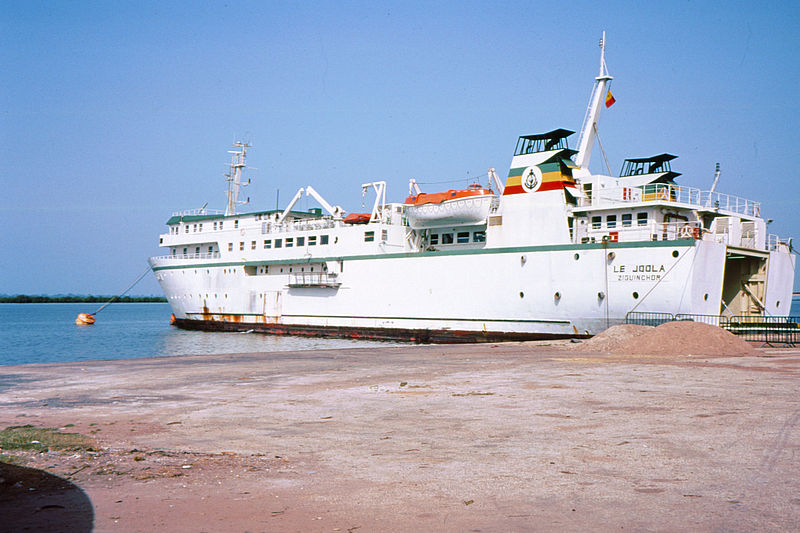
Today marks the tenth anniversary of the capsizing of the Sengalese ship, M/V Le Joola, on September 26, 2002. Le Joola was a government owned roll-on, roll-off ferry which operated between Senegalese ports on the Atlantic Ocean. At the time of its sinking, ferry travel was a popular option because a civil war made the land route prohibitively dangerous. The ferry’s maximum capacity was approximately 550, however, there were nearly 2,000 passengers aboard the ship when it capsized 35 kilometers off the Gambian coast.

A combination of overcrowding and gross neglect (the ship had only recently returned to service after a multi-year hiatus) contributed to the ship’s capsizing although the exact cause of the sinking has never been conclusively proven. It was also alleged that political considerations regarding the appeasement of separatist groups within Senegal encouraged the Senegalese government to return the ferry to service before it was fully seaworthy.

Sadly, only ~60 of the nearly 2,000 souls aboard survived and an exact body count has never been determined. The disaster is one of the worst sinkings in history with more lives lost than that of RMS Titanic, however it pales in comparison to the ~9,000 lives lost aboard the M/V Wilhelm Gustloff in 1945. The ship’s sinking continues to have ramifications today with survivors and victims’ families demanding a new inquiry into the causes of the sinking.

research vessel

Photo: Woods Hole Oceanographic Institute

The US Navy has announced that their newest Auxiliary General Oceanographic Research (AGOR) class of vessels will be named after naval aviator and astronaut Neil Armstrong who passed away last month. The class will be composed of two vessels and construction on the lead ship, R/V Neil Armstrong, began in August. Neil Armstrong is set to enter service in summer 2015.

The Neil Armstrong class of vessels will displace 3,200 tons, stretch 238 feet in length and have a cruising range of 11,500 nautical miles at 12 knots. Neil Armstrong’s 1,800 square feet of dry, wet and computer labs will give its 24 embarked scientists plenty of space to conduct research and exploration operations throughout the globe. In addition to its lab and staging spaces, the Neil Armstrong will be able to launch and recover various ROVs and mini-submersibles with its stern and main cranes. Among the innovations included in the ship’s design is a hull optimized to divert bubbles from the sonar area for enhanced sonar performance.

The ships are funded by the Office of Naval Research, but will be operated by non-profit oceanographic institutes. The yet unnamed second vessel of the class (AGOR 28) will be operated by the Scripps Institution of Oceanography in San Diego, California. Neil Armstrong will be based at the Woods Hole Institute of Robert Ballard fame and conduct most of her operations in the Atlantic.

civil war navy

Pulitzer Prize winning author James M. McPherson’s latest book, War on the Waters, is a concise naval history of the American Civil War. Most authors and historians focus on the great generals (Lee, Jackson, Grant, Sherman, etc.) or the great battles (Antietam, Chancellorsville, Gettysburg, Shiloh etc.) and often ignore the vital role the navies played in the conflict both on the rivers of the western Confederacy and the high seas. Entire books have been written on various aspects of the naval war – riverine warfare in the west, blockade running, Confederate merchant raiders, foreign intrigue in Europe and the innovations that made their debut in the conflict. McPherson neatly summarizes each of these topics and arranges them in easily digestible chapters that proceed in chronological order.
McPherson’s organization and writing style allow both the uninitiated reader and the Civil War buff to understand the ebb and flow of the conflict and the various personalities, events and inventions that influenced the war. Perhaps most importantly, McPherson accompanies his chapters with strategic or tactical level maps that enable the reader to understand the events which occur in the chapter. McPherson understands the unwritten rule that the inclusion of a relevant map is worth multiple pages of text in helping a reader establish an awareness of the events being described. Along with the maps, various etchings and photos accompany each chapter and neither maps nor illustrations are confined to a few pages in the center or the beginning of the book. This allows the reader to visually grasp the crux of each chapter and makes both the maps and the illustrations more relevant to the narrative being told.

Overall, War on the Waters is a fantastic single volume history of the Civil War’s naval history. McPherson hits all of the highlights of the Civil War – CSS Virginia vs. USS Monitor, blockade running, William B. Cushing’s daring raid on the CSS Albemarle, and the first successful attack by a submarine – in only 225 pages. War on the Waters is a welcome addition to the naval literature of the Civil War and will be enjoyed by anyone interested in American history, naval history or the Civil War.

Merchant submarine

German Merchant Submarines Deutschland & Bremen
Photo: Kevin Heath

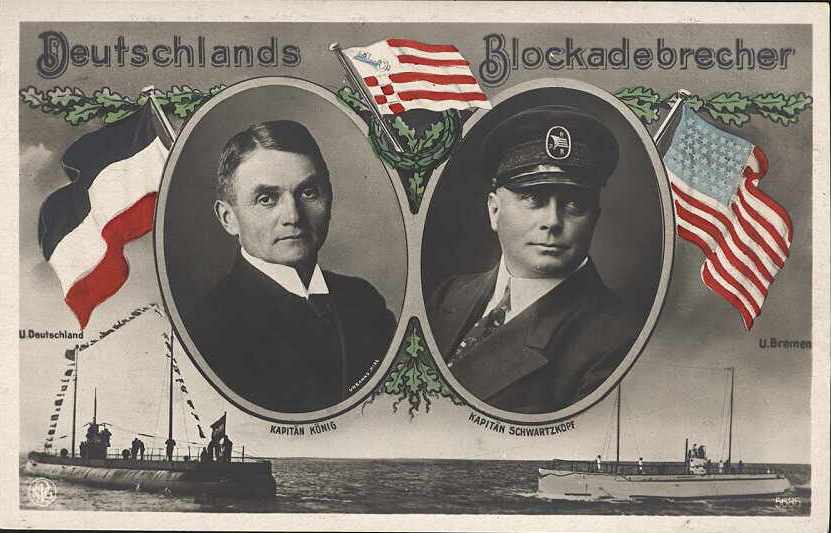
During World War I, the Royal Navy blockaded Germany’s North Sea ports and cut off all imports into the country. Desperate for imports of rubber, tin, nickel and other resources unavailable within their borders, the German merchant marine took a page from Jules Verne’s 20,000 Leagues Under the Sea and developed blockade running merchant submarines. The subs were built for the North German Lloyd Line and were designed to maximize cargo carrying capacity – unusual for vessels normally viewed as tools of war and not of trade.

The first sub, Deutschland, made her maiden voyage in June of 1916 and arrived in Baltimore, Maryland a month later carrying dyes, gemstones and pharmaceuticals. Deutschland had successfully threaded the needle of the Royal Navy blockade without even being detected. Returning with a load of valuable nickel, tin and rubber, the Deutschland’s maiden voyage not only paid for itself, but it netted a massive profit for her North German Lloyd Line owners.

The Deutschland made one more voyage to the United States before deteriorating relations between the US and Germany precluded further trade. Deutschland was later converted to u-boat use by the Imperial German Navy, sank 42 vessels and was turned over to the Royal Navy after the Armistice. The Deutschland’s sister ship, Bremen, sailed for the US in September of 1916, however, she never arrived and was presumed lost at sea. One of Bremen’s oil stained life preservers was discovered near Cape Elizabeth, Maine indicating the ship may have made its way as far the American coast. The ship’s disappearance, though, remains a mystery. Various reports indicate she might have been depth charged or mined by Royal Navy vessels, but perhaps Bremen felt drawn to her Jules Verne origins and fell prey, like Captain Nemo and the Nautilus, to the Moskstraumen.

One of the most unusual clashes in naval history occurred on September 14, 1914 when two former passenger liners fought one another off the coast of Brazil’s Trinidada Island. At the outbreak of World War 1, both the British and German navies put into effect plans calling for the arming of certain ships as auxiliary cruisers to act as wartime supplements to their naval forces. Two such ships were the SS Cap Trafalgar and RMS Carmania.

The SS Cap Trafalgar had been built in 1913 and operated between Hamburg, Germany and South American ports. Following the declaration of war, her civilian crew was replaced by officers and seaman of the German Imperial Navy and she was armed with 2 4.1in. guns. Thus she became SMS Cap Trafalgar and was charged with hunting down and sinking Allied shipping in the South Atlantic. SMS Cap Trafalgar’s opponent, RMS Carmania, was a British mail liner built in 1905 for the Cunard line’s Liverpool to New York route. Similar to SMS Cap TrafalgarRMS Carmania was commandeered by the British Admiralty and became HMS Carmania on August 8, 1914 when she was armed with 8 4.7 in. guns. Unlike Germany’s auxiliary cruisers, Britain utilized its cruisers to protect merchantmen or assist in the hunt for Germany’s merchant raiders.

The two ships were destined to come across one another after each were given orders to proceed to Trindade Island – the Germans were to rendezvous with colliers and the British suspected the island was being used by the Germans as a supply point. Caught with two colliers in broad daylight, the Cap Trafalgar at first fled from the pursuit of the Carmania, however, the Germans reversed course and turned to engage the Carmania. After a brisk 70 minute battle, with both ships ablaze and holed below the waterline the Cap Trafalgar capsized and sank with the loss of 51 officers and crew. While the Cap Trafalgar had been sunk, it had inflicted serious damage on the Carmania and she required extensive repairs at Gibraltar’s dry dock. The Carmania finished out the war in British service and was eventually scrapped in 1932. Even though it involved two of the largest, fastest and most expensive ships in the world, the engagement was of little strategic consequence and is now merely a strange footnote in naval history.

Morro Castle Fire

Photo: Wikimedia Commons

78 years ago today, a devastating fire destroyed the passenger liner SS Morro Castle off the coast of New Jersey. Operating between Havana and New York City, the liner had been built in 1930, but her builders failed to incorporate the latest safety features into her design. The fire began in a storage room around 3am and quickly spread throughout the ship. The ship’s highly flammable materials, de-activation of the trip wires for the ship’s fire doors and poor structural design allowed the Morro Castle to be engulfed in flames in just minutes. 135 passengers and crew perished in the disaster and the Morro Castle was beached and later sold for scrap. 

Partly because the Morro Castle burned so close to shore (and was a beach front attraction for several weeks before being towed to the breaker’s yard), the disaster served as the catalyst for more stringent maritime safety laws in the form of the Merchant Marine Act of 1936. It also influenced an entire generation of naval architects, including William Francis Gibbs the designer of the SS United Statesto introduce multiple safety innovations in the next generation of passenger liners. Earlier this year, New Jersey authors Gretchen Coyle and Deborah Whitcraft published Inferno At Sea documenting the Morro Castle disaster. The authors interviewed survivors and archival materials to produce the most recent account of the maritime tragedy.