Archives For November 30, 1999

hong kong ferry

CC Image Courtesy of Trey Menefee on Flickr

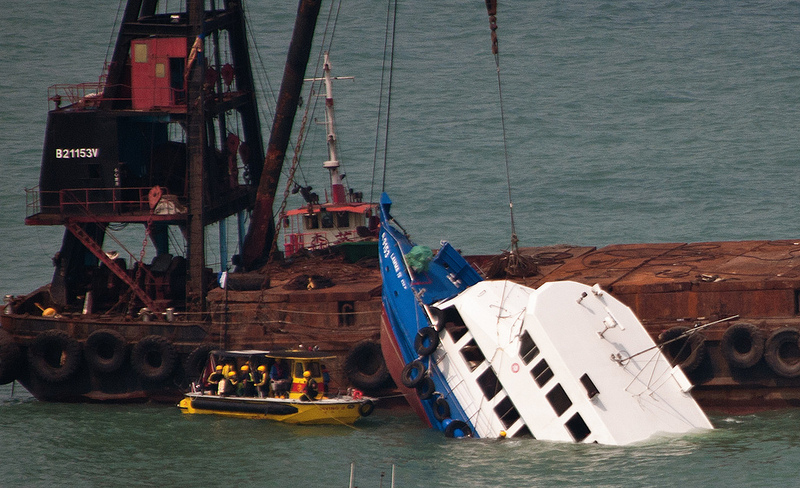
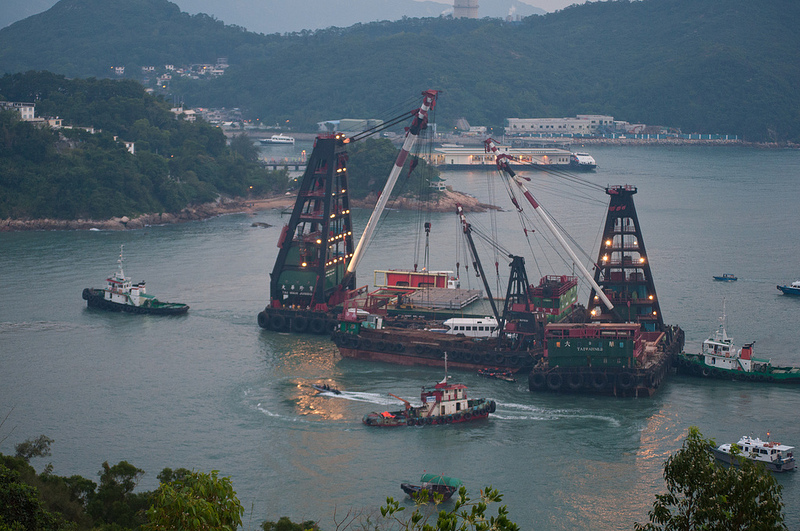
A commuter ferry and a boat full of Hongkong Electric Co. employees collided Monday night around 8:30pm. The Hongkong Electric boat, Lamma IV, was carrying 120 passengers on their way back from a tour of a power facility and were about to take in a fireworks display in Victoria Harbor. The ferry, Sea Smooth, collided with the Lamma IV’s stern and caused the Lamma IV to sink quickly by the stern, stranding dozens of passengers below deck.

So far 38 people have been declared dead of the 120 aboard while only minor wounds were suffered by the Sea Smooth‘s passengers and crew. Authorities have towed the Lamma IV to a nearby beach and discovered a large hole on the port side of the vessel’s stern. Both captains and several of the crew from each vessel have been arrested and released on bail. Hongkong Electric has already pledged to pay $25,800 to each victim’s family. The exact cause and responsibility for the wreck has yet to be determined.

hong kong ferry

CC Image Courtesy of Trey Menefee on Flickr

More than 100 years ago, Greek skin divers discovered the remains of an ancient shipwreck nearly 200 feet below the surface of the Aegean Sea near the Greek island of Antikythera. For 2 years, divers utilized crude diving gear to recover items from the wreck. Among the items discovered was what appeared to be a random assortment of cogs and gears. Not until 2006 were scientists able to discern that the object was in fact an ancient computer designed for use as a calendar as well as to show the positions of the sun, moon and planets in the sky. The computer, termed the Antikythera Mechanism, could evn predict the timing of eclipses. The device is believed to have been built in the 1st century BC and the video above shows a Lego recreation of the device.

The diving technology of the early 20th century prohibited a full survey of the site and 2 divers were left paralyzed from the bends and another killed during the work. Apart from a few brief dives on the site, it has remained undisturbed until this year. Scientists with the Woods Hole Oceanographic Institute are set to begin surveying the site this week after reaching a deal with the Greek government. Using rebreather gear and self-propelled dive scooters, the scientists will be able to dive deeper and go farther than earlier expeditions and hope to learn more about Greek trade patterns and technology from the expedition.

Canadian coast guard cutter

CCGS Terry Fox in St. John’s Harbour, Newfoundland
Photo: Canadian Coast Guard

The Canadian Coast Guard has announced its plan to spend $332,000 to investigate the feasibility of incorporating fuel cell technology into its new offshore fishery science vessels. Under the current proposal, the vessels would have hybrid diesel-fuel cell propulsion systems. While at sea, the ship will be able to rely on its diesel engines and then switch to the fuel cell system to generate electricity while in port. The system is designed to both reduce emissions and fuel costs as diesel technology operates most efficiently at sea, but has a high amount of energy waste when used simply to produce electricity while docked. This feasibility study is in addition to a delayed project at the University of Victoria where the British Columbia approved $13.3 million for converting an existing ship to the technology.

The Canadian Coast Guard isn’t the first to experiment with alternative fuel technologies for marine propulsion. Maritime consultancy group Germanischer Lloyd Group has also developed plans for a hydrogen powered commercial container vessel. In addition, Norwegians have been operating several dozen liquefied natural gas (LNG) fueled vessels for a decade. The vessels have reduced emissions and their fuel costs can be as much as 25% less than a traditionally powered ship. Less than two weeks ago, the Central Commission for the Navigation of the Rhine and the United Nations Economic Commission for Europe approved a LNG powered vessel for use on all international inland waterways. This move could spur additional adoption of LNG technology as the EU passes ever more stringent emissions regulations. Nuclear powered vessels have also seen limited commercial experimentation, but for now are reserved almost exclusively for icebreaking and military functions.

If the current path of ever more onerous emissions regulations is continued, then shipowners will migrate in ever greater numbers to LNG and other alternative fuel sources for propulsion. Adoption of LNG technology by US shipowners might occur even faster considering natural gas prices are at near historic lows and the country is experiencing a boom in supply.

chinese ice breaker

Chinese Ice Breaker Xue Long
Photo: Ajai Shukla

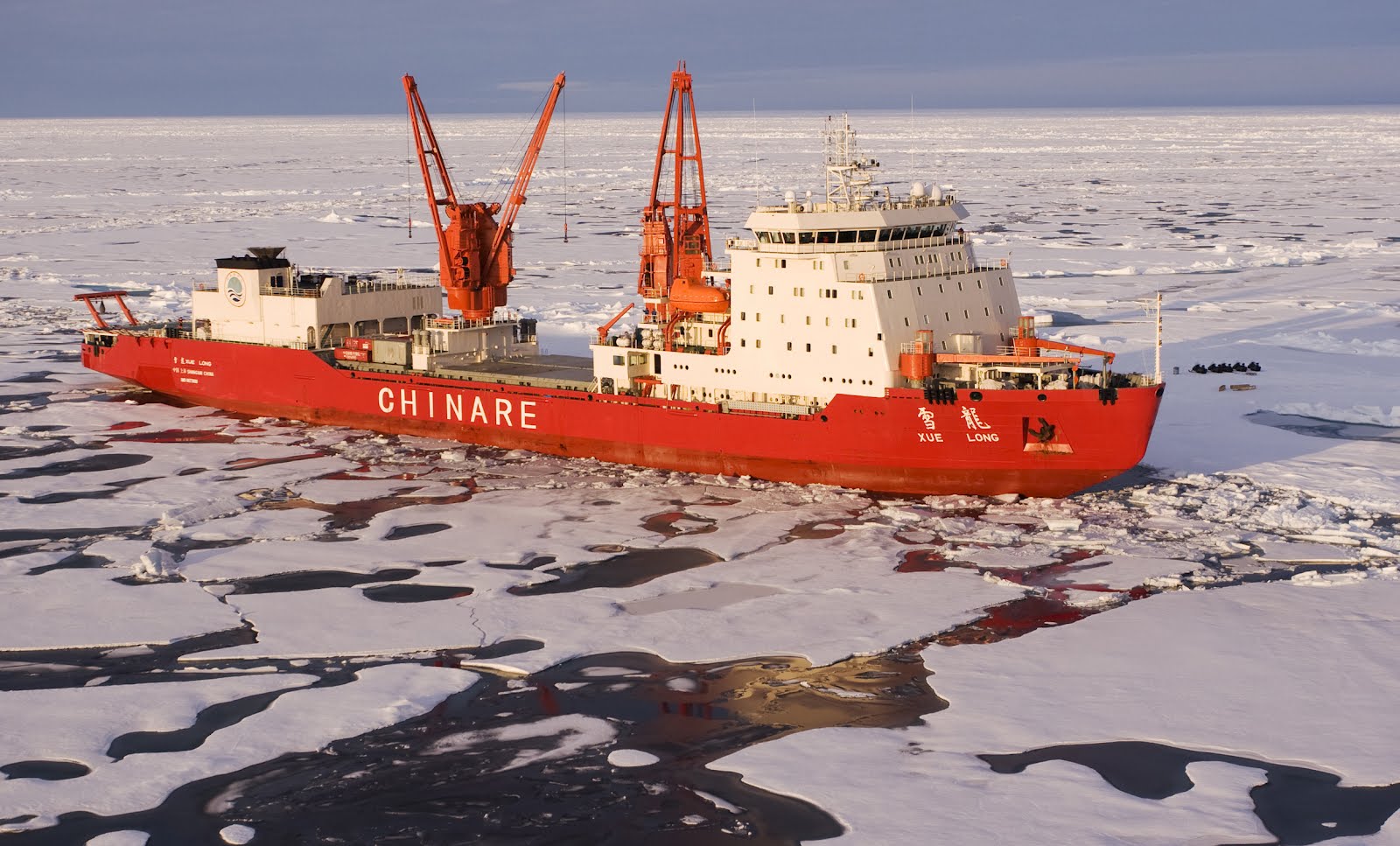
This week has proven to be a historic one in Chinese naval affairs. On Tuesday, the Chinese Navy commissioned its first aircraft carrier, Liaoning. Although still lacking a naval air wing capable of operating from the carrier, the Chinese Navy has joined the exclusive club of nations which operate aircraft carriers and set itself on a path to developing the skills requisite to its efficient operation. In addition, crowds in Shanghai welcomed home the ice breaker Xue Long (Snow Dragon) as it completed a historic 18,500 mile scientific voyage and became the first Chinese ship to sail through the Northern Sea Route.

Manned by 119 scientists and crew, Xue Long departed Qingdao (best known for its Tsingtao beer, a relic of its Imperial German colonial past) on July 2nd. During her 3 month voyage, the Xue Long and her crew conducted various geophysical surveys and installed an automatic meteorological station. The ship also stopped over in Iceland to collaborate with scientists there and to perform joint oceanic surveys.

These two events further mark the strides China has made towards projecting its power on a global scale. Not since Admiral Zheng He’s 15th century sailing expeditions has China reached this far afield. A final event this week which could either end up a small footnote in diplomatic history or the catalyst to an Asian conflagration was the cruising of Chinese maritime surveillance cutters and naval frigates to the disputed Diaoyu/Senkaku Islands. Long a subject of dispute between China and Japan and to a lesser extent Taiwan, Japan purchased the islands earlier this month from a private party. The presence of large oil reserves in the waters around the islands make them, like the Falklands, quite valuable economically. It remains to be seen whether the dispute is simply kicked down the road, spurs Japan to acquire a nuclear deterrent or erupts in limited to full scale conflict.

british destroyer

HMS Edinburgh Firing Sea Dart Missiles
© UK MOD/Crown Copyright 2012

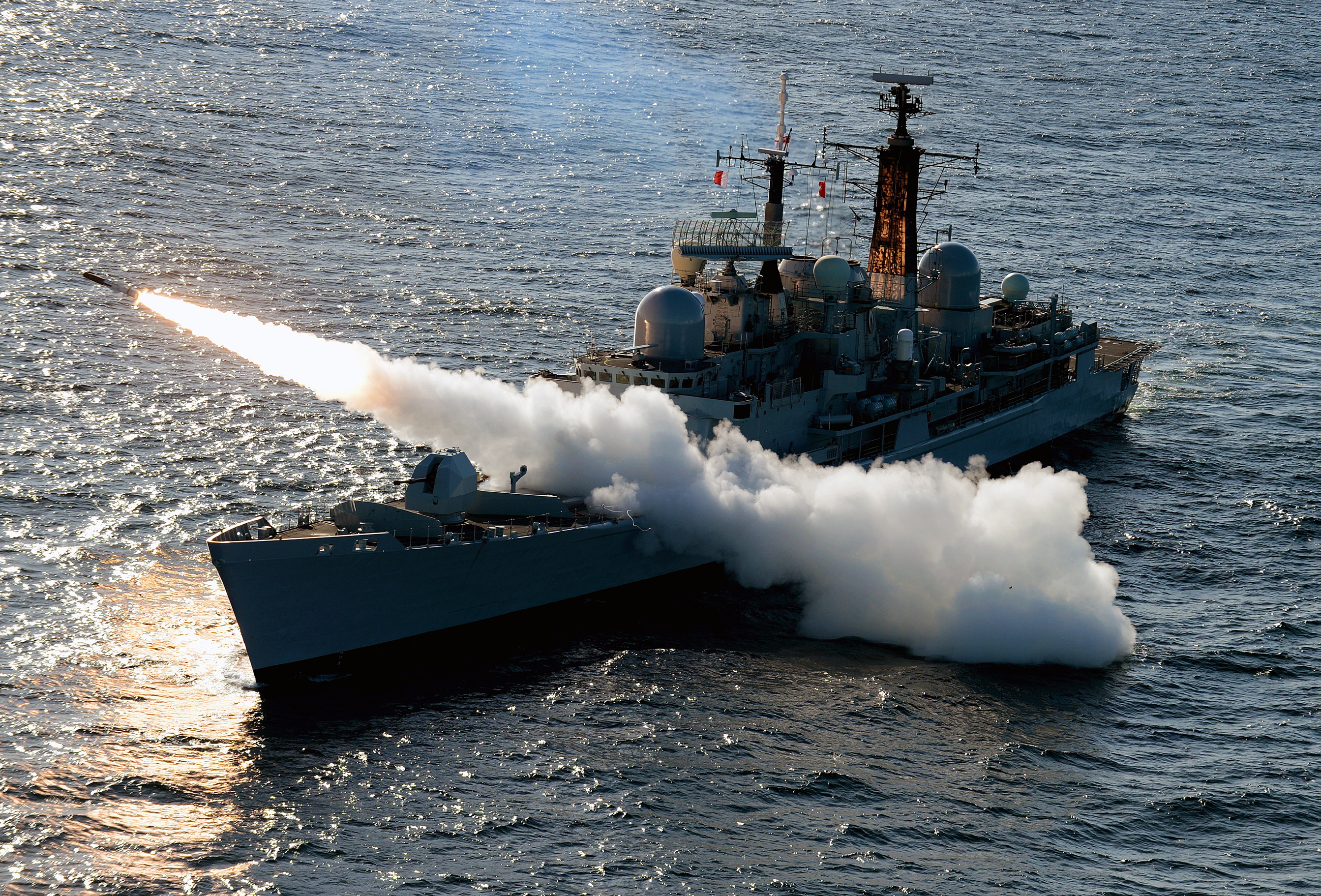
Today the Royal Navy retired the HMS York, its second to last Type 42 destroyer. Its last Type 42, HMS Edinburgh, sailed on its final deployment earlier this week and will be retired upon its return. The Type 42 destroyer class has served the Royal Navy since the 1970s and two were lost in the Falklands War. York and Edinburgh will soon be replaced by new Type 45 destroyers which are among the most powerful and sophisticated anti-aircraft vessels in the world.

During her long career, York sailed 750,000 miles in defense of British interests and saw service in Iraq (2003), Lebanon (2006) and most recently Libya (2011). Her sister ship Edinburgh also served in the 2003 Iraq conflict and has deployed on numerous anti-terrorism and narcotics interdiction missions around the globe. Both ships are currently for sale on the UK MoD’s disposal site and their sale will be used as a diplomatic tool to further relations with another nation(s). Another notable warship sale occurred earlier this year when the US Navy sold for scrap the Sea Shadow, a copy of which appeared in the James Bond film Tomorrow Never Dies.

The last vessel to bear the Edinburgh name was a Town-class cruiser lost in World War 2 in the Arctic Sea. The ship fell prey to Nazi sea and air forces while escorting a convoy from Murmansk, Russia to Great Britain. Aboard the vessel was 465 bars of gold bullion weighing 4.5 tons. Several salvage efforts were launched but it wasn’t until September 1981 that the first bar of gold was recovered. Over the course of two dive seasons, 460 of the 465 bars were successfully recovered. The recovery operations were performed under a contract similar to that between the UK government and Odyssey Marine for the Gairsoppa and Mantola recoveries in 2012.

research vessel

Photo: Woods Hole Oceanographic Institute

The US Navy has announced that their newest Auxiliary General Oceanographic Research (AGOR) class of vessels will be named after naval aviator and astronaut Neil Armstrong who passed away last month. The class will be composed of two vessels and construction on the lead ship, R/V Neil Armstrong, began in August. Neil Armstrong is set to enter service in summer 2015.

The Neil Armstrong class of vessels will displace 3,200 tons, stretch 238 feet in length and have a cruising range of 11,500 nautical miles at 12 knots. Neil Armstrong’s 1,800 square feet of dry, wet and computer labs will give its 24 embarked scientists plenty of space to conduct research and exploration operations throughout the globe. In addition to its lab and staging spaces, the Neil Armstrong will be able to launch and recover various ROVs and mini-submersibles with its stern and main cranes. Among the innovations included in the ship’s design is a hull optimized to divert bubbles from the sonar area for enhanced sonar performance.

The ships are funded by the Office of Naval Research, but will be operated by non-profit oceanographic institutes. The yet unnamed second vessel of the class (AGOR 28) will be operated by the Scripps Institution of Oceanography in San Diego, California. Neil Armstrong will be based at the Woods Hole Institute of Robert Ballard fame and conduct most of her operations in the Atlantic.

landing ship tank

Photo: US Navy

World War 2 saw the perfection of modern amphibious operations with successful landings in North Africa, Italy, Normandy and throughout the Pacific contributing to the demise of the Axis Powers. Among the innovations which made these operations successful was the Landing Ship, Tank (LST). LSTs were designed with massive bow doors and a bow ramp that enabled Allied forces to deliver tanks, half-tracks, deuce and a halfs and other vehicles directly to the beachhead. After disgorging their cargo, the LST’s crew could use a winch system to extricate the ship from the beachhead and return to port for another load. Of the 1,051 LSTs produced for Allied naval forces, most were scrapped or converted to use as merchant vessels after the war while a few saw service through the Vietnam War. One even served as a produce carrier for Los Angeles Mafioso Jack Dragna, hauling bananas between Latin America and California.

LST 393, one of only 2 surviving LSTs, now serves as a museum ship in Muskegon, Michigan. The ship delivered 9,000+ troops and 3,248 vehicles to the beaches of Salerno, Sicily, and Normandy. Following her wartime service, LST 393 was renamed M/V Highway 16 and plied the Great Lakes as an automobile carrier for decades. In 2000, a group began restoring the ship as a memorial to the officers and crew who served aboard these important vessels. The ship is open for tours and can be rented for special occasions. More information can be found at the ship’s website: http://www.lst393.org/

littoral combat ship

USS Forth Worth during sea trials
Photo: US Navy

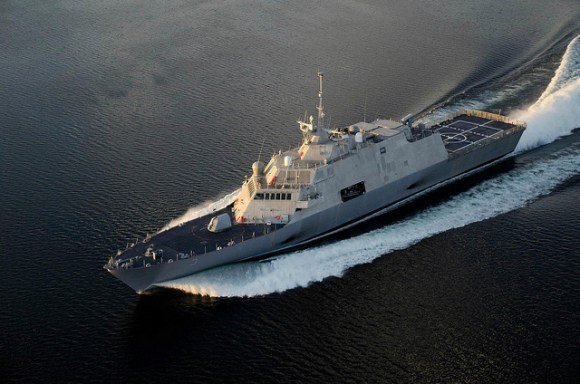
Tomorrow the US Navy is set to christen the USS Fort Worth in Galveston, Texas. The Fort Worth is the second vessel of Lockheed Martin’s Freedom class Littoral Combat Ships which are designed to operate in a multi-mission role in shallow waters. The Littoral Combat Ship was first devised in the 1990s when the US Navy recognized the need for a multi-purpose vessel to operate in the littoral zone where either deeper draft vessels couldn’t operate or the dangers of the zone (i.e. missile boats, mines, shore launched missiles, etc.) prohibited the exposure of more expensive ships. After the solicitation of various proposals, two designs were chosen for production – Lockheed Martin’s conventional Freedom-class and General Dynamics/Austal’s trimaran Independence class. Despite cost-overruns and serious criticism, the program has forged ahead and, for good or bad, the ships are entering service.

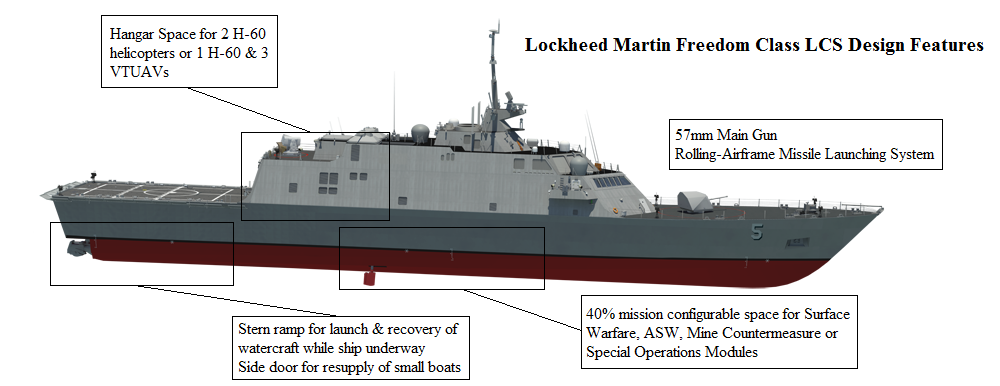
The Freedom class variant utilizes a conventional monohull and Lockheed Martin was assisted in its design by veritable naval architecture firm Gibbs & Cox. Gibbs & Cox, founded by America’s greatest naval architect, has designed more than 60% of the US Navy’s surface ships as well as ships for 15 other world navies. Among the Freedom-class’ notable features is its jet propulsion system which allows it to reach speeds of 40 knots/hour, its 12.8 foot draft which enables it to operate in shallower water than most US Navy vessels, the ability to launch and recover watercraft while underway and its 40% re-configurable space.

littoral combat ship

Freedom class LCS Diagram

The LCS ships are intended to fulfill the roles previously performed by Oliver Hazard Perry guided missile frigates, MCM Avenger class mine countermeasure vessels and Osprey class coastal mine hunters. In order to perform to possess this flexibility, the ship and its crew must rely on interchangeable mission modules that are installed based on mission needs. These plug and play modules include an anti-submarine warfare (ASW) module, surface warfare module, and mine countermeasures module. The ship can also be configured to support special operations.

The thinking behind the modules is that if the Iranians mine the Straits of Hormuz, then the ship’s mine countermeasure module is quickly swapped in (projected time is a couple days) and the ship deployed to sweep the Strait clean. Discounting the fact that much of the mission modules’ substance has yet to be created, this is where the biggest criticism of the ships come into play. As any military officer will attest, you fight with what you’ve got on the battlefield. An LCS outfitted with its surface warfare module is largely ineffective against a diesel submarine strike. Unfortunately, “time out I’ve got to go change modules before we can fight” will never work on the battlefield. Ultimately, the Navy’s LCS fleet will most likely spend most of its time equipped with a single module and 3 or more LCS kept on station to perform dedicated roles. For a more detailed discussion of the LCS’ origins see here.

jolly roger

CC Image Pirated From Scott Vandehey on Flickr

To recognize International Talk Like a Pirate Day, here are a few piratical items of note…

Captain Morgan, the Diageo owned rum distiller, funded excavations at the site of the real Admiral Morgan’s shipwreck this summer. No word if any rum has been found aboard the wreck or if the salvage crew were cited for operating an ROV under the influence.

Excavations continue on both Captain Sam Bellamy’s Whydah and Blackbeard’s Queen Anne’s Revenge. Artifacts from both wrecks can be viewed at their respective museums in Provincetown, Massachusetts and Beaufort, North Carolina.

According to the Maritime Executive, there were 17 pirate attacks just last month. This month, pirates even fired upon an Italian naval helicopter. A map of pirate attacks in 2012 can be viewed here.

Last year, 35 people lost their lives while being held hostage by Somali pirates. As of August 30, there were 11 vessels and 188 hostages being held by Somali pirates. In addition to the human costs of piracy, experts estimate that the financial costs of piracy was around $6.6 – 6.9 billion in 2011 alone.

Piracy along the coast of Somalia has become such a problem that one of the primary reasons for the 2007 creation of the US’s Africa Command (AFRICOM) was the fighting of piracy. It’s rumored that the servicemen of AFRICOM will star in Disney’s upcoming film Pirates of the Caribbean: On Somali Tides.

helicopter carrier

Hull of LHD Canberra aboard heavy lift ship MV Blue Marlin
Photo: Royal Australian Navy

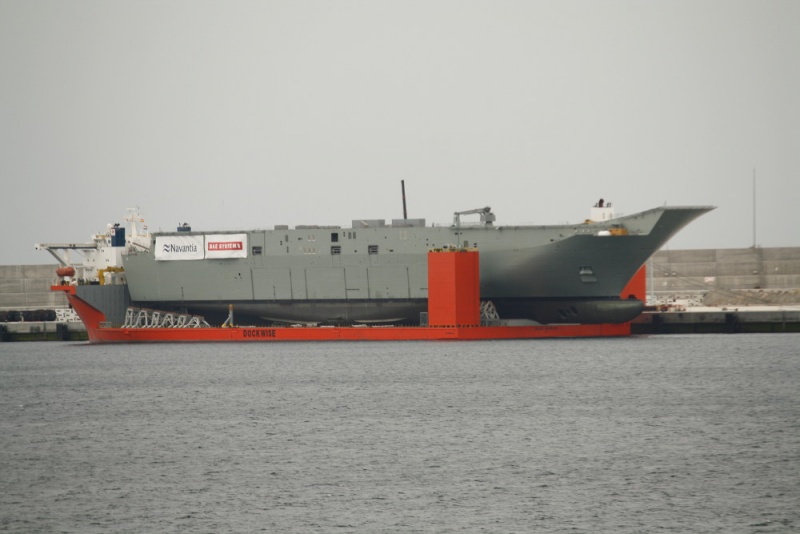
The first of the Royal Australian Navy’s new Landing Helicopter Dock ships is ~1/3 of its way to Australia. Launched in February 2011, the LHD Canberra is the first of two Canberra class Landing Helicopter Dock ships being built for the Royal Australian Navy. The ships are based on the design of Spain’s SPS Juan Carlos I which entered service in the Spanish Navy in 2010. The hull and flight deck were built in a Spanish shipyard and are being transported to Australia via heavy lift ship. The same lift ship was used to transport the USS Cole back to the United States after it was bombed by Islamic fundamentalists on October 12, 2000. Upon arrival in Australia in November, the Canberra’s final fitting out will be performed by BAE Systems. Once commissioned in 2014, the Canberra will be the largest warship to ever serve in the Royal Australian Navy.

Australian helicopter carrier

LHD Canberra Cutaway
Photo: Royal Australian Navy

Depending upon mission needs, the Canberra class LHDs can accomodate up to 1,000 troops and 110 vehicles in its multiple decks. The Canberra’s welldeck can hold and launch 4 landing craft and RHIBs. Air capabilities include 6 medium helicopter launch spaces and room for 26 medium-helicopters (up to CH-47 Chinook size) in its hanger and light vehicle deck. The ship is approximately the same size as the United States’ Wasp class amphibious assault ships and as such could most likely operate V-22 Ospreys as well as the F-35B if/when it becomes available. Additionally, the ship was designed with the lightest draft possible so as to be able to operate in the littorals and secondary ports. The addition of the Canberra and her sister ship Adelaide in 2015 will give the Royal Australian Navy further power projection capabilities and help maintain the balance of power in a region increasingly under the influence of Chinese autocracy.