Archives For November 30, 1999

St. Louis Riverboat

Belle of the Night
Photo: Polestar Boating Center

Three days from now, on October 20th, the Belle of the Night, a former floating restaurant will be auctioned off to the highest bidder at Polestar Boating Center in St. Charles, Missouri. The Belle of the Night operated as a restaurant and night club in Havana, Missouri until being laid up. Prior to that, she was named Belle Angeline and was moored along St. Louis’ Laclede’s Landing as a floating restaurant during the late 1970s and 1980s. The vessel was built in 1975 and is a barge with a 4 story superstructure and not an actual riverboat. The current owner has attempted to work with groups to re-open the Belle of the Night in Grafton, Illinois or St. Charles, but neither have come to fruition. If the vessel is not sold at auction, then its fixtures will be auctioned off on October 24th and the vessel sent to the scrapyard.

The plight of the Belle of the Night is not unusual as the St. Louis riverfront has lost many of its former riverboat attractions in the past few years. The riverboat Robert E. Lee was lost to a fire in 2010 and the Admiral Casino was sent to the scrapyard in 2011. The St. Louis riverfront used to be home to nearly a dozen floating restaurants, excursion boats and even a World War II minesweeper, but changing demands and the forced retirement of many vessels due to age has caused the number of vessels to dwindle to a mere handful.

HMS Cymric

Oil Painting by Kenneth King
National Maritime Museum of Ireland

Late in 2011, divers from Dark Star dive team discovered the wreck of the British submarine J6 off the Northumberland coast. While the discovery of a submarine may have surprised the team, what is even more surprising, and tragic, are the circumstances by which the J6 was sunk.

On October 15, 1918 the HMS Cymric was on patrol off the Northumberland coast in Northeastern England. The HMS Cymric was originally an Irish schooner launched in 1893. She was later converted by the Royal Navy for use as a Q-ship. Q-ships were modern-day Trojan Horses – camouflaged to look like innocent merchant ships in order to lure unsuspecting German u-boats and merchant raiders to attack. When attacked, the Q-ship crew would reveal a bristling array of hidden armaments and the hunter would become the hunted. Q-Ships claimed fourteen German u-boats destroyed and 60 damaged during World War I through the use of these tactics.

While on patrol, the Cymric’s crew spotted what appeared to be a German submarine with the markings U6 on its conning tower. The Cymric opened fire and sank the submarine. Unfortunately, the markings were in fact J6 and 15 Royal Navy sailors lost their lives to friendly fire. The Cymric’s captain was cleared after a court of inquiry and the matter remained classified until 1969. The Cymric returned to commercial service after the war, but her bad luck continued as she struck a tram with her bowsprit in 1927 in Dublin harbor and then disappeared with all hands while sailing from Scotland to Portugal in 1944. Dark Star divers plan to return to the wreck this year to lay a memorial plaque in honor of the lives lost aboard J6.

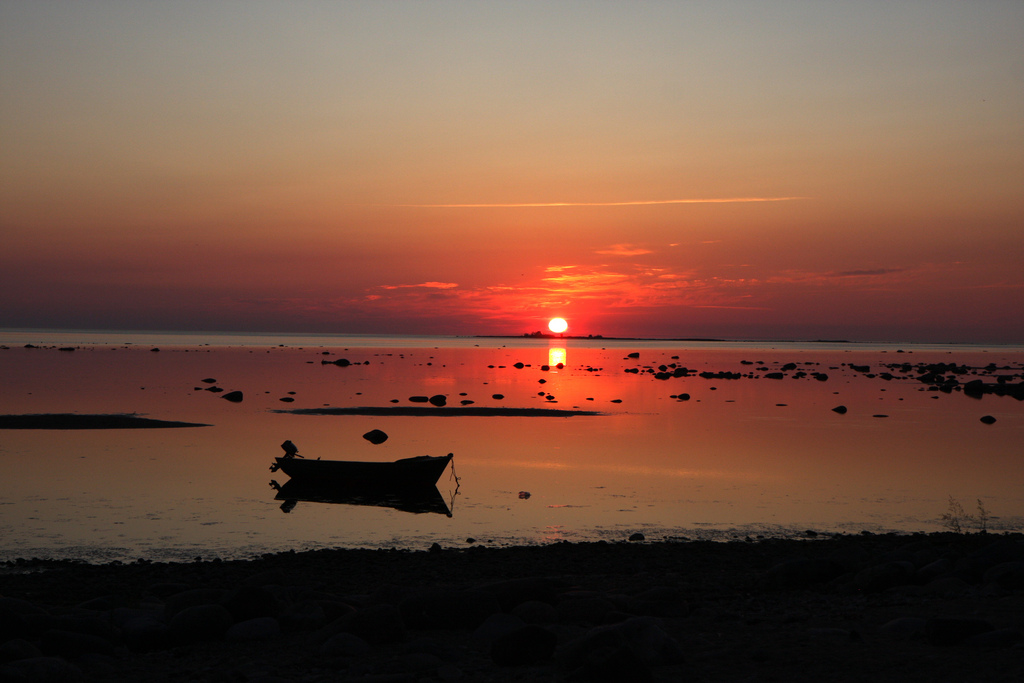
operation albion

Sunset over Saaremaa Island, Estonia
CC Image Courtesy of Luke Saagi

In late 1917, the German High Command was desperate to knock Russia out of World War I and devote more resources to the Western Front. Despite upheaval at all levels of society and especially within the military, Russia had remained a belligerent after the Russian Revolution in February 1917. The Russian military had essentially ceased to be an effective fighting force and yet the Provisional Government under Alexander Kerensky insisted on continuing the fight against Germany and Austria-Hungary. Thus the Germans devised a plan to invade a trio of islands in what is now Estonia. The operation would achieve two significant objectives and potentially force Russia to withdraw from the war. First, the Russian Baltic Fleet would be all but neutered by German control of the islands and, more importantly, the Russian capital of St. Petersburg would be threatened with invasion.

Dubbed Operation Albion, the plan called for a combined arms operation in which infantry and cyclist troops would land on October 12, 1917 on Saaremaa Island and isolate the garrison. Meanwhile, a naval task force would provide fire support and deal with any attempted intervention by the Russian Navy. Both land and sea forces would be supported by seaplanes which flew reconnaissance and bombing missions.

The Russians had formidable coastal batteries and garrisons on Saaremaa and nearby Muhn Island, however, a combination of poor morale and bold action by the German forces negated any Russian advantages. Russian morale was so low that some coastal batteries refused to engage the German ships in the hope that non-resistance would spare their batteries hostile fire. Russian forces were also hampered by poor communication and a lack of initiative by some commanders.

The German landings were achieved without serious opposition and cyclist troops quickly pushed to divide the Russian forces by occupying a dam which connected Saaremaa and Muhn. The cyclists reached their objectives and wreaked havoc on the Russian forces as they attempted to withdraw across the dam. Russian naval forces and 3 Royal Navy submarines attempted to intervene, however, their efforts were unsuccessful and resulted in the loss of the pre-dreadnought Slava, the destroyer Grom and a few smaller vessels. Apart from damage from mines, the Germans lost no capital ships during the operation.

battleship sinking

Pre-Dreadnought Slava Sinking
Photo: Wikimedia Commons

After little more than a week, the Germans had secured the three islands – Saaremaa, Muhu and Hiiumaa and captured 20,000 Russian troops. Most significantly, though, the Germans had successfully launched a combined air-land-sea operation and were now poised to invade St. Petersburg. Less than 6 weeks after the action, the Russians sued for peace and German troops were freed from the Eastern Front to launch a last ditch effort to win on the Western Front.

The operation also had a minor World War II connection. Lieutenant Ernst Lindemann, later the captain of the ill-fated Nazi battleship Bismarck, served in the operation as a wireless officer aboard the battleship SMS Bayern. In 1944, the Soviets would launch their own Operation Albion, this time to wrest control of the islands from Nazi forces garrisoned there.

st. louis low water ship

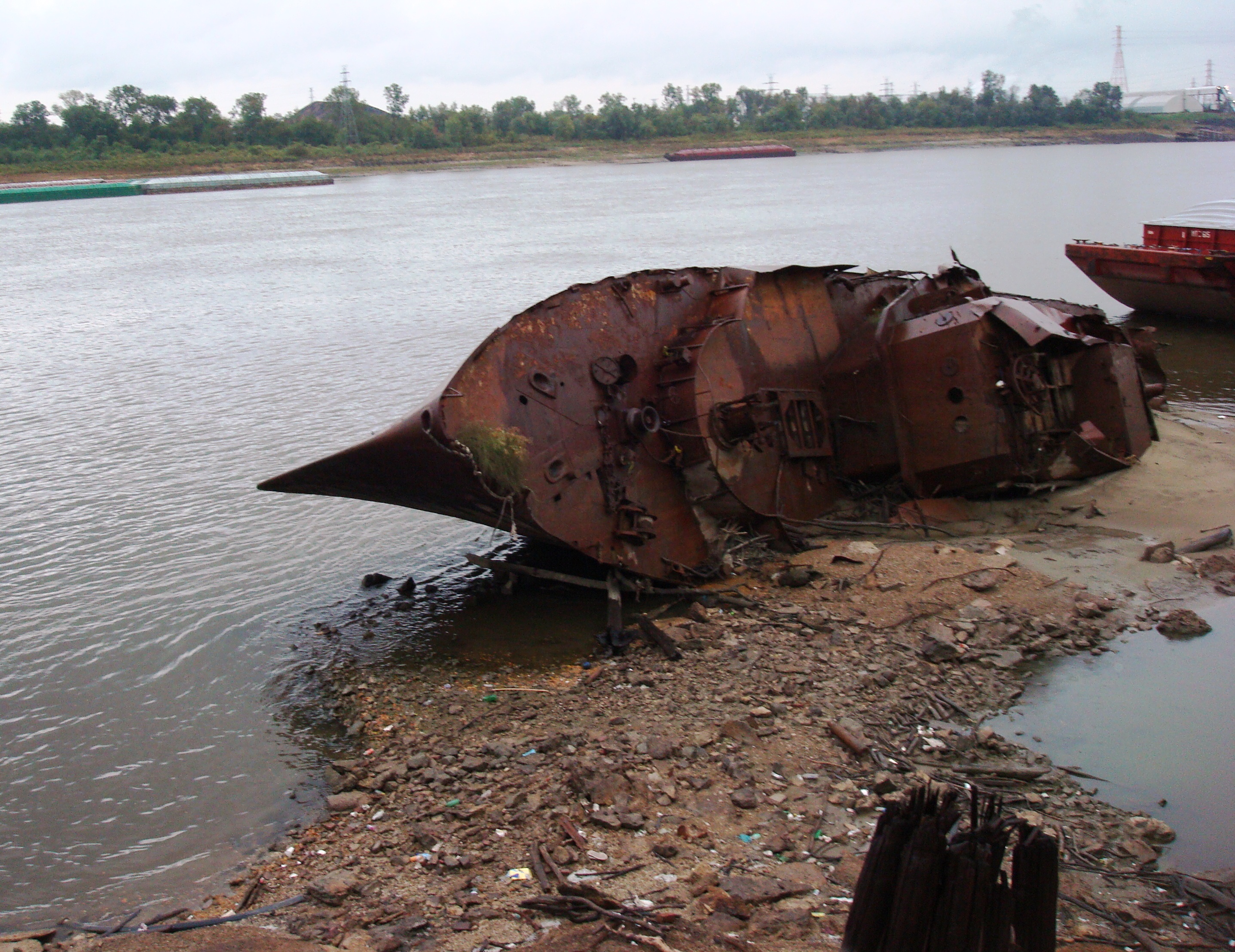
Wreck of USS Inaugural
Photo: Dillon Fulcher

Low water levels on the Mississippi have revealed the wreck of the USS Inaugural, a World War II minesweeper which sank in the Great Flood of 1993. The Inaugural began life in Washington state where it was built for the US Navy during World War II. A member of the Admirable class of minesweepers, the ship was commissioned in December of 1944 and earned two battle stars for its service in the Pacific Theater. Inaugural and her crew fought in the Okinawa campaign and swept more than 80 Japanese mines from the Pacific.

Following World War 2, the ship was mothballed in Texas as a member of the Atlantic Reserve Fleet until an enterprising St. Louisan named Robert O’Brien discovered the ship in a military surplus catalog. O’Brien purchased the ship and moved it to St. Louis where he charged $1 per person to tour the Inaugural. The Inaugural changed hands several times throughout the intervening years until she was ripped from her moorings during the Great Flood of 1993. Efforts by the US Coast Guard and other vessels allowed the ship to be safely beached just south of downtown St. Louis, however, the ship sank a few days later in what some believe to be mysterious circumstances – possibly flowing out of the owner’s desire to collect insurance on the vessel and pay off looming creditors.

The ship now breaks the surface every time the river level is below average and under current conditions is almost completely above water. The Inaugural is not the only recent maritime oddity on the St. Louis riverfront as a cement barge sank while at anchor just last year and a fire claimed the steamboat Robert E. Lee in 2010.

Go here for more pictures of the wreck.

More than 100 years ago, Greek skin divers discovered the remains of an ancient shipwreck nearly 200 feet below the surface of the Aegean Sea near the Greek island of Antikythera. For 2 years, divers utilized crude diving gear to recover items from the wreck. Among the items discovered was what appeared to be a random assortment of cogs and gears. Not until 2006 were scientists able to discern that the object was in fact an ancient computer designed for use as a calendar as well as to show the positions of the sun, moon and planets in the sky. The computer, termed the Antikythera Mechanism, could evn predict the timing of eclipses. The device is believed to have been built in the 1st century BC and the video above shows a Lego recreation of the device.

The diving technology of the early 20th century prohibited a full survey of the site and 2 divers were left paralyzed from the bends and another killed during the work. Apart from a few brief dives on the site, it has remained undisturbed until this year. Scientists with the Woods Hole Oceanographic Institute are set to begin surveying the site this week after reaching a deal with the Greek government. Using rebreather gear and self-propelled dive scooters, the scientists will be able to dive deeper and go farther than earlier expeditions and hope to learn more about Greek trade patterns and technology from the expedition.

Coast Guard Cutter Ingham

CC Photo Courtesy of Kay Gaensler on Flickr

During a career spanning more than 50 years, the USCGC Ingham kept the shores of the United States safe for mariners in both war and peace. Commissioned in 1936, the cutter protected the Bering Sea and the fisheries of the Grand Banks until ordered to participate in neutrality patrols upon the outbreak of World War 2. After America’s entry to the war, Ingham helped convoy hundreds of Allied ships across the Atlantic. On December 15, 1942, during routine convoy operations, the Ingham detected and sank the German U-boat U-626. In late July 1944, the Ingham underwent alterations in the Charleston Navy Yard to prepare it to serve as a combined operations and headquarters and ship in the Pacific Theater. Ingham served briefly as a headquarters ship for General Douglas MacArthur prior to his landing in the Philippines.

Following World War 2, the ship returned to peacetime service and her missions included maritime rescue and oceanographic surveying. Ingham was called upon once again to serve in wartime during the Vietnam War. During the war she and her crew became the only Coast Guard cutter to earn 2 Presidential Unit Citations for her naval gunfire support and replenishment missions. Ingham responded to yet another crisis when Cuban dictator Fidel Castro allowed thousands of dissidents to flee his autocratic regime in what became known as the Mariel Boatlift. The Ingham rescued several boaters and towed half a dozen vessels to freedom in the United States. At the time of her decommissioning, the ship was the oldest and most decorated Coast Guard cutter in service. The ship now resides in Key West, Florida as a memorial to the 581 Coast Guardsmen killed in action during World War 2 and the Vietnam War. The ship is open for tours Monday thru Saturdays and more information can be found on their website.

Viking Sally

Photo: Wikicommons

Eighteen years ago today, the Baltic ferry M/V Estonia sank in heavy seas while en route from Talinn, Estonia to Stockholm, Sweden. Designed for use as a ferry, the Estonia was launched in 1980 as the Viking Sally. Following Estonian independence, the ship was purchased by Estlines in 1993 and was the largest ship flying the Estonian flag at the time of its sinking.

The loss of the Estonia is one of the world’s 10 worst maritime disasters and 1 of 2 to have occurred in the Baltic Sea. The official explanation for the wreck is that the bow door locks failed due to the heavy seas the Estonia encountered and the failure resulted in the ship taking on large amounts of water in its vehicle deck. Eventually the incoming water in the vehicle deck caused the vessel to capsize and then sink. Termed the free surface effect, this phenomenon of a ferry sinking from water flooding its vehicle deck is widely associated with roll-on, roll-off ferries such as the Estonia and could have been a contributor to the sinking of the M/V Le Joola.

Alternative conspiracy theories have circulated claiming the Estonia sank due to the explosion of a secret military cargo being transported by Britain’s MI-6 and the American CIA. Fueling the conspiracy claims is the prohibition of diving on the wreck site which has prevented independent analysis of the wreckage. Conspiracists claim the prohibition is to prevent the true reason for the sinking from coming to light while the Estonian government states it is to preserve the site as a monument to the 852 souls who perished in the sinking. The conspiracy has even made it to the big screen in the form of the movie Baltic Storm

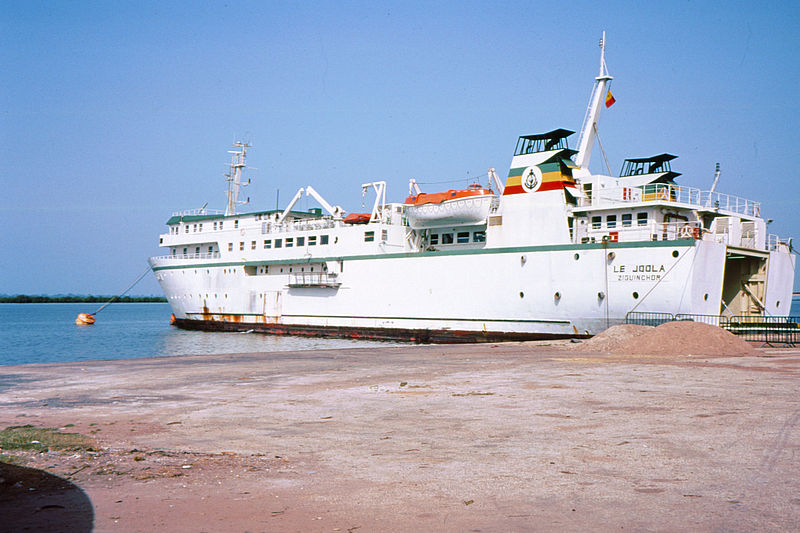
african ferry

CC Image Courtesy of Yaamboo on Wikimedia Commons

Today marks the tenth anniversary of the capsizing of the Sengalese ship, M/V Le Joola, on September 26, 2002. Le Joola was a government owned roll-on, roll-off ferry which operated between Senegalese ports on the Atlantic Ocean. At the time of its sinking, ferry travel was a popular option because a civil war made the land route prohibitively dangerous. The ferry’s maximum capacity was approximately 550, however, there were nearly 2,000 passengers aboard the ship when it capsized 35 kilometers off the Gambian coast.

A combination of overcrowding and gross neglect (the ship had only recently returned to service after a multi-year hiatus) contributed to the ship’s capsizing although the exact cause of the sinking has never been conclusively proven. It was also alleged that political considerations regarding the appeasement of separatist groups within Senegal encouraged the Senegalese government to return the ferry to service before it was fully seaworthy.

Sadly, only ~60 of the nearly 2,000 souls aboard survived and an exact body count has never been determined. The disaster is one of the worst sinkings in history with more lives lost than that of RMS Titanic, however it pales in comparison to the ~9,000 lives lost aboard the M/V Wilhelm Gustloff in 1945. The ship’s sinking continues to have ramifications today with survivors and victims’ families demanding a new inquiry into the causes of the sinking.

landing ship tank

Photo: US Navy

World War 2 saw the perfection of modern amphibious operations with successful landings in North Africa, Italy, Normandy and throughout the Pacific contributing to the demise of the Axis Powers. Among the innovations which made these operations successful was the Landing Ship, Tank (LST). LSTs were designed with massive bow doors and a bow ramp that enabled Allied forces to deliver tanks, half-tracks, deuce and a halfs and other vehicles directly to the beachhead. After disgorging their cargo, the LST’s crew could use a winch system to extricate the ship from the beachhead and return to port for another load. Of the 1,051 LSTs produced for Allied naval forces, most were scrapped or converted to use as merchant vessels after the war while a few saw service through the Vietnam War. One even served as a produce carrier for Los Angeles Mafioso Jack Dragna, hauling bananas between Latin America and California.

LST 393, one of only 2 surviving LSTs, now serves as a museum ship in Muskegon, Michigan. The ship delivered 9,000+ troops and 3,248 vehicles to the beaches of Salerno, Sicily, and Normandy. Following her wartime service, LST 393 was renamed M/V Highway 16 and plied the Great Lakes as an automobile carrier for decades. In 2000, a group began restoring the ship as a memorial to the officers and crew who served aboard these important vessels. The ship is open for tours and can be rented for special occasions. More information can be found at the ship’s website: http://www.lst393.org/

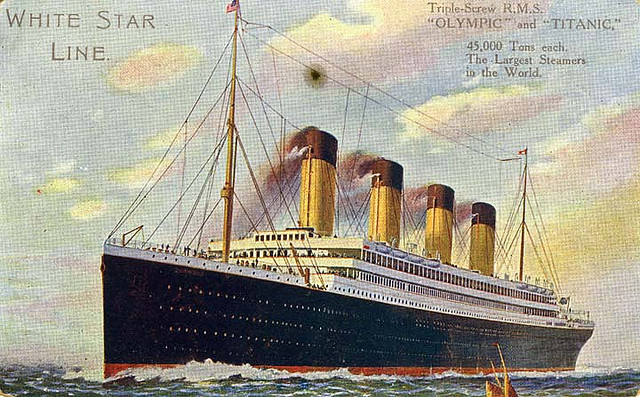
Titanic & Olympic

Much like the Apostle Paul, Violet Jessop survived a trio of maritime disasters, including the sinking of RMS Titanic. Jessop began work as a stewardess for White Star Line in early 1911. White Star is best remembered in history as the owner and operator of the Titanic, but in the late 19th and early 20th century the company ferried thousands of immigrants from Europe to the United States. Jessop first assignment was aboard Titanic’s sister ship RMS Olympic. While cruising off the Firth of Forth on September 20, 1911, the Olympic and the Royal Navy armored cruiser HMS Hawke collided resulting in significant damage to both ships. Neither Jessop nor any of the other passengers and crew aboard either ship were injured even though two of Olympic’s watertight compartments were flooded and the Hawke nearly capsized.

Jessop’s next brush with death occurred merely 7 months later on April 14, 1912 when Titanic sank after its infamous collision with an iceberg. For four years Jessop enjoyed smooth sailing aboard her employer’s ships until November 1916. RMS Brittanic, which had been converted to a hospital ship, struck a mine on November 12, 1916 and once again Jessop found herself scrambling for the lifeboats. Despite her three near-death experiences, Jessop continued to work aboard passenger liners and retired to England where she passed away in 1971.